
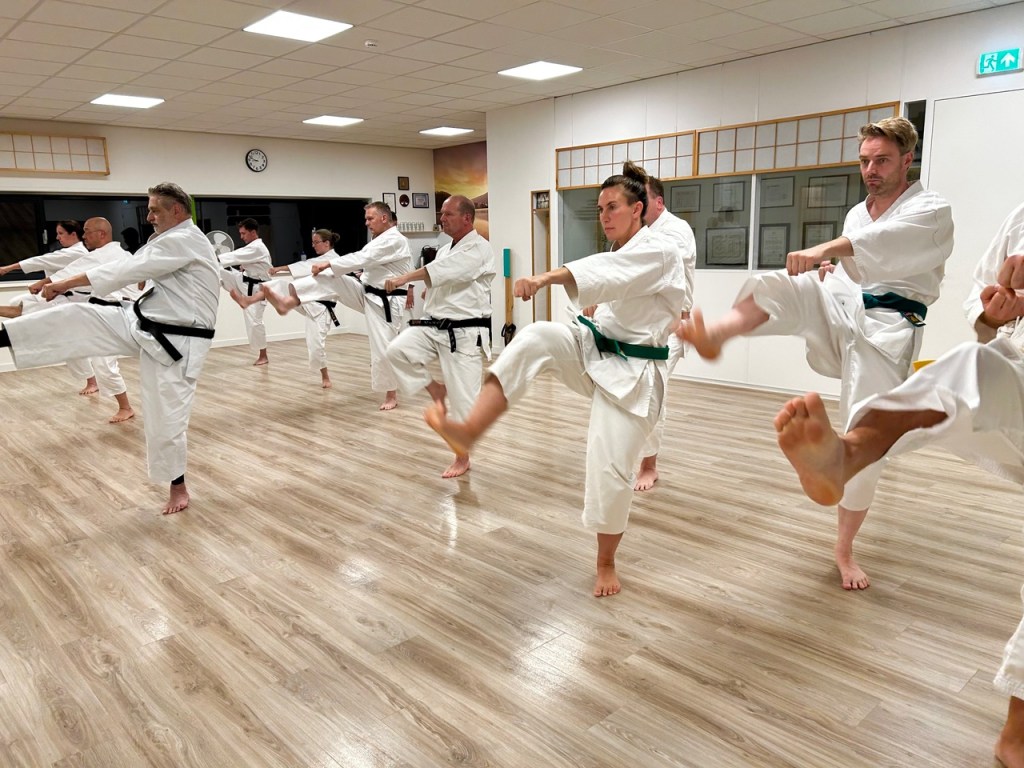
Describing Wado technique; “So,… using business-speak, what we have is a ‘leaner approach’ to the problem?” This is just one of the priceless moments in comments and questions from students and instructors on my recent weekend course in the Netherlands. (this particular quote related to a specific paired kata that was trimmed to the bone to make it work).
What I always enjoy on these workshops is the way they become collaborative and encourage sharp enquiry at all levels. This weekend was no exception.
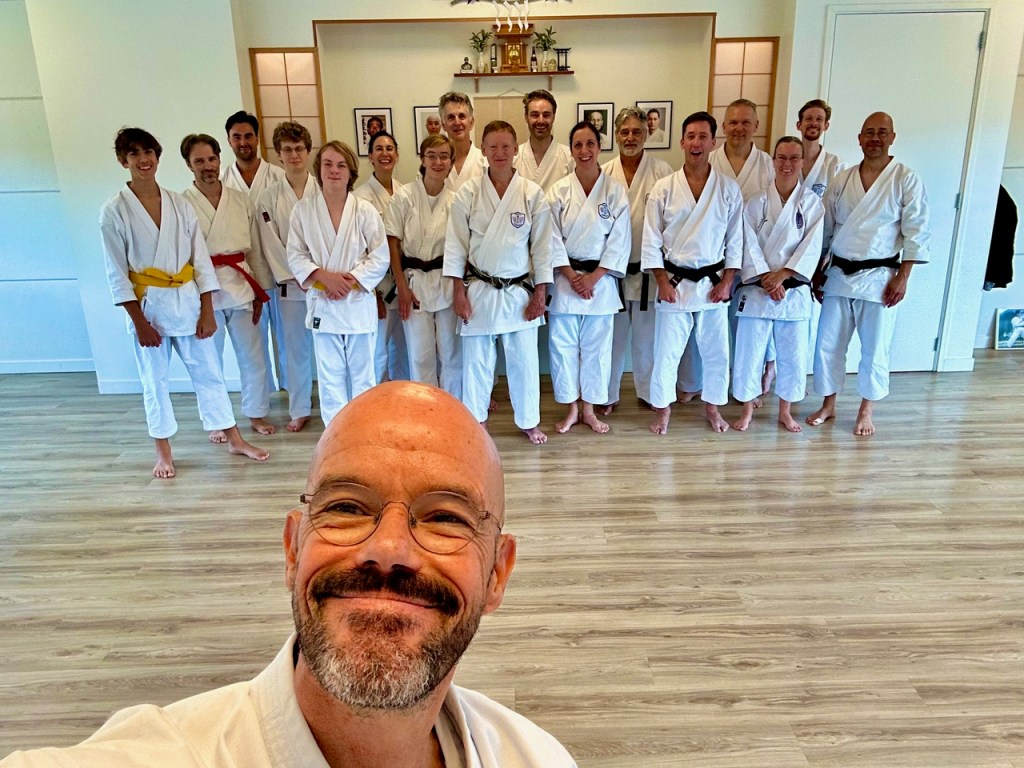
This was three days of training following a number of threads, attended mostly by the now burgeoning Shikukai membership. (There was a calendar clash with a KBN event, but it didn’t interrupt our stride). The benefit we had was that I was able to pick up with the regulars and move things rapidly to the higher levels of study.
But first…
Friday training began with a short ceremonial ‘Mokuto’ in memory of recently departed Kenkokai Dojo senior, Ron Snellens, who is sorely missed within the organisation and everyone who knew him.
The actual training.
In recent conversations with our chief instructor, Sugasawa Sensei; he has directed me to focus keenly on the important principles of Wado techniques and ensure that the students don’t misunderstand what we are trying to achieve. As such, one of my main objectives was to help the students to understand why we are doing things the way we do, and how the teaching methods actually work. (I will be putting forward a setting of teaching notes for this course on a future post on my Substack project).
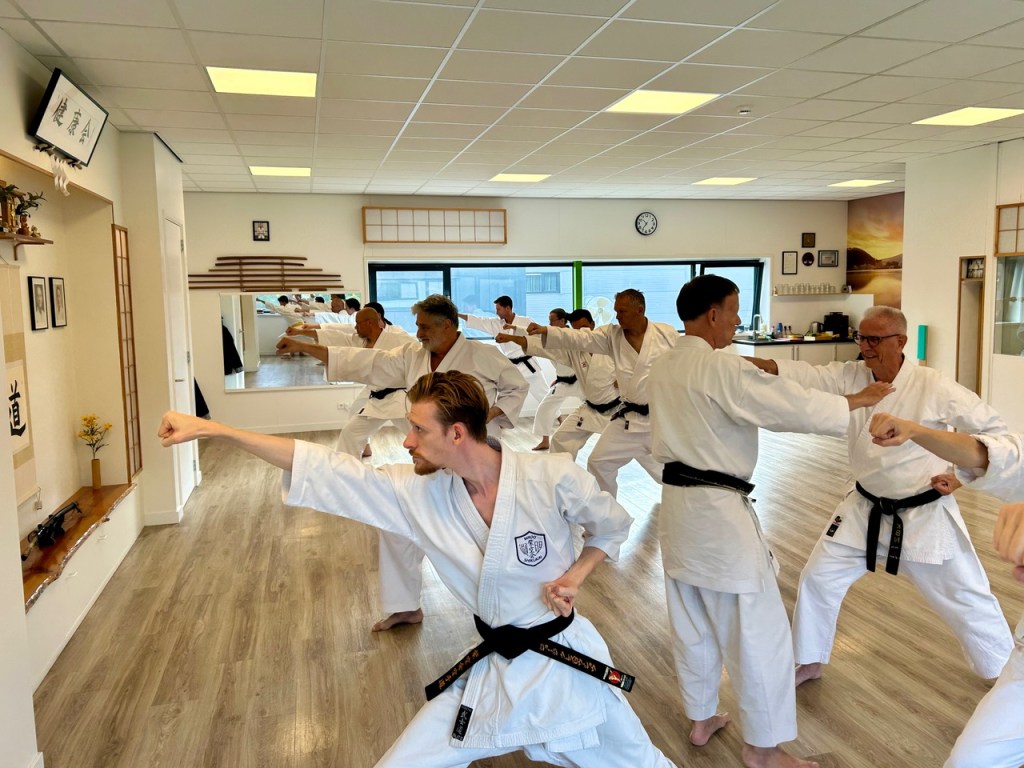
The content of the training involved core kihon, kumite gata and kihon gumite. The solo kata this time was Pinan Nidan.
Part of the agenda was to also supply solid guidance to senior students who are planning to put themselves before a Shikukai grading panel at a future date. I wanted to give students the insider-track on what the examiners are looking for, and also, crucially, what they are not looking for.
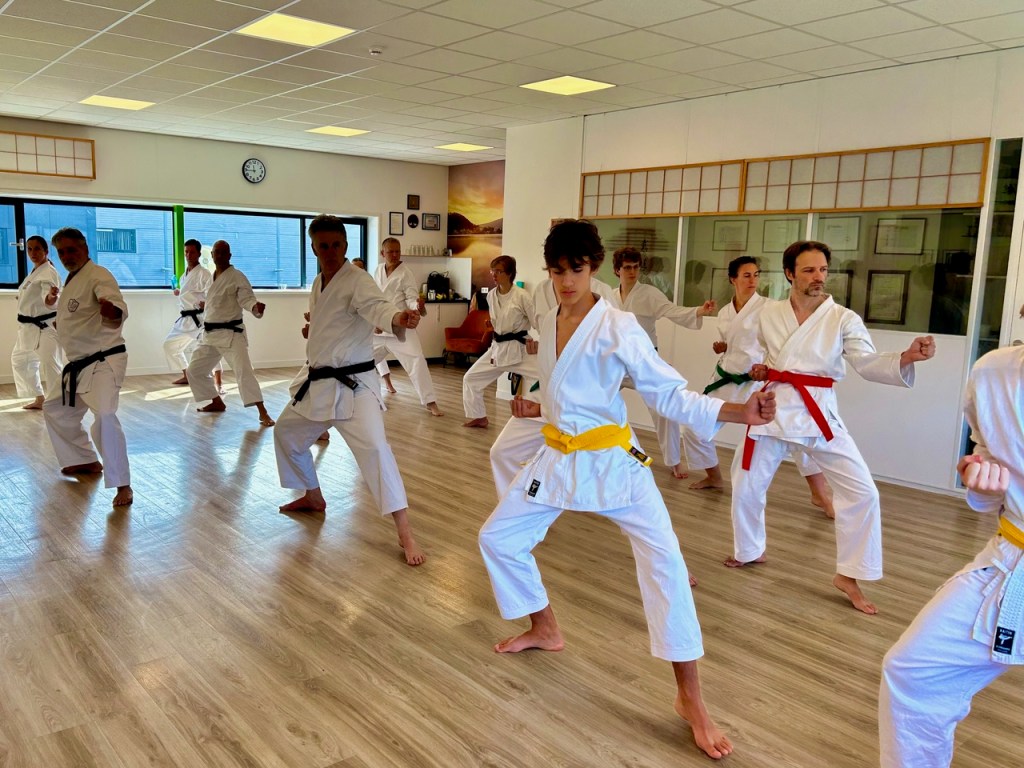
We did some filming of techniques, viewed from multiple angles, accompanied by a commentary from me on the stand-out areas for development. I am sure the prospective candidates would find it useful.
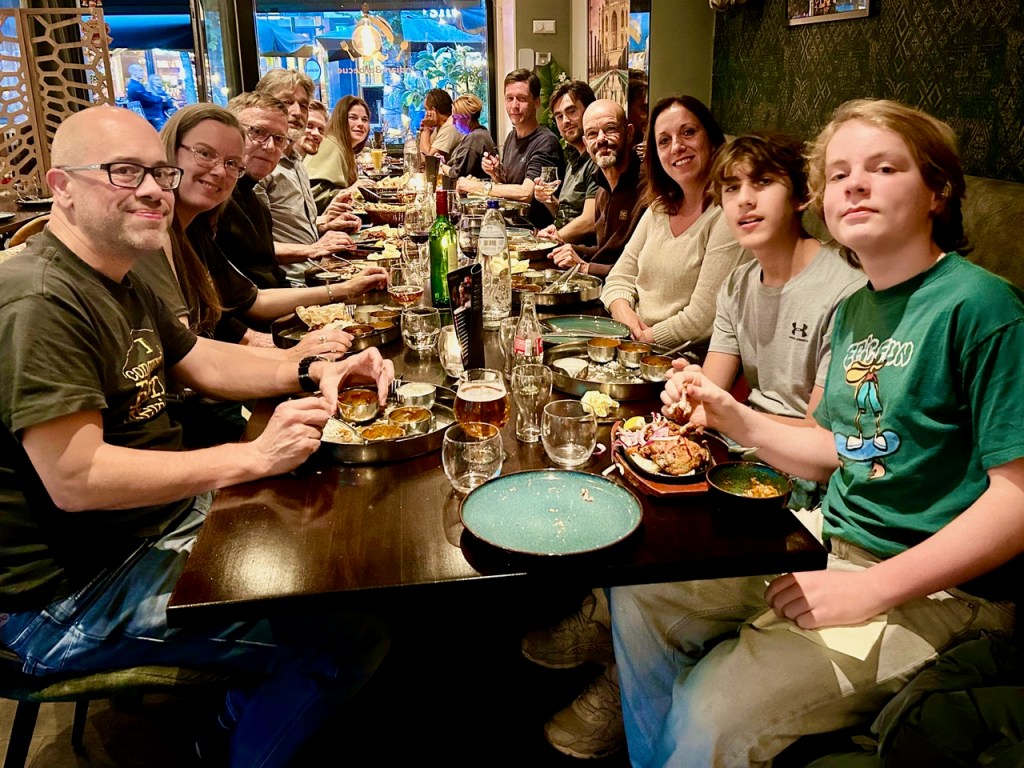
It wasn’t all work and no play. I think we are gradually working our way round the various restaurants in Hilversum; which is a town that seems to have no shortage of bars and eateries. This time we were treated to an Indian establishment that seemed determined to show its full potential, and all at a very reasonable price. But it wasn’t really about the price or the food, it was the good company that mattered the most.
On the Sunday training the main focus shifted from Nagashizuki and moved into some of the more complex paired kata. And then, all of a sudden, it was over. We honestly could have just kept going, but for me the delights of Eindhoven airport and Ryanair awaited.
Across the weekend Ryanair got more than one mention, and even influenced training advice.
I was telling the students how in the Kette techniques in Kihon, Sugasawa Sensei said that you should ‘glide’ into the final punch, like an aircraft coming in to land – to which I added; ‘not hit the ground abruptly; like an average Ryanair landing’. And lo and behold; touchdown at Stansted that evening, jarred my bones from skull to sacrum.
I wasn’t going to let it ruin my weekend though.
Huge thanks to Martijn and Astrid Schelen – de Vries and all the regulars at the Kenkokai Dojo in Eemnes. Keep an eye open for the next Shikukai event in the Netherlands in 2027.
Tim Shaw October 2026.

