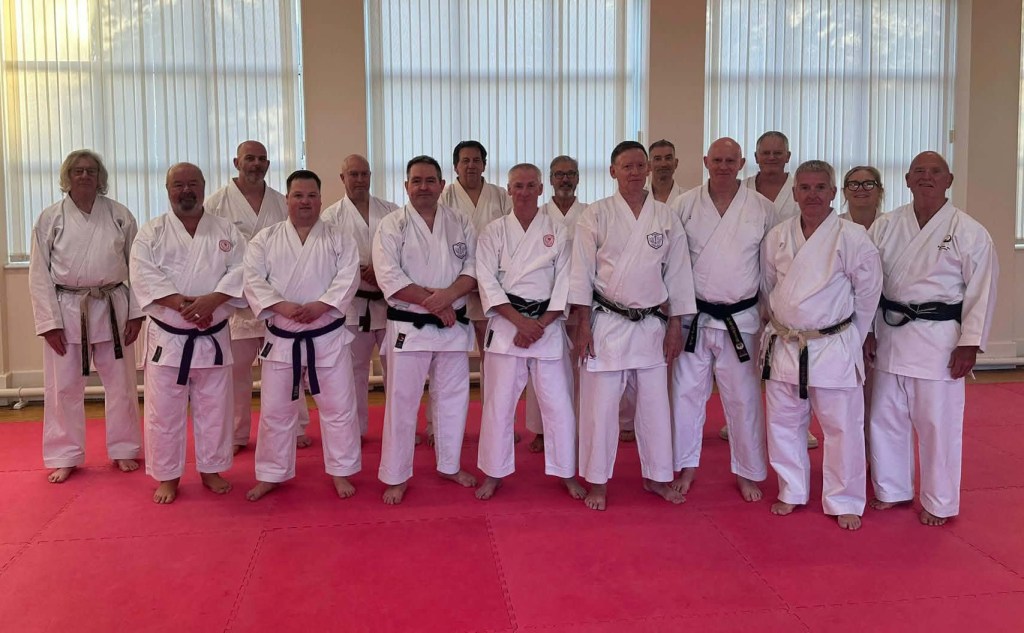
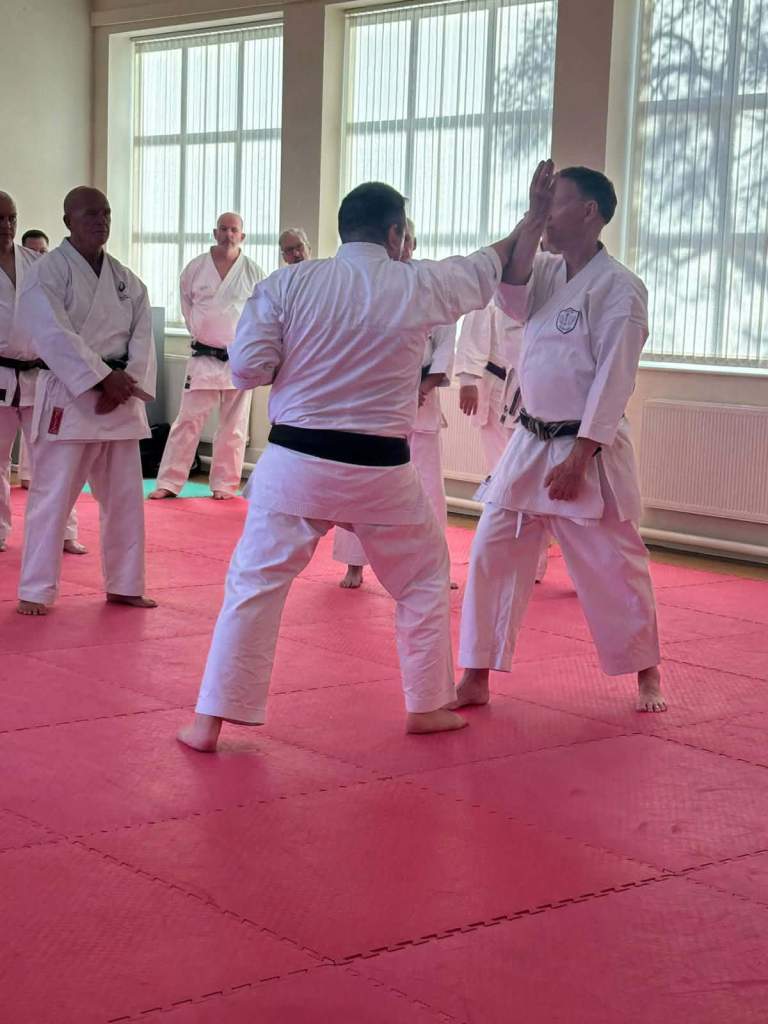
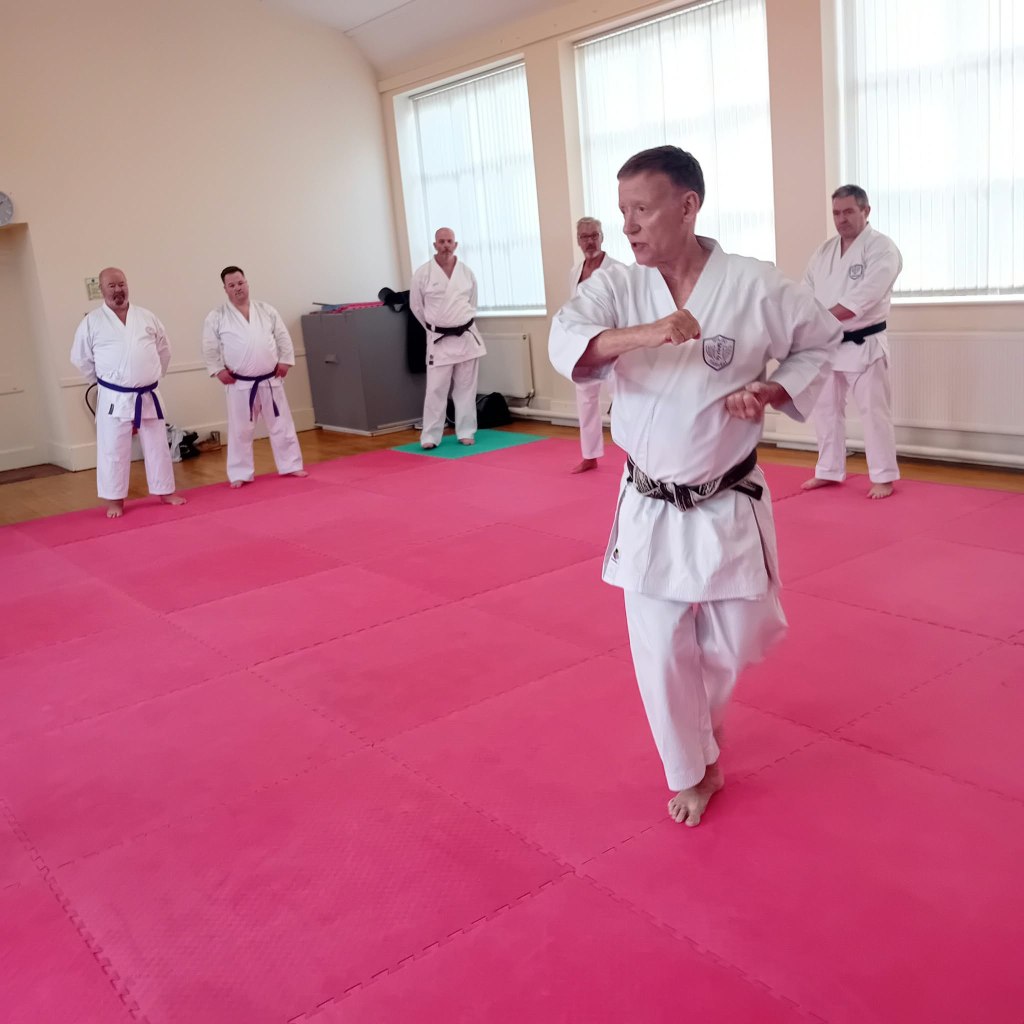
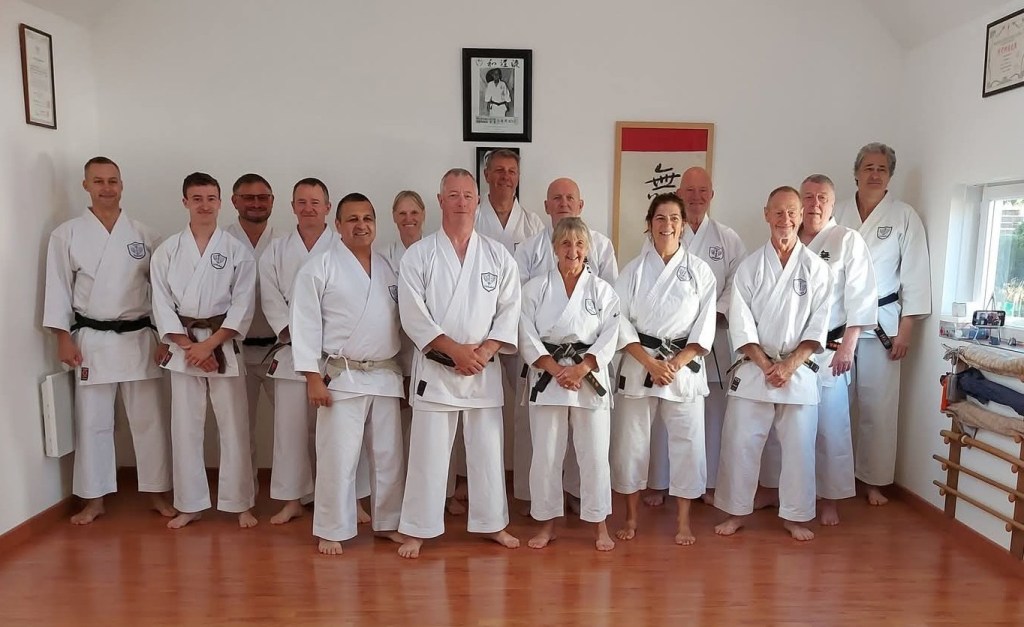
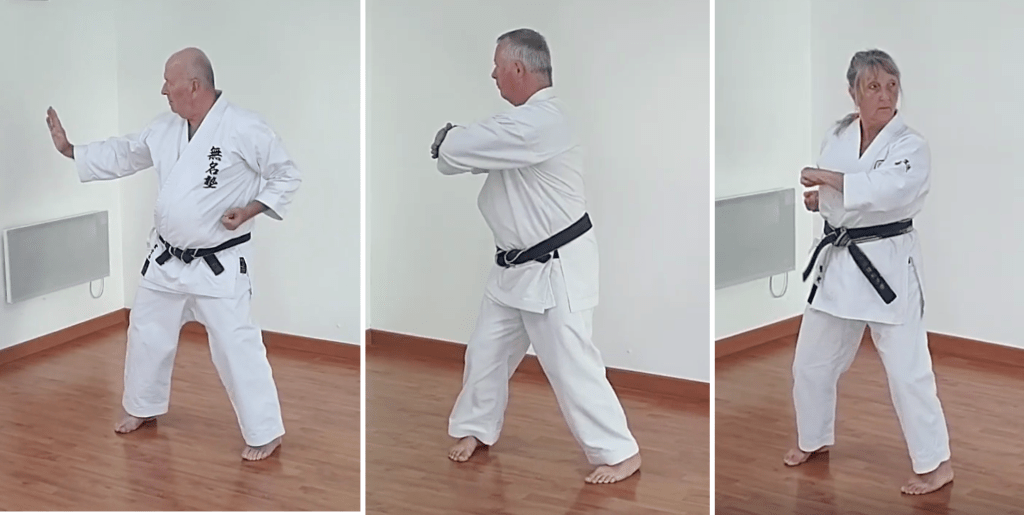
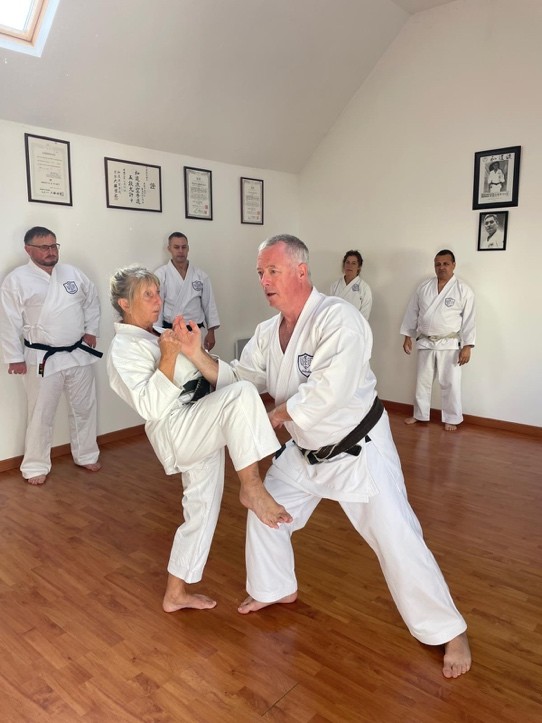
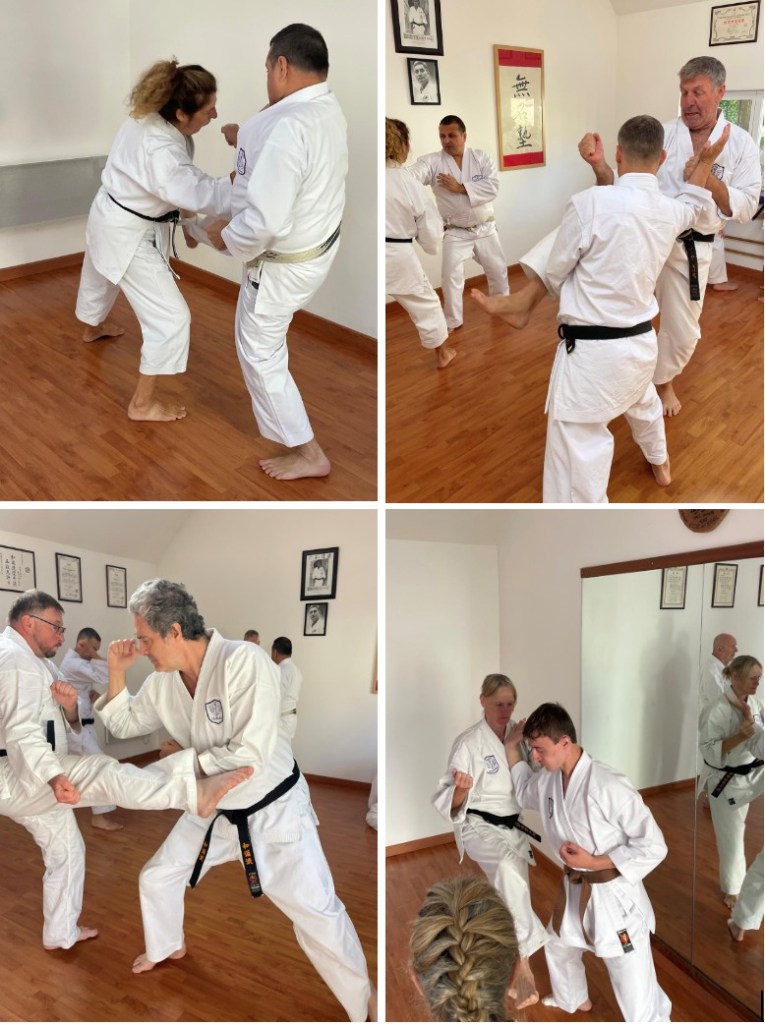
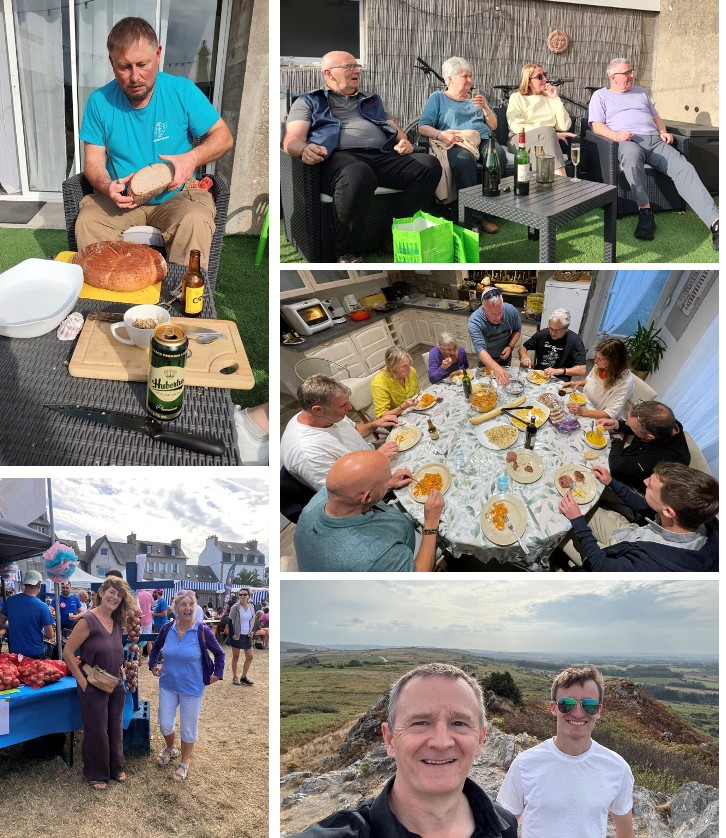
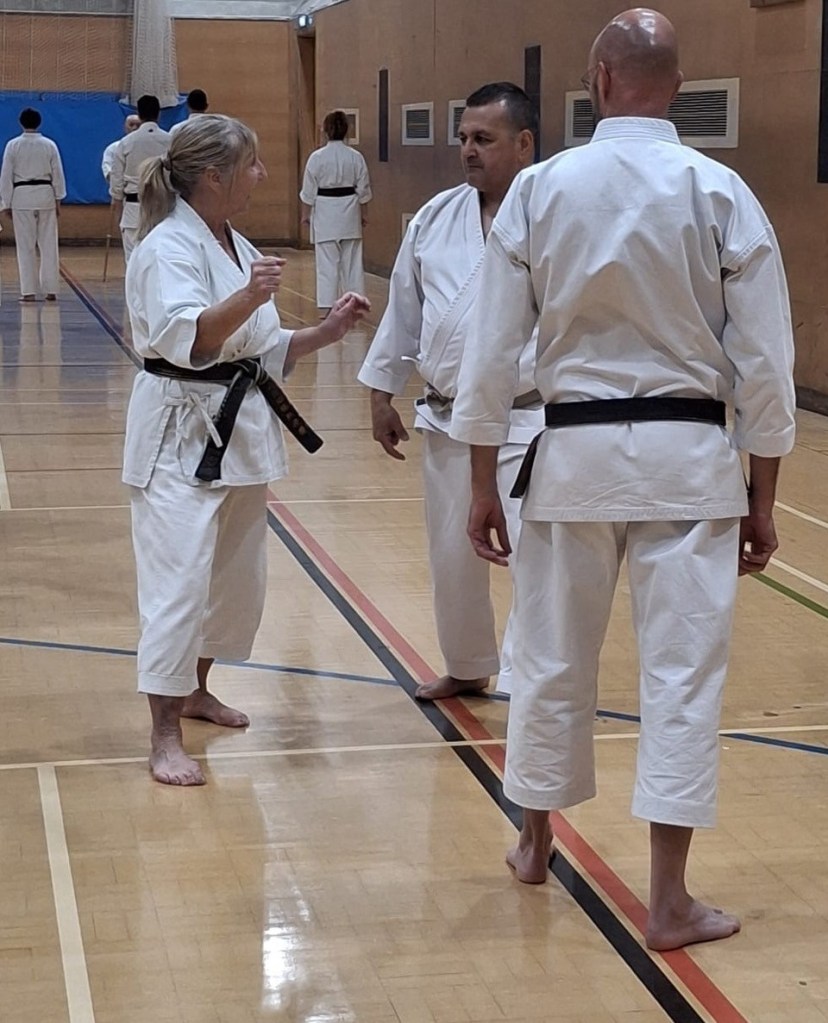
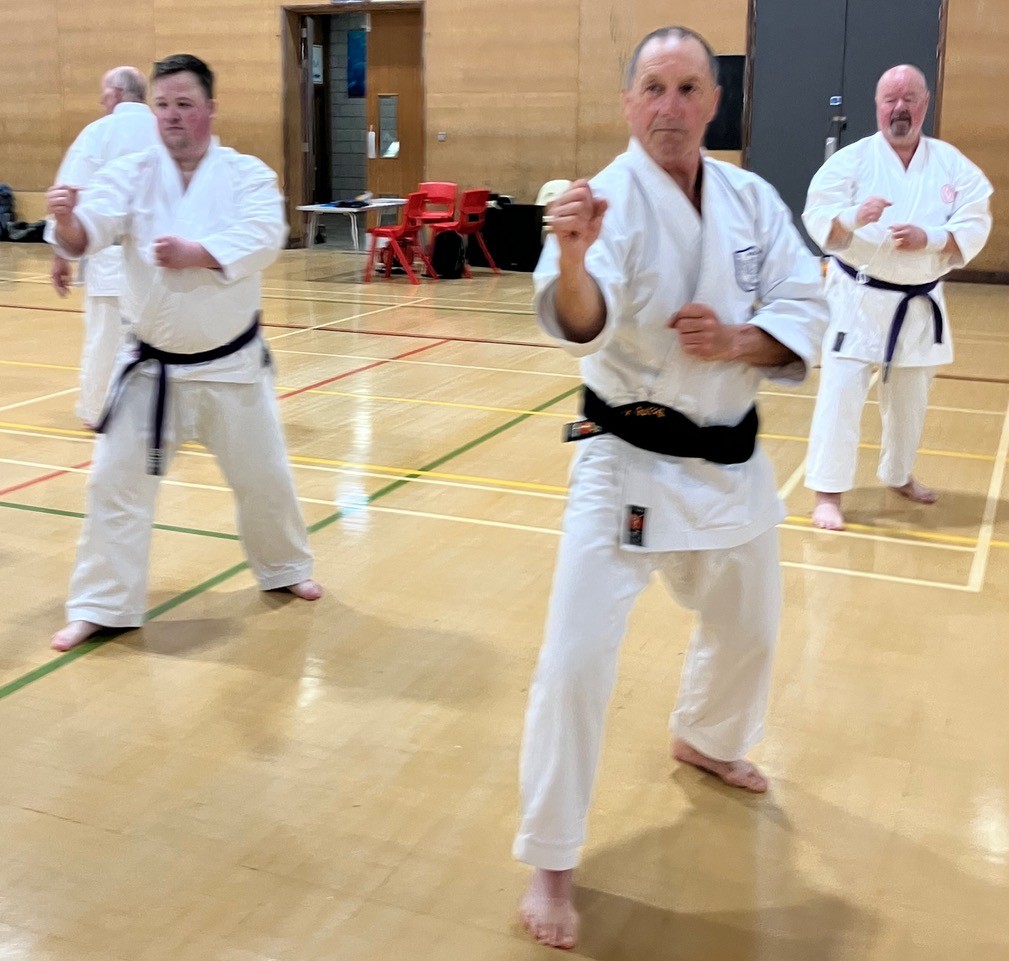
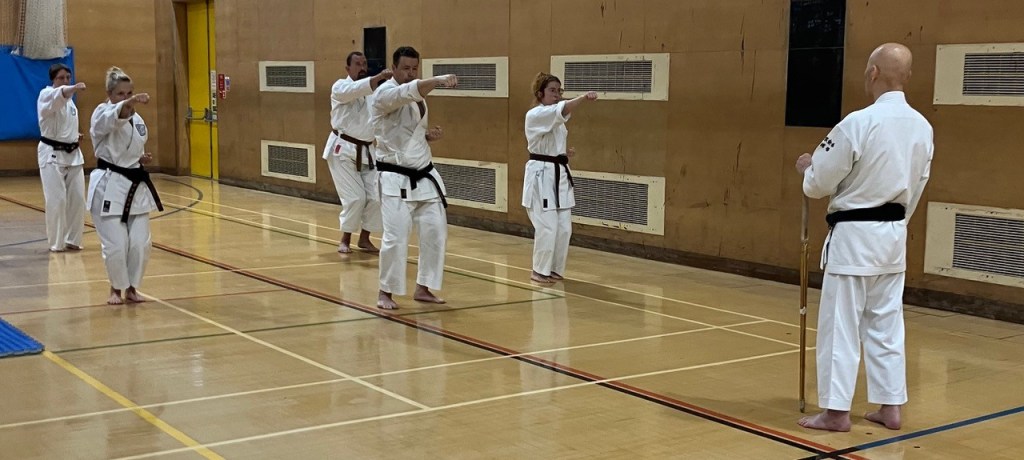
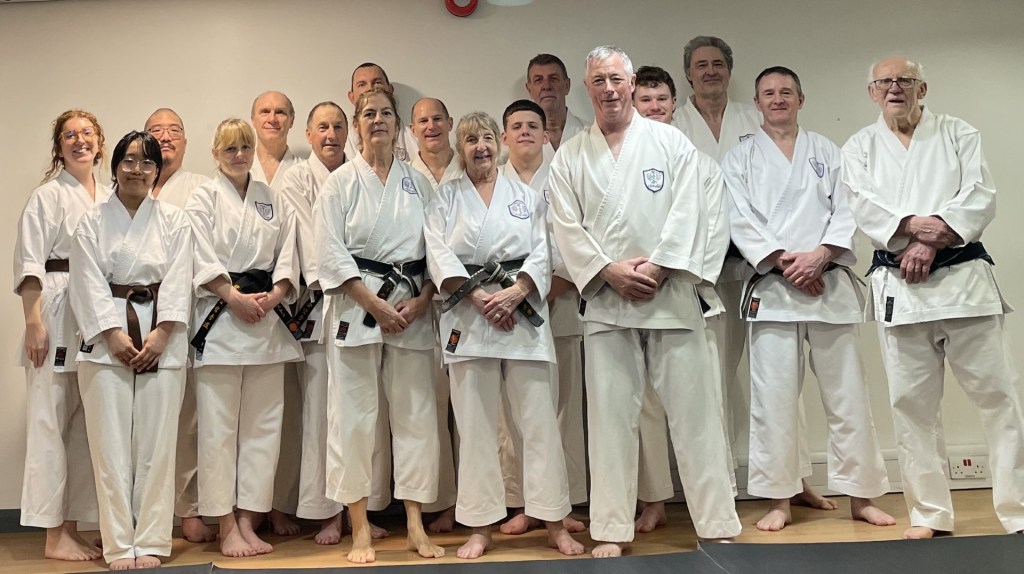
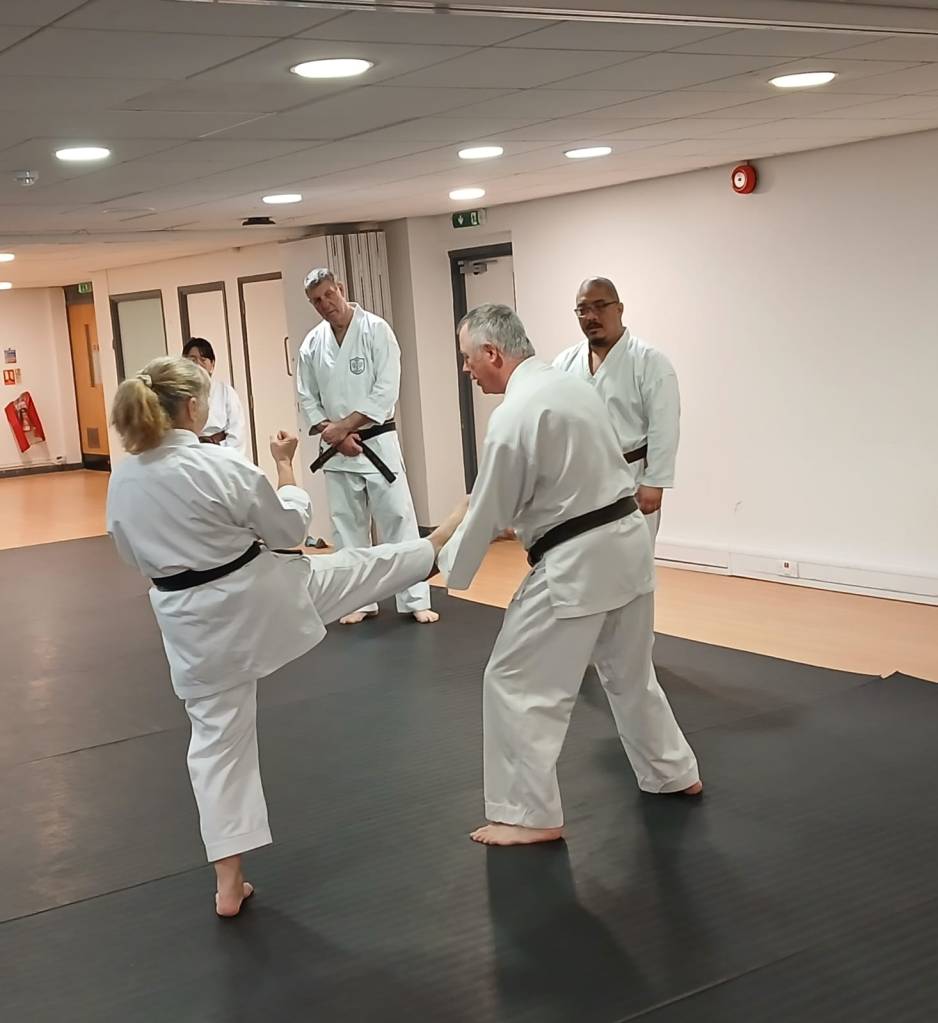
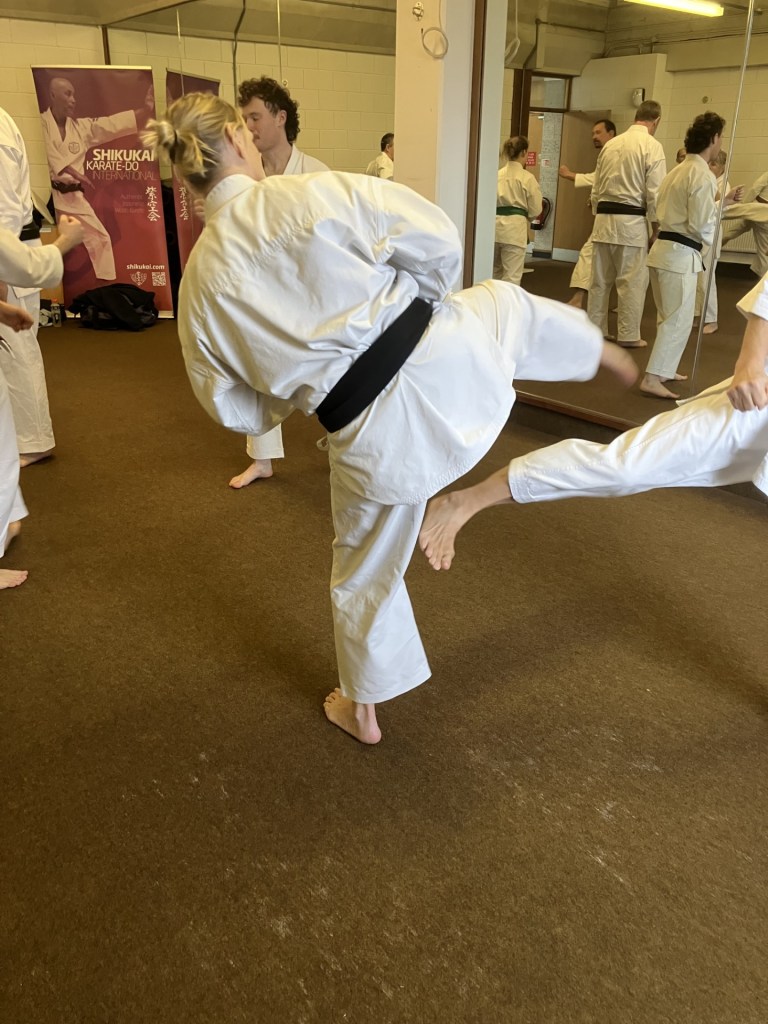
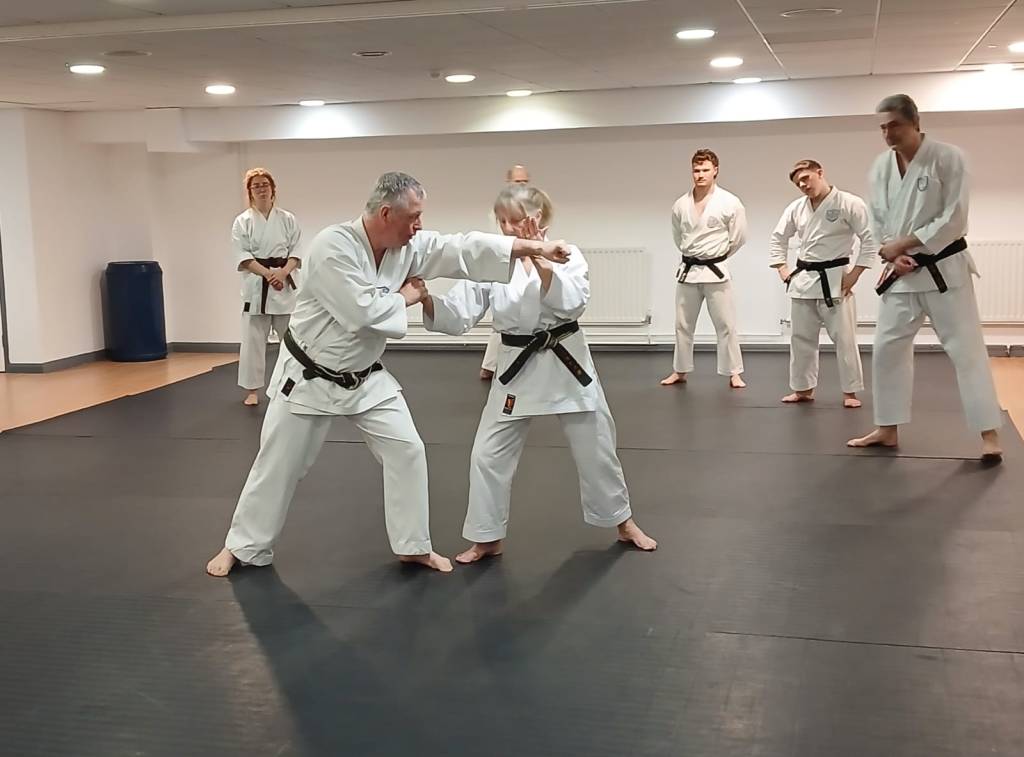
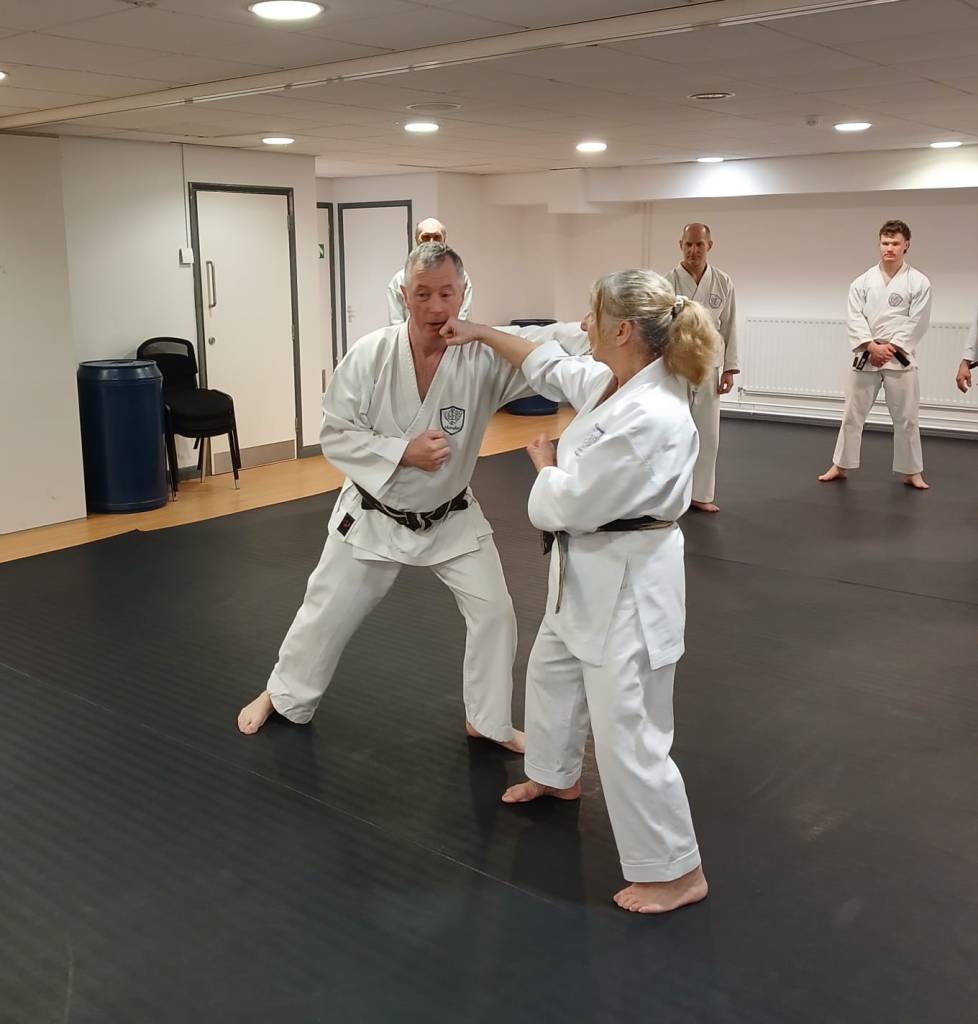
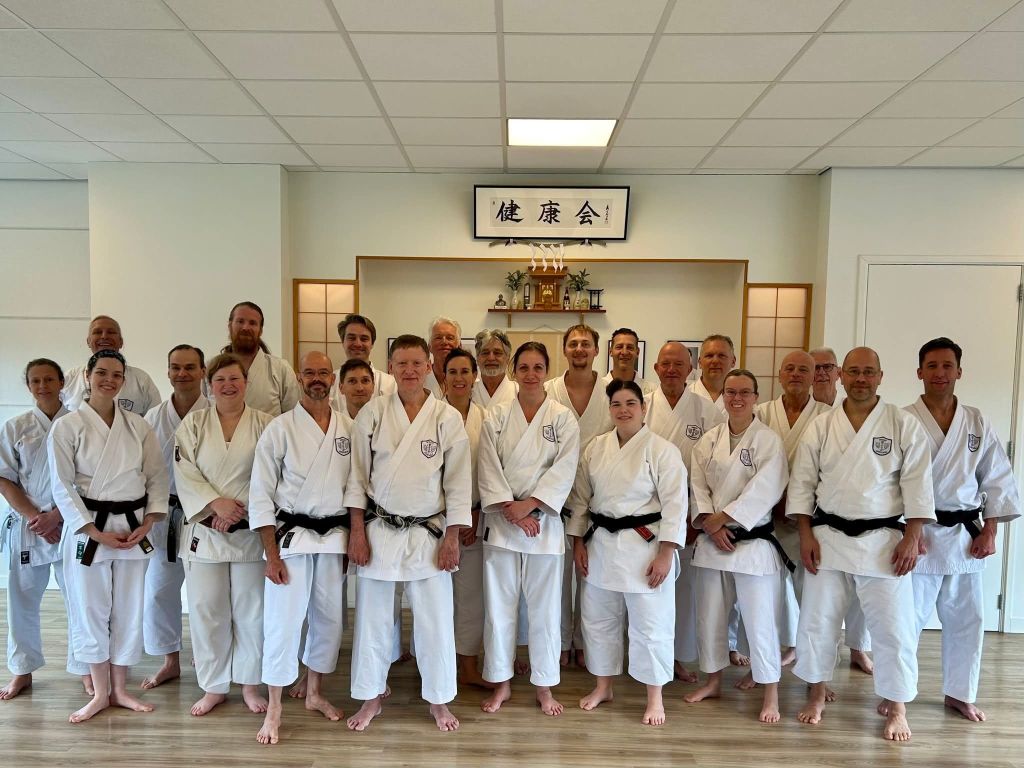
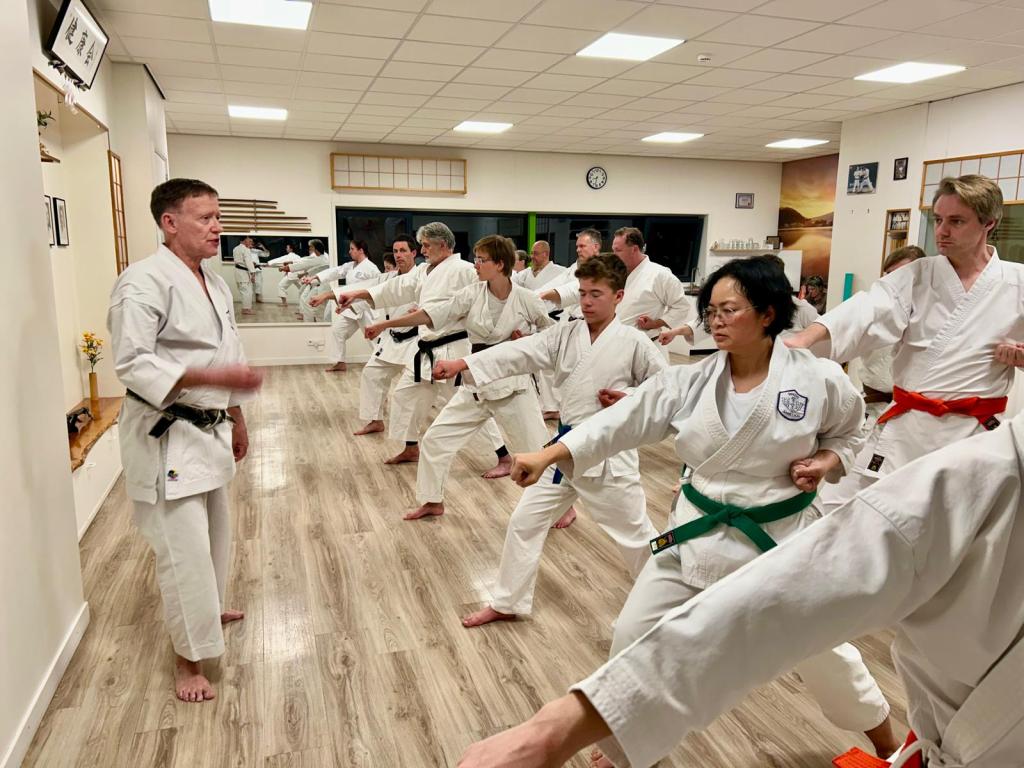
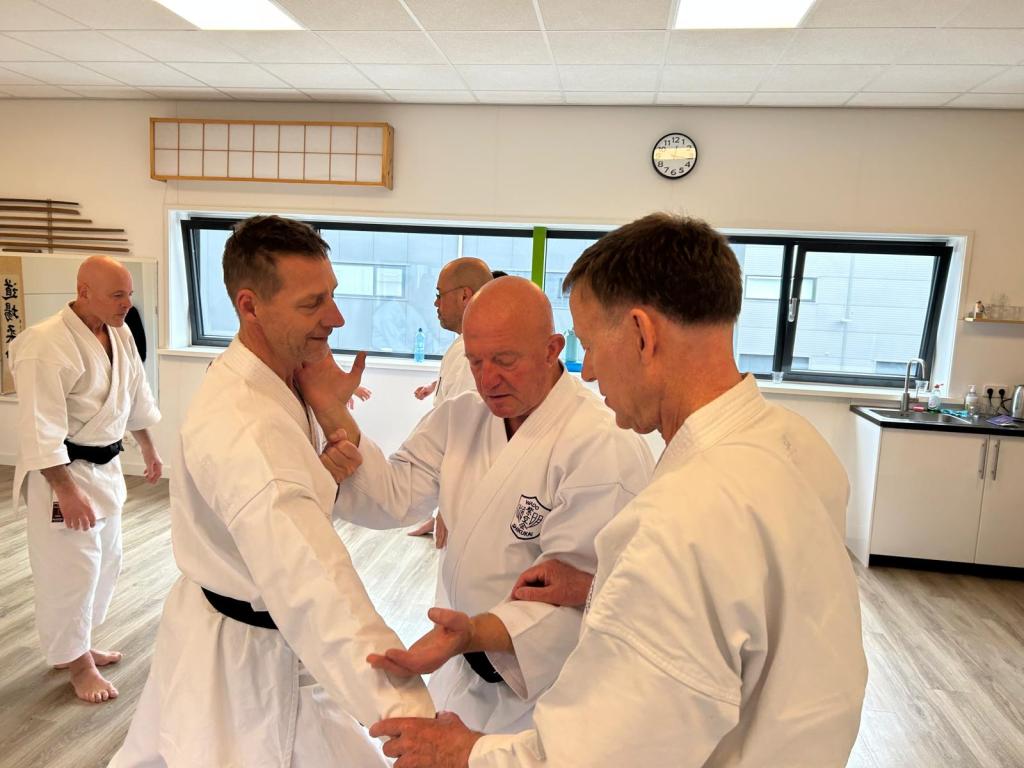
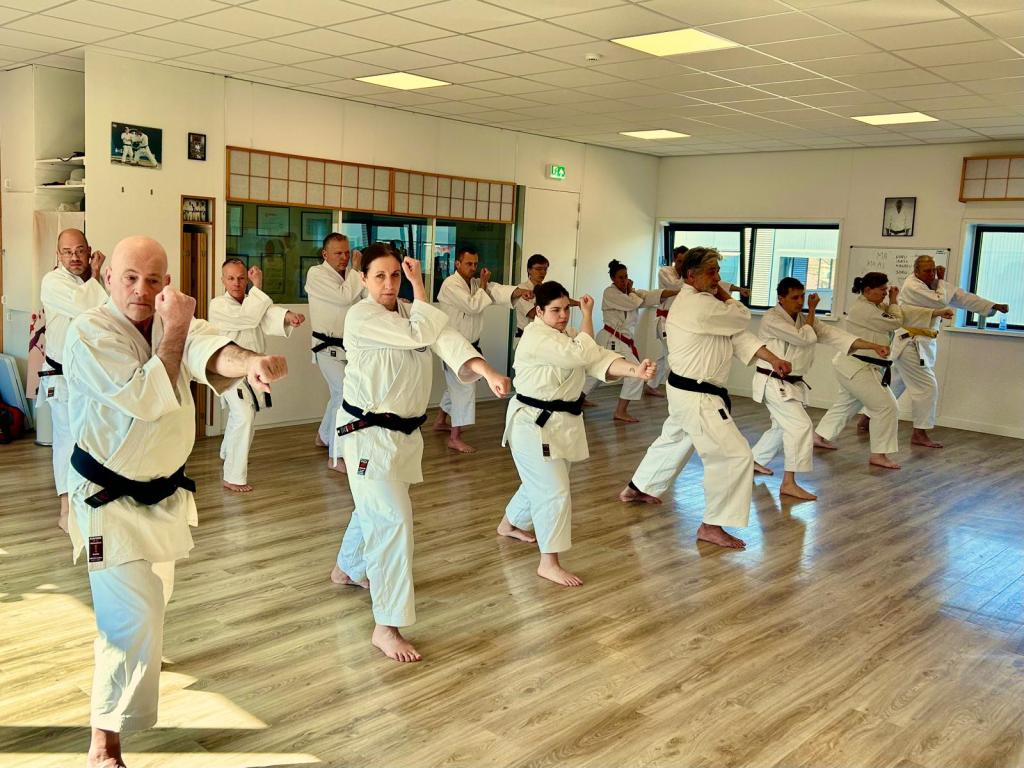
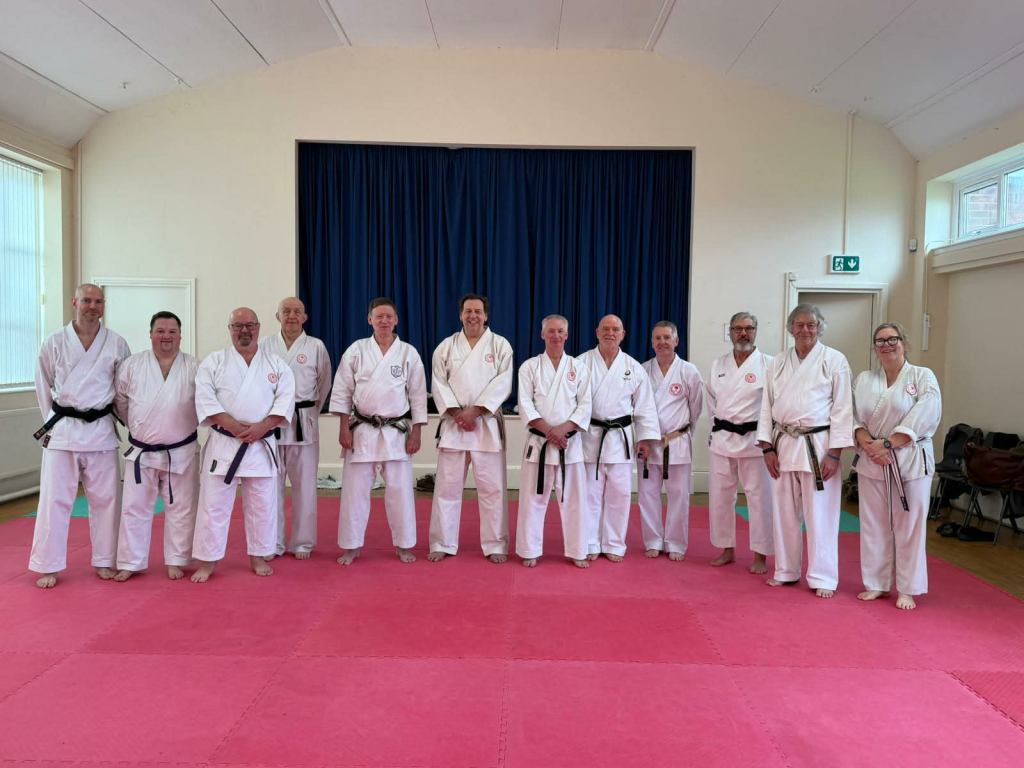
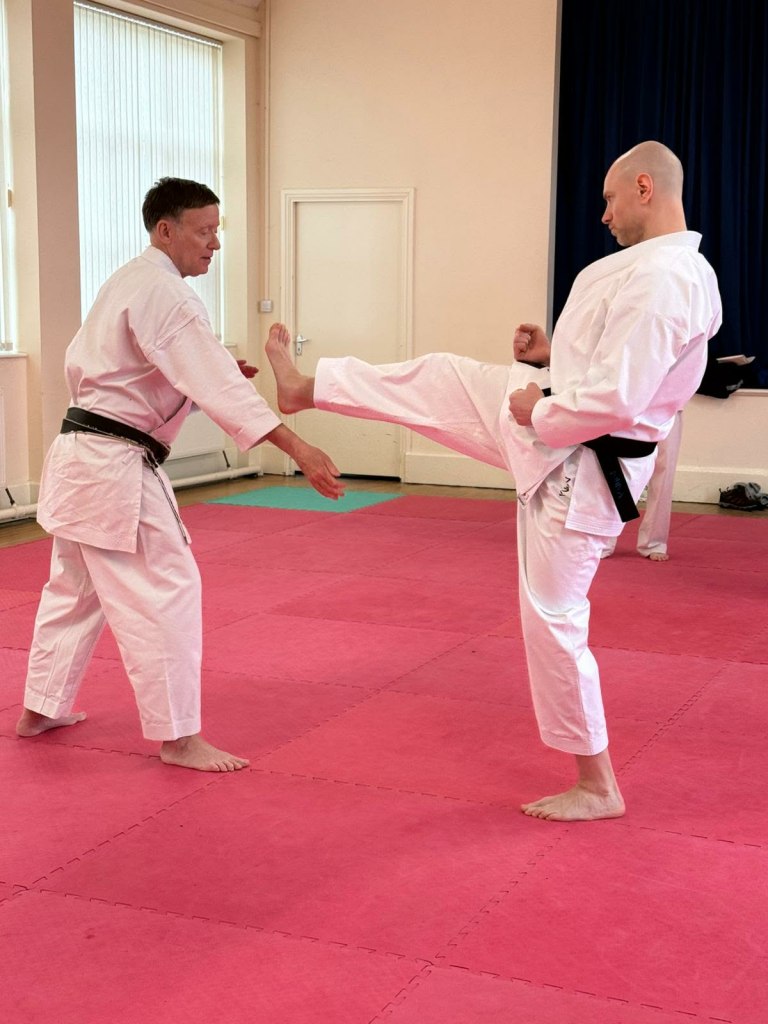
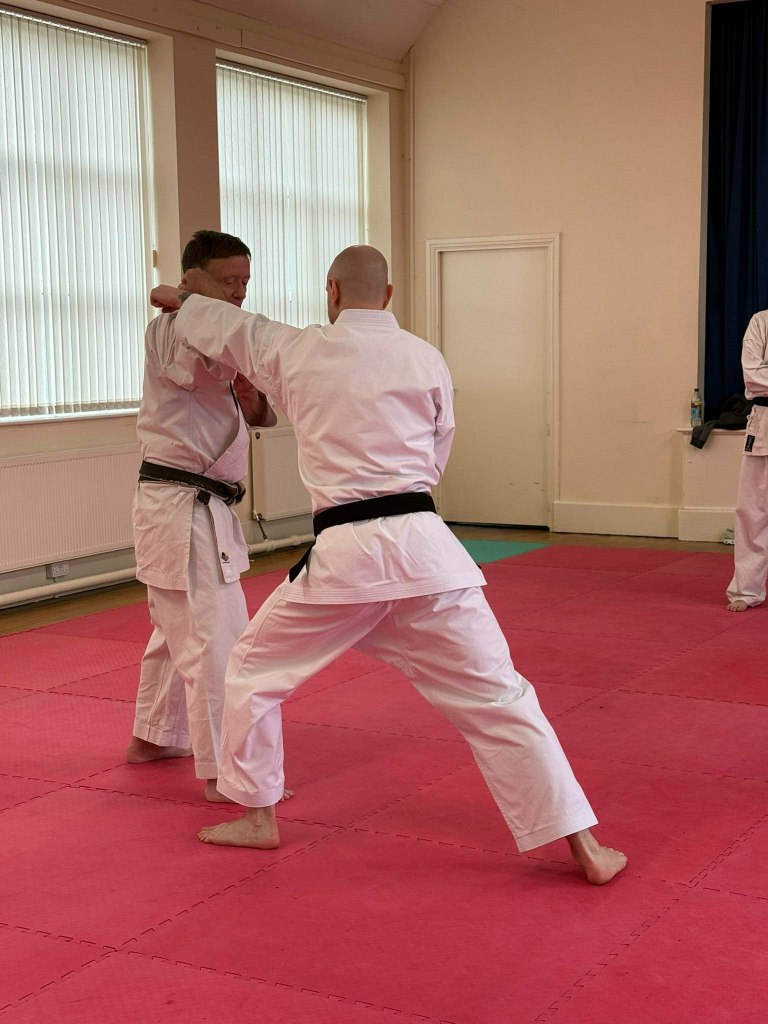
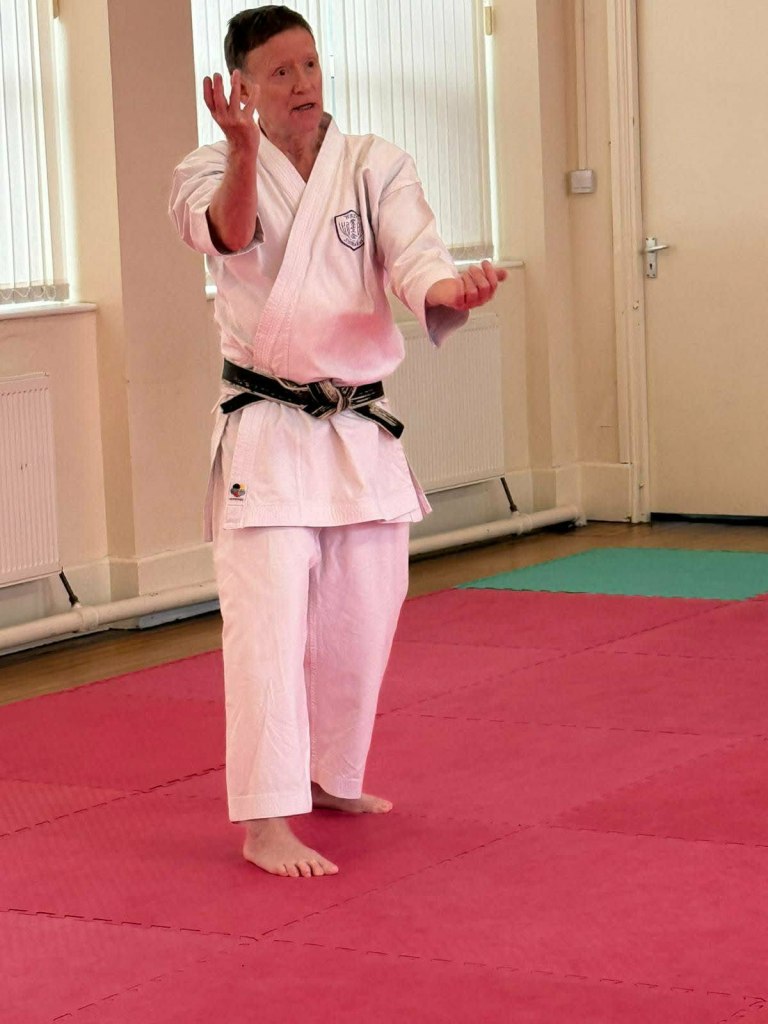
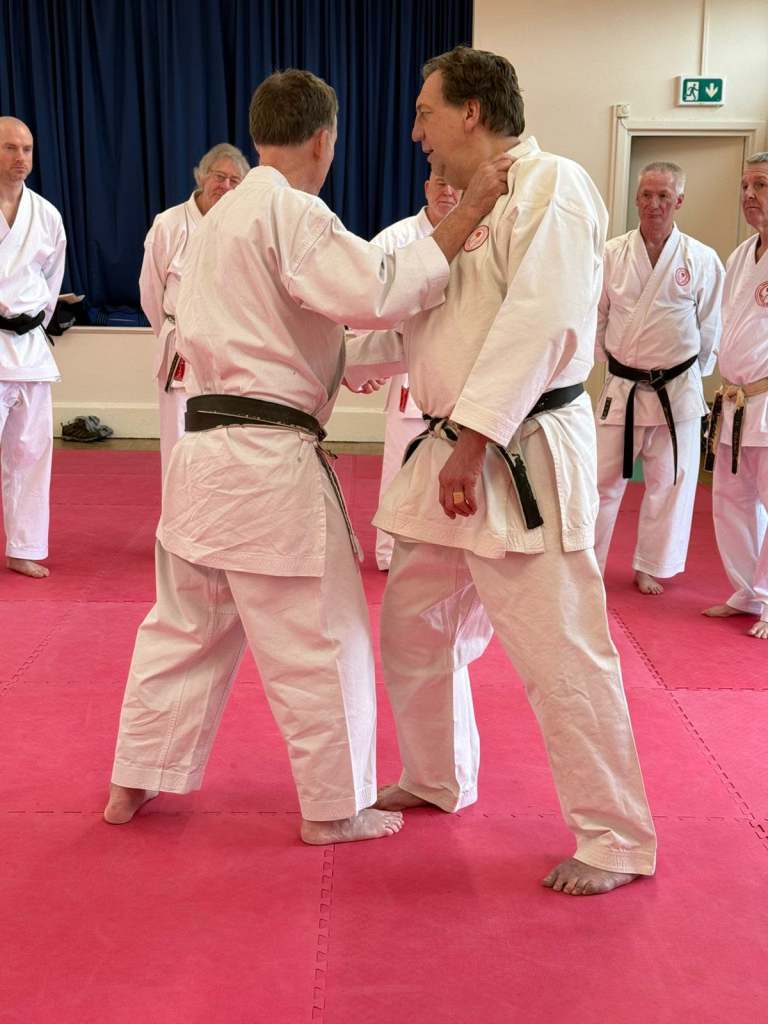
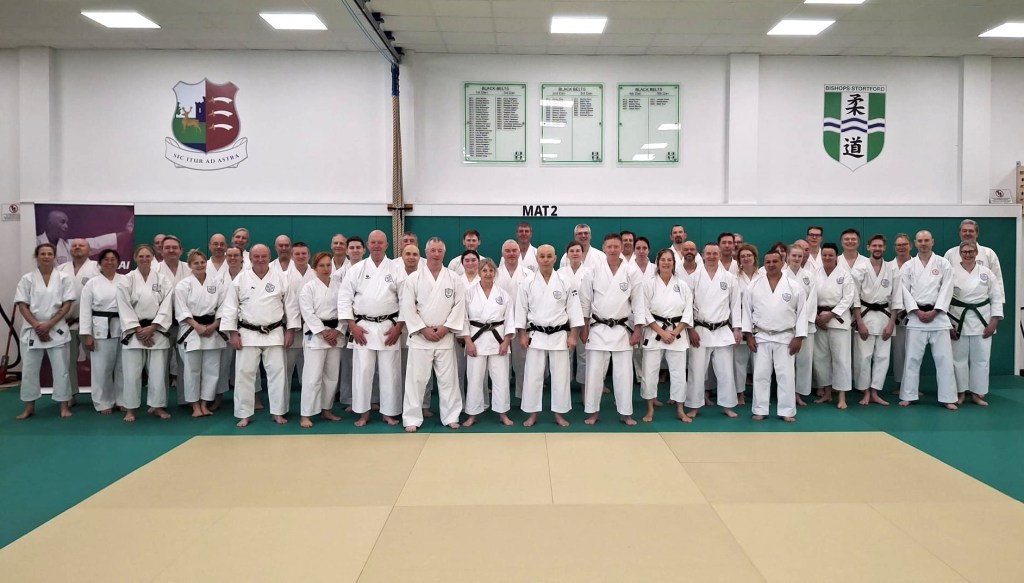
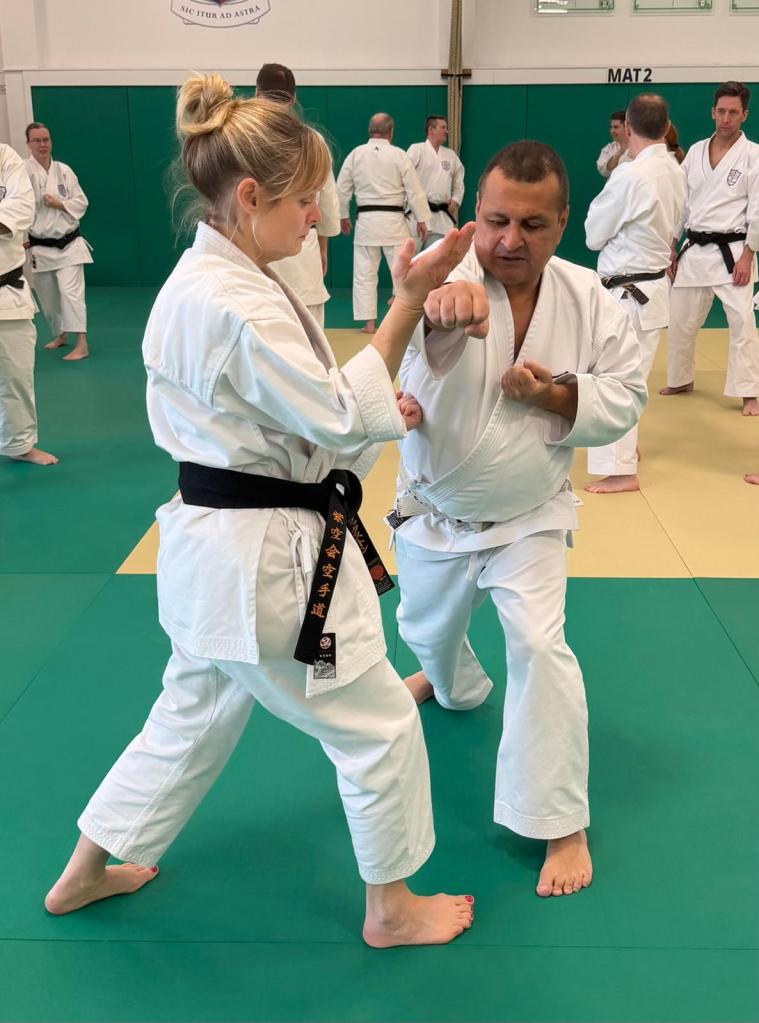
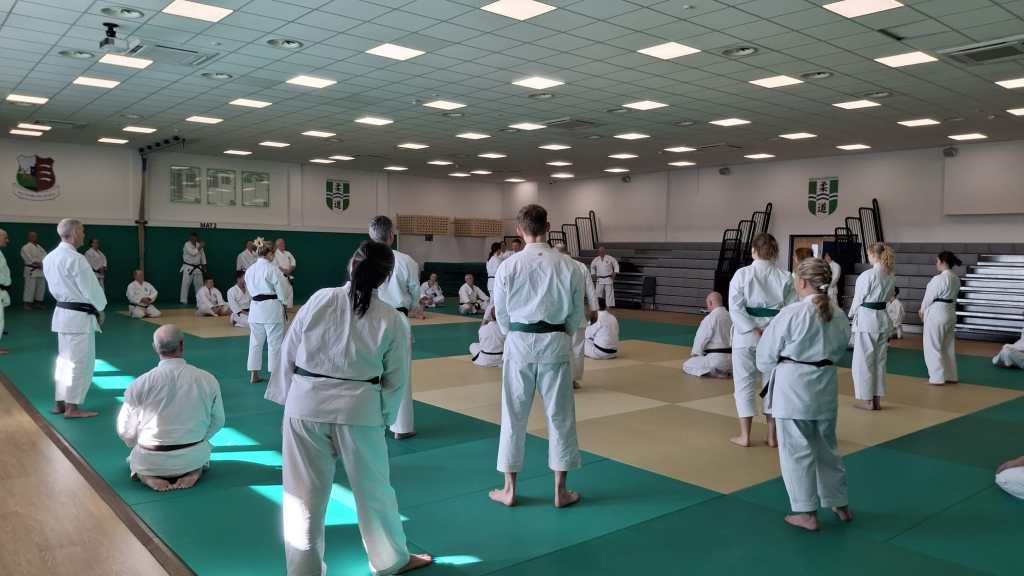
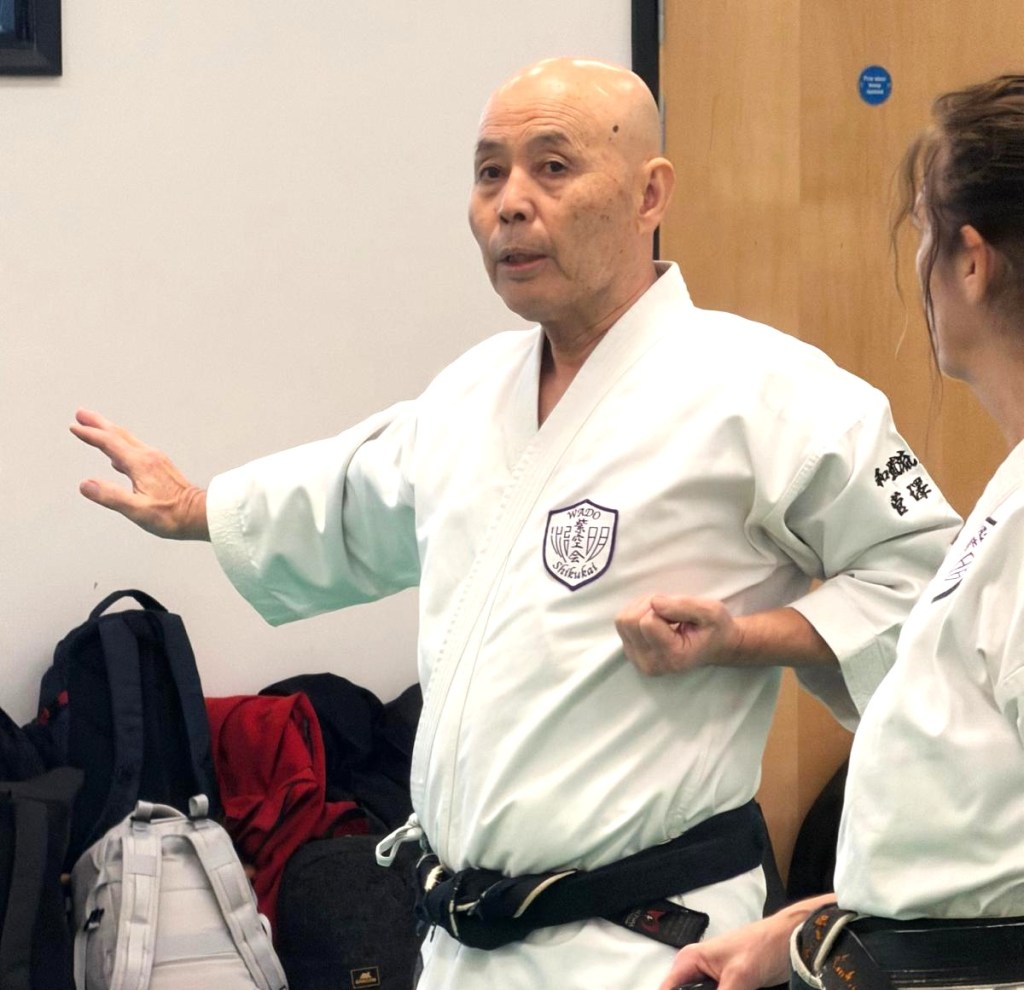
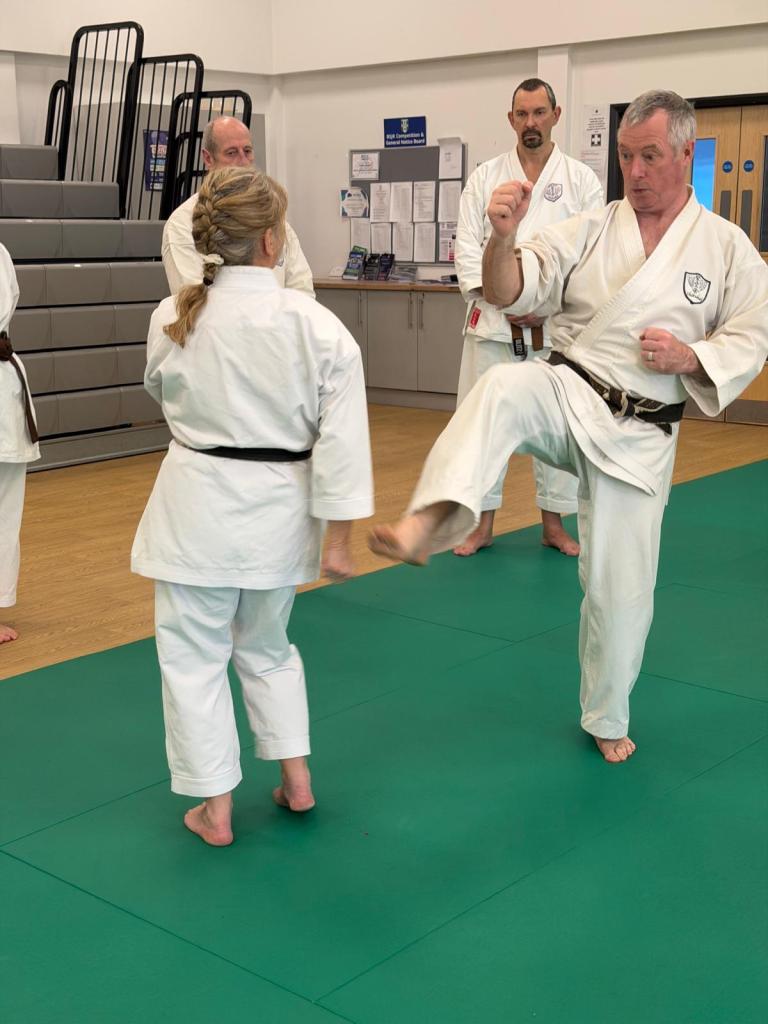
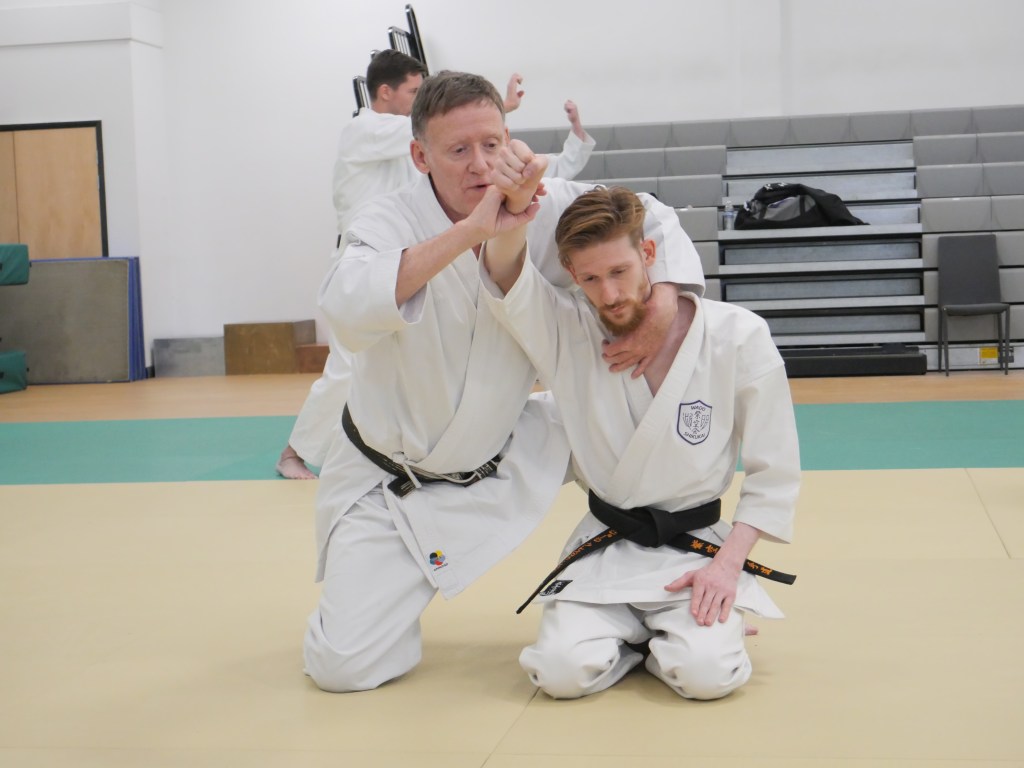
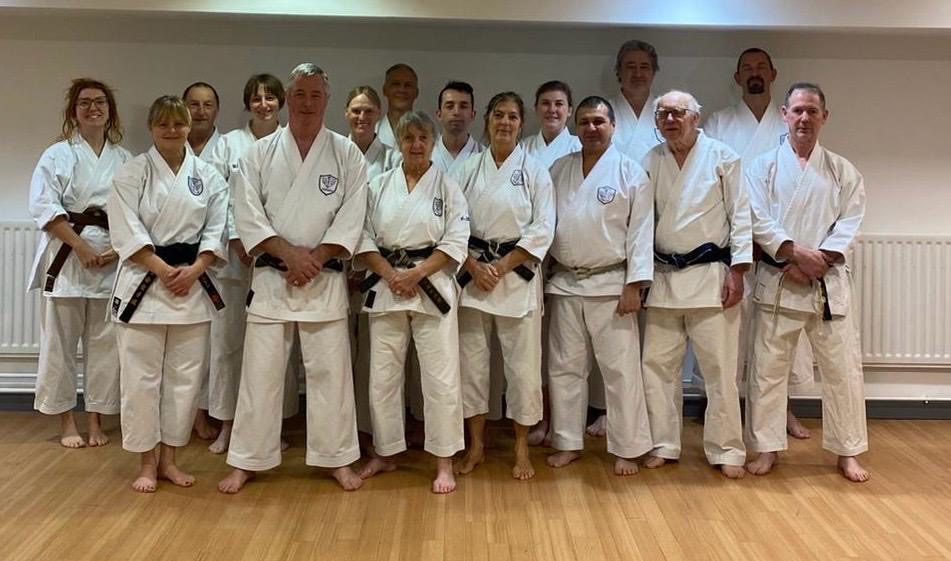
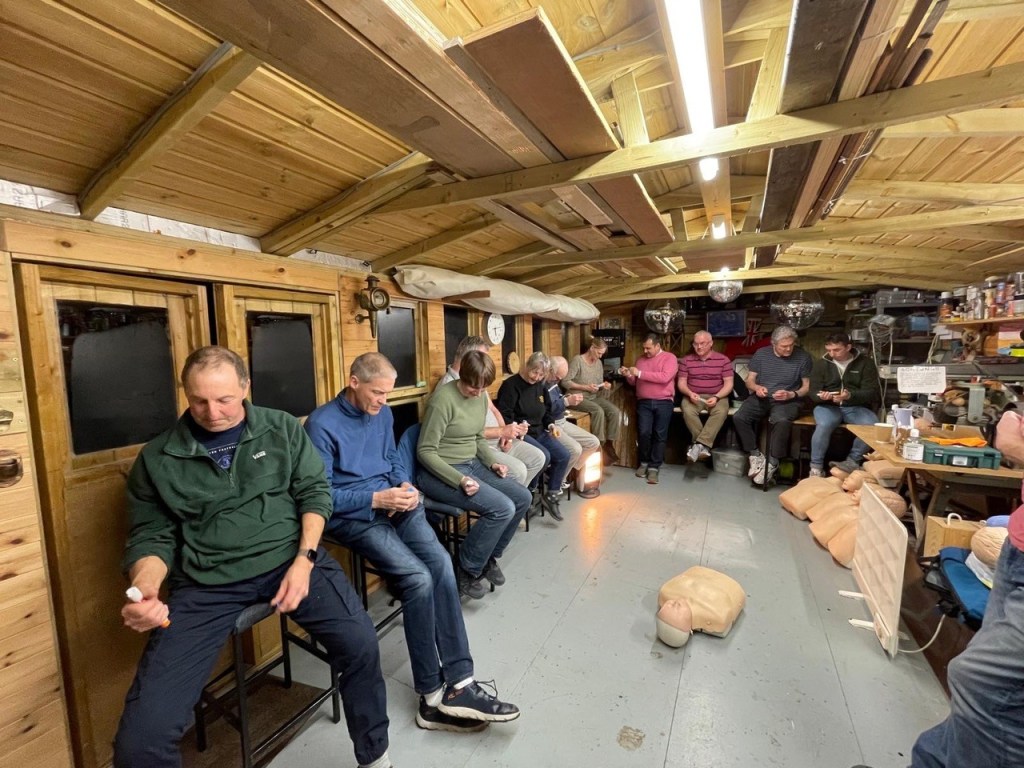
Saturday 26th and Sunday 27th September saw the return of Tim Shaw Sensei at Kishin Jyuku in Doncaster.
Having made the commitment to join Kishin Jyuku to Shikukai, this weekend was highly anticipated.
We also welcomed Shikukai students Steve Thain and John Ebel. We were also delighted to have in attendance Tim Skinner and Nick Rudelhoff from Bury St Edmunds and Clacton, respectively. As students of the late Shinohara Sensei, they have been highly impressed with the Shikukai standard and organisation.
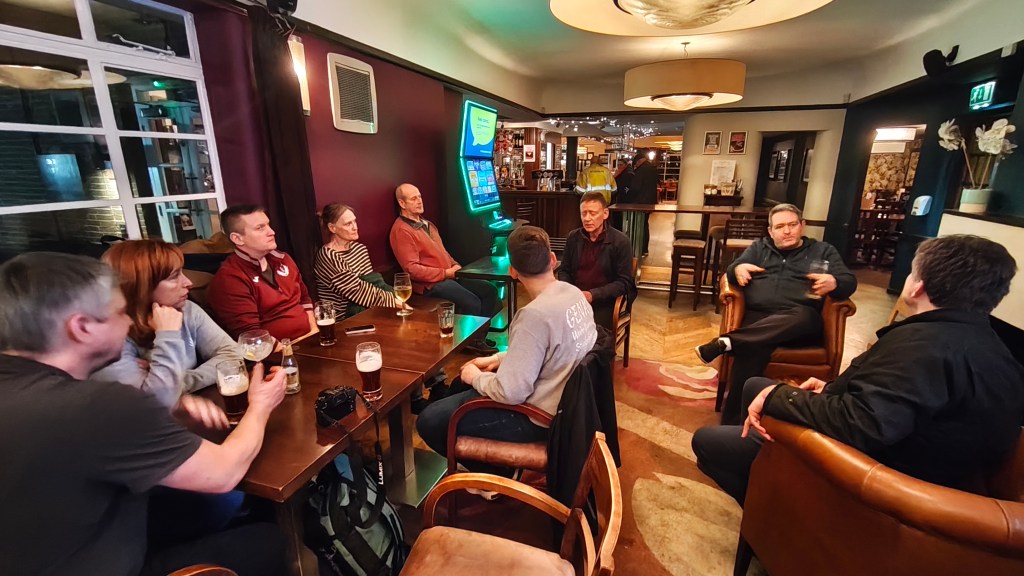
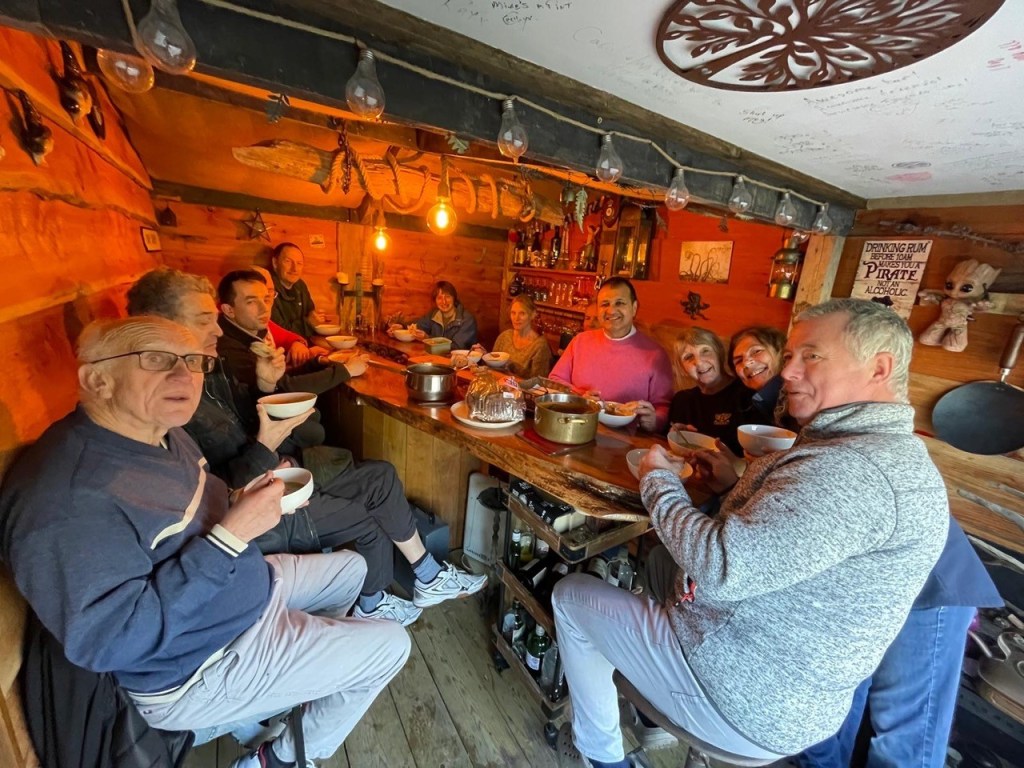
Saturday evening saw a superb example of Yorkshire hospitality, with good food, good company and excellent conversation.
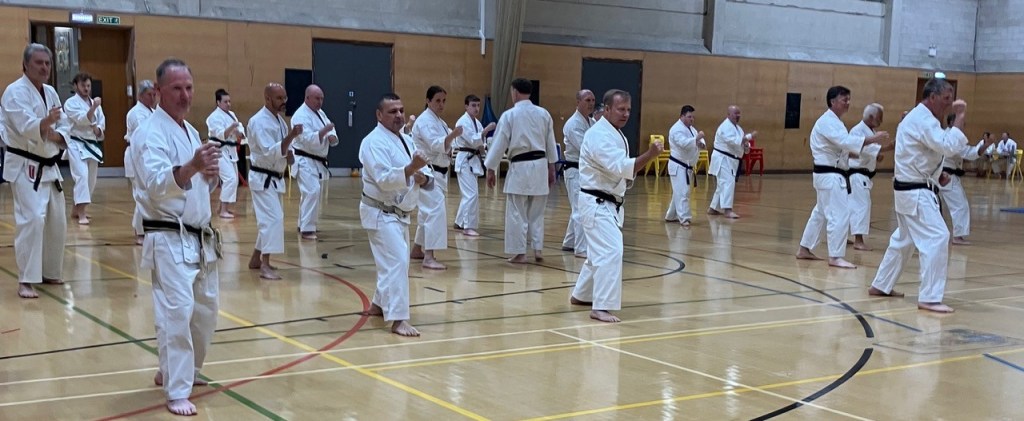
Sunday training began with an outstanding warm-up delivered by Steve Thain. The session then moved to a deep dive into Naihanchi. Suddenly the clock had beaten us.
The class concluded with a drill showing kata as form.
Kishin Jyuku are looking forward to our journey with Shikukai. We now eagerly anticipating hosting Steve and Pamela Rawson in November, as they return to their ancestral home.
Once again, a massive thank you to Tim, Steve and John for making the weekend so memorable.
This year’s Shikukai course in Bretton was extra special as we had the privilege of meeting and training with Tony Moore, the Shikukai representative from Australia, as well as students from Holland and the Czech Republic, and almost all of the top-tier instructors from the UK. Although unable to attend in person this year, we also had the benefit of Sugasawa Sensei’s insightful guidance and inspiration through the course via video link.
Training in Shikukai is founded on the understanding and correct use of the principles that underly technique and movement. These were first demonstrated by senior instructors and then put into practice by all under their close supervision.
We started with paired kata practice, going back-to-basics to make sure we practiced with the necessary seriousness, realism and continual awareness of the partner. While these qualities are somewhat intangible, they are readily apparent to an experienced instructor. With so many people training on the course this year, we had a great opportunity to work with different partners. This highlighted the importance of adapting to the different challenges posed by each partner while applying these principles effectively. By the end of the first day, we had practised only two of the kumite forms, which highlighted just how much depth and detail is contained within the paired kata.
The second day included a study of Seishan kata, covering some of the finer details of this important kata. Special attention was given to the origin of the movements (from the hara or core), and links were made to movements in the paired kata from the previous day. During the practice we were reminded of Waza no San Aku, the three elements that must be avoided (mudana waza, mudana chikara, and mudana ugoki), which Seishan kata is particularly good at highlighting.
The time seemed to pass quickly and we soon reached the end of the course when two students took advantage of a special grading opportunity, with David Vlk, lead instructor of Shikukai in the Czech Republic, attaining 4th Dan. Congratulations to him on this achievement.
As well as the training, Shikukai courses provide a chance for all to socialise, and this year was no exception. Food and wine, local scenery and possibilities for afternoons out are all excellent in this region and full advantage was taken of the beautiful weather this year.
Many thanks to Steve Chamberlain Sensei for being such a great host (and Mary of course) and for making the course possible. Same time next year? Can’t wait!
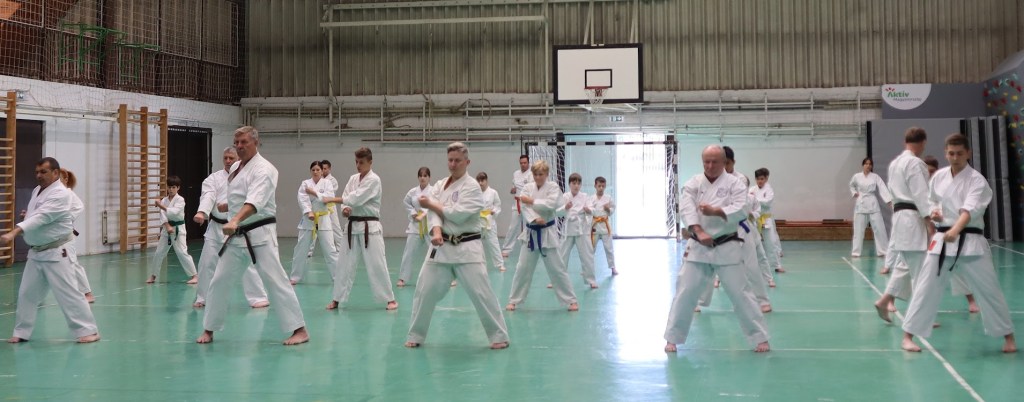
While the UK sweltered in yet another heatwave the Hungarians carried on with business as usual. In fact, the temperatures over there were quite benign compared the ‘Phew wot a scorcher’ Brits have been living through. All of this was good news for a demanding training programme across four days.
The course has been deliberately scheduled so that if anyone just fancies a weekend away, sightseeing in Budapest, and some training, it’s ideal.
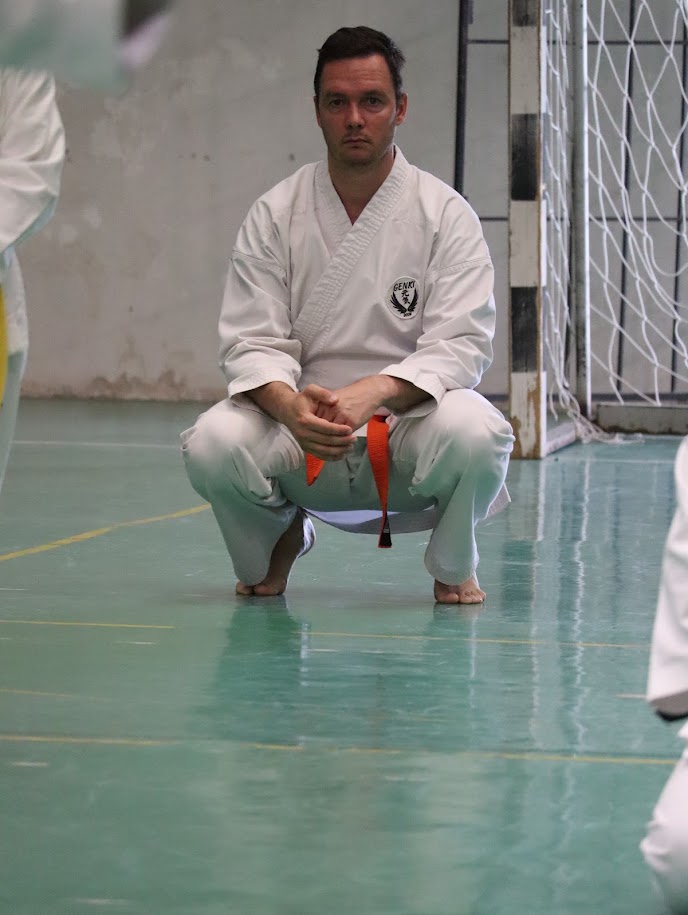
The Genki Dojo.
Based in Isaszeg (which is around 40km East of Budapest and easily connectable by road and rail) this is a family run enterprise with a real emphasis on youth. They have great successes in competition and hold the line in the balance between sport karate and a deep traditional study of the complexities of the Wado system. An act not easy to achieve in the current climate of specialisation.
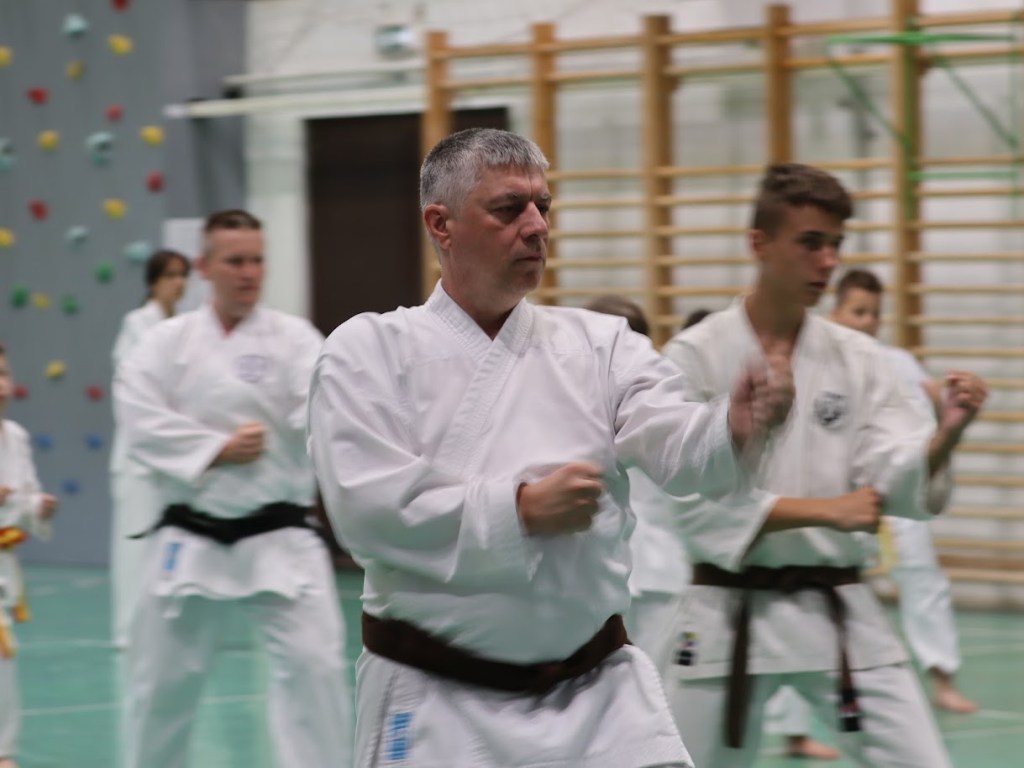
The training course is actually their summer camp, but for us visitors and instructors the focus is on the training from Saturday to Tuesday. For the rest of the week the youngsters continue to work hard towards final grading examinations conducted by the instruction team. It all runs like clockwork.
Training itinerary.
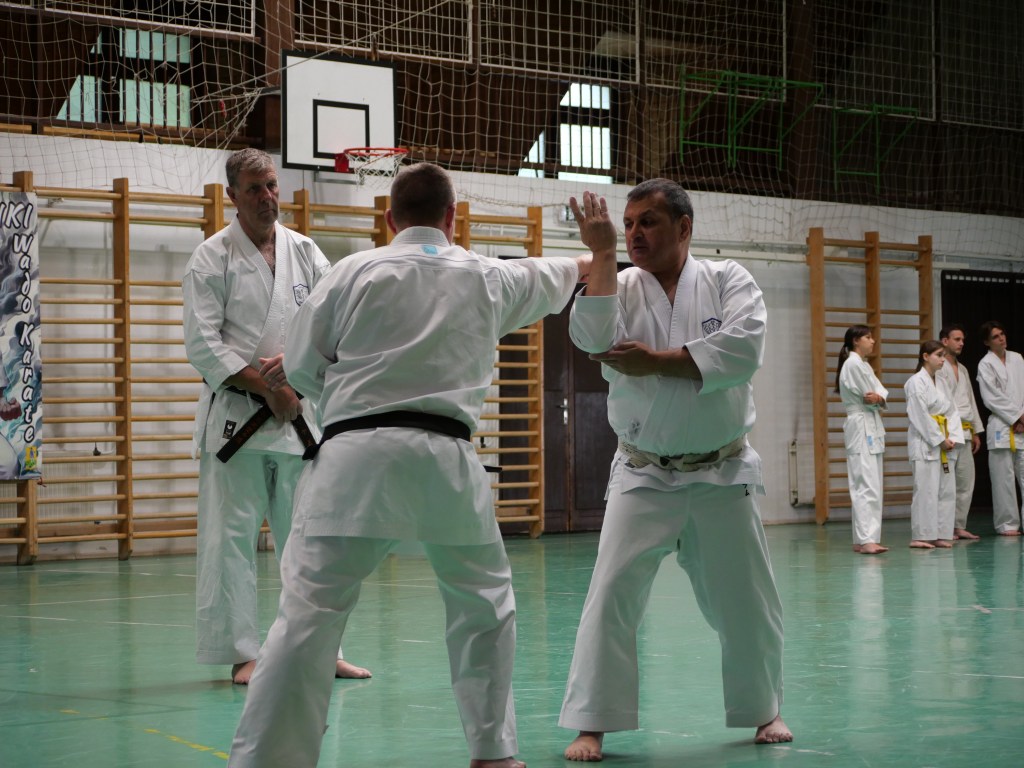
The training programme was designed entirely to reflect the needs of the students at all levels. This year I had put together an agenda constructed to hit these key priorities:
Training themes and patterns were intended to be differentiated so that lesser experienced junior grades could work alongside the more complex versions that the seniors were subjected to.
Key points and concepts that our chief instructor Sugasawa Sensei has been emphasising were underlined and explained in ways that were accessible to students at all levels.
The training reflected the most recent agenda items put forward by our chief instructor, in both face-to-face training and through his rather excellent regular Zoom sessions (available to Shikukai members).
With the exception of the first day (Saturday) the training all happened before the midday heat kicks in, with each class being three hours duration, with a break in the middle.
Brits.
Apart from myself, the course was attended by three Shikukai senior instructors; Richard Barham, Mark Gillis and Mark Troman, as well as Shikukai kyu grade Jan Crossman for whom this was his first visit to one of the Shikukai events in Europe.
The Genki Dojo team were impeccable hosts and made sure everything ran so smoothly.
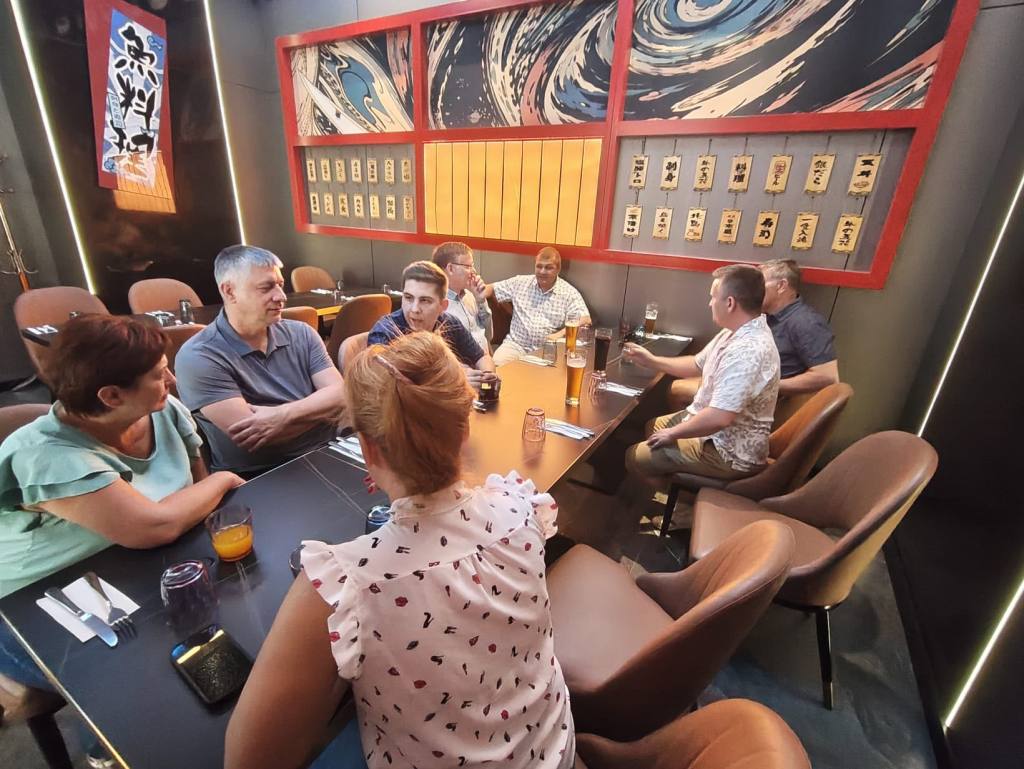
As usual, they surprised us with amazing restaurant experiences, saving the real joy for the final night.
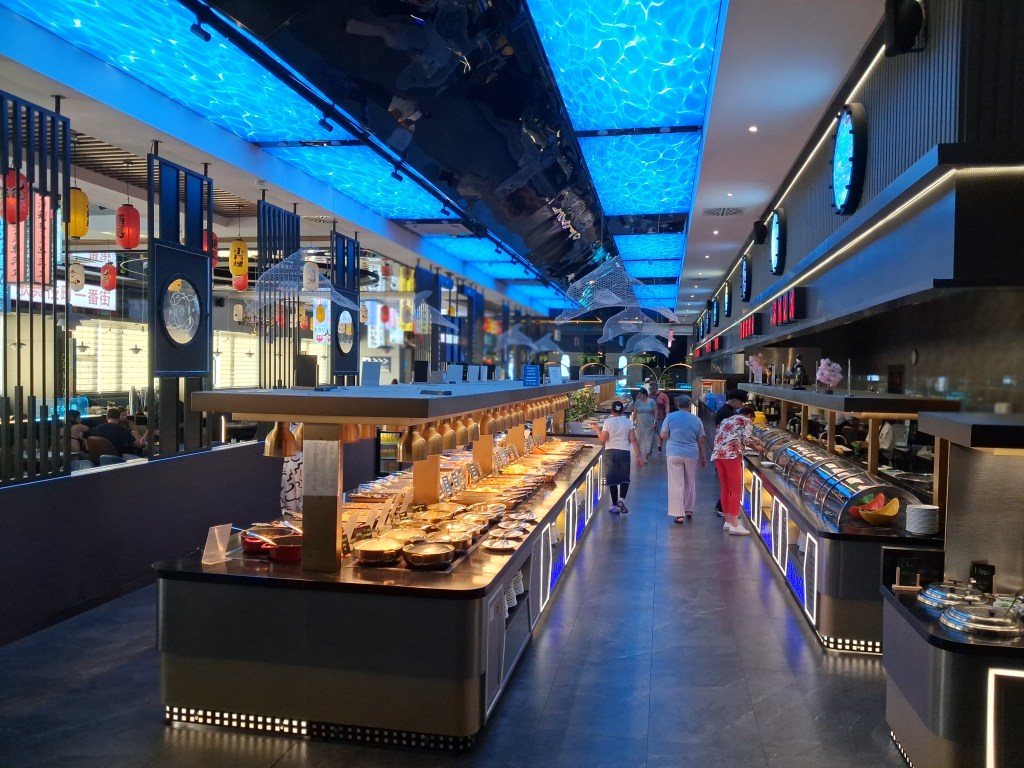
This was a place tucked away in a district of Budapest not really visited by tourists. It was a high-tech Asian-Fusion buffet, that had a close resemblance to what I would image you might find on a luxury cruise liner. It had the length of an Amazon warehouse with an impossible array of delicacies all beautifully presented, even food cooked to order in front of you, Teppanyaki-style. Nearly forgot to mention… included in the set price is your own beer tap! (other drinks available). Not something I could ever see working in the UK.
Visit to Buda.
On the Sunday evening our hosts took us into Budapest, up to the high part of the city, Buda, with sweeping views of the Danube, but crucially, for me, the location of the newly refurbed Hungarian National Gallery. I had been keen to visit the collection for a long time, this for me was the cultural cherry on the top. If you are an Art enthusiast like me, this is for you.
This turned into another restaurant evening, where we had the chance to experience delicacies that only the Hungarian imagination can bring together.
All finished rather too quickly.
The course wrapped up for us on the Tuesday, when the weather changed from a comfortable 28 degrees to a baking 35 degrees. But, we were getting used to it.
As a final word…
The Shikukai Hungary team at the Genki Dojo are really keen to encourage Wado practitioners of all affiliation to come along and experience the Shikukai model of Wado karate, and really want to build on the continuing success. These courses just keep getting better and better.
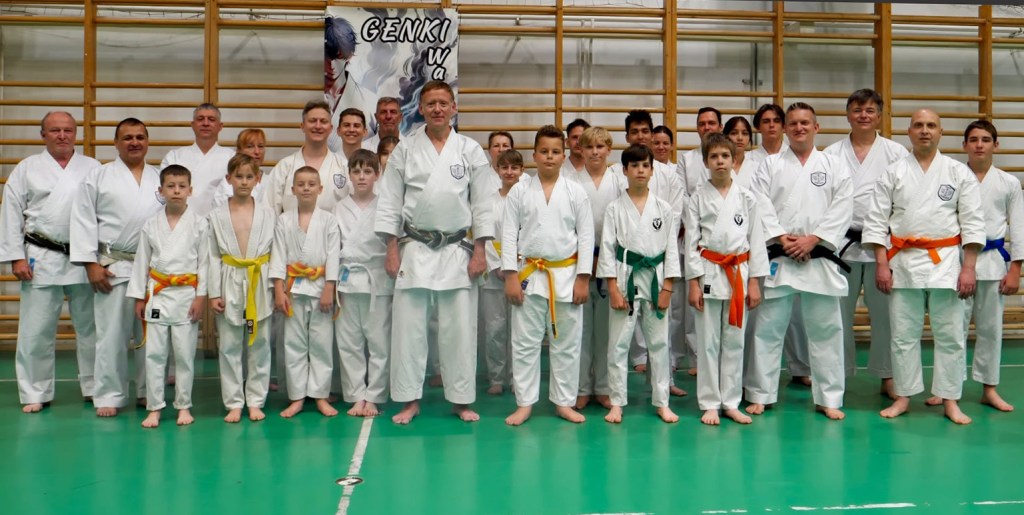
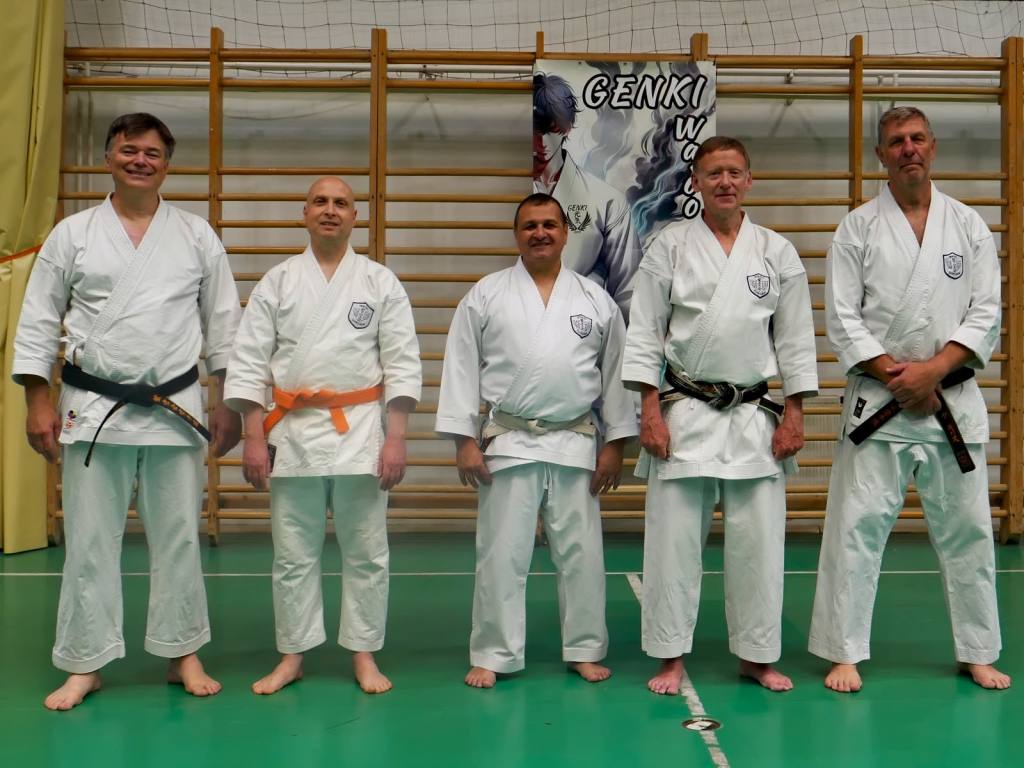
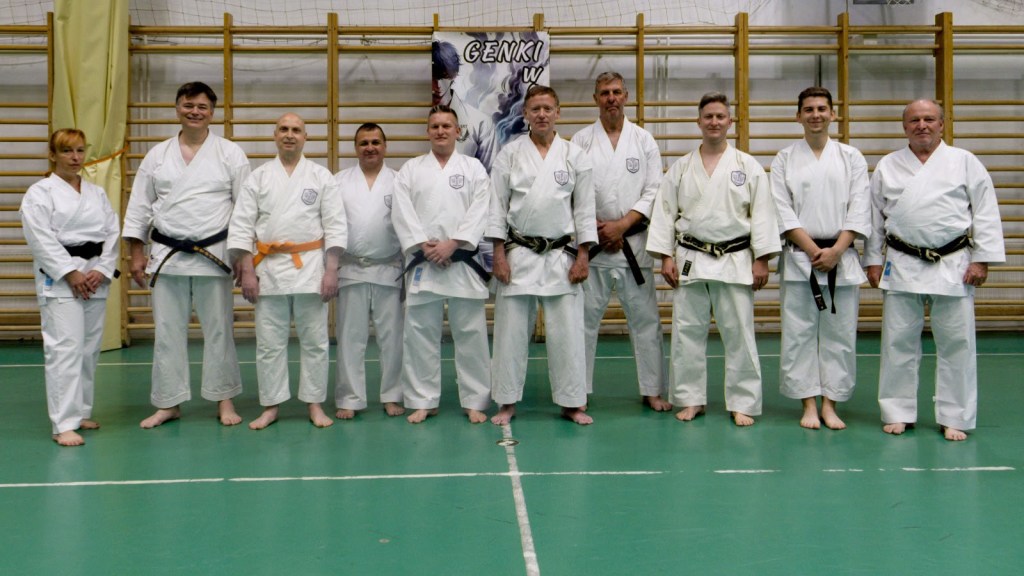
UK contingent and the Genki team.
Next years dates are already set at the 10th to the 13th July. Put it in your 2027 calendar.
My immense gratitude to the Genki team for yet another triumph and being amazingly generous hosts. I am also grateful to the Brits who came over, who were keen to work alongside the senior team and share their vast knowledge.
This year we were blessed with wonderful weather during the whole course. As last year, Sensei, Julie, Steve & Mary Chamberlain brought the sun with them when they arrived on Thursday, joining us for refreshments in the garden before going on to their accommodation. Thursday is a Club training night for us and we were joined by Kiku Wa Jyuku student Andrew Skelton. Bob Wymer and the Norway contingent arrived later that evening, having enjoyed their long but uneventful journey. Friday afternoon we were joined by Kiku Wa Jyuku’s Carol and Meg Chatterton together with Kishin Kai’s Andrew & Fiona Genery after their long drive from Doncaster.
The Spring Course always attracts a good turnout and this year was no exception. As well as the usual attendees from the UK Shikukai Clubs, we welcomed students from Norway, Holland and Kishin Kai, Doncaster.
Friday evening was the start of the course proper, with Steve Chamberlain leading the warm up and initial hour of training. Sensei was keen that students practised correct hand movement and this was the theme of the evening. Steve Rawson and I continued the theme, with Sensei completing the session.
Saturday’s session was initially taken by myself, with the theme being Junzuki and Gyakuzuki movement. Under Sensei’s watchful gaze these movements were broken down and I had the “pleasure” of being the guinea pig to demonstrate the good and bad points of Gyakuzuki with the help of Sensei’s shinai! After a short break the students were divided into four groups,. Tim Shaw took the senior Dan Grades through Seishan kata, while Naihanchi was the kata of choice for the other Black & Brown belts. Steve Chamberlain and Bob Wymer took charge of the lower Dan Grades under the watchful eye of Sugasawa Sensei while Steve & myself took the brown belts. Richard Barham put the Junior Grades through the Pinan Katas. At the end of training, Sensei presented Astrid Schelen de Vries from Holland with her 2nd Dan Certificate. He also presented Kenbu Jyuku students Archie Warren and Lewis Higginson with their Shikukai belts, following their attainment of 1st Dan at last year’s Spring Course. The usual course photograph was taken.
On Saturday evening as last year, the seniors enjoyed a group meal at Rona’s Turkish Bar and Restaurant in the town which everyone enjoyed. The more energetic members extended their evening with music, dancing and beers in the local pubs, while Steve & I headed home for a bit of rest and relaxation!
Sunday morning’s session came round quickly. This time it was the turn of Steve Rawson to lead the training. Sensei wanted the students to practice core stability in relation to their kicks, so the lesson was dedicated to being able to balance on one leg and Kaeshi kicking. After a short break, Sensei used Steve R as his “model” – focussing on Gyakuzuki No Tsukkomi. Steve & myself took the 1st Dan and brown belts for Kihon Gumite while Tim and Steve C worked with the seniors on Kihon Gumite Ipponme under the watchful eye of Sensei. The juniors were taken by Richard and Steve Thain.
All too soon it was the final morning, and a meeting was held for the Instructors. Tim Shaw took this session which focussed on San mi Ittai Dosa. The two hours passed very quickly, during which time Showa Jyuku student Dave Fowler graded for 1st Kyu and was successful. Steve & I took the senior Dan Grades through some non syllabus pairworks while the Dan Grading candidates were put through their paces by Sensei Sugasawa.
All too soon, time was up and the hall was prepared for the Dan Grading. The following students were successful: 1st Dan – Andrew Skelton and Meg Chatterton (Kiku Wa Jyuku) 2nd Dan – Margaret Harris (Kiku Wa Jyuku) and Teresa Claxton (Showa Jyuku) 3rd Dan – Frank Parry (Zendo Jyuku) Congratulations to all.
It was decided to hold this Course in two parts; firstly there was a lot of content to cover and secondly the two different venues made it easier for students’ journeys.
Part 1 in January was hosted by Kenbu Jyuku at The Osprey Leisure Centre, Portland while Part 2 was held in March at The Olympiad in Chippenham and hosted by Kiku Wa Jyuku.
Around 25 karateka attended on each of the sessions, including students from Kenbu Jyuku, Kiku Wa Jyuku, Mushin Jyuku, Showa Jyuku, Zendo Jyuku and Seido Jyuku. It was explained to the students that Ura No Kumite are the forerunner and building blocks to modern syllabus pairworks and showing the importance of Seichisa 精 緻 さ (Precision) and Shogekido 衝 撃度 (Impact).
The two parts followed the same format, beginning with a short warm up and some basic techniques. Part 1 covered the odd numbers and Part 2 the even numbers, thereby dealing with all the 24 over the two sessions. The main advantage of having a large group of students from various clubs meant that everyone could work with partners of differing age, ability and size, ensuring the necessary adaptions had to be factored in.
Ohtsuka III released his video showing the 24 Ura No Kumite several years ago, and it was interesting to show the students how the various techniques relate not only to the Shikukai syllabus but also pairworks from various other syllabuses that have been taught over the years. The longer a student had trained, the more relevant this became.
Several students commented on having a “lightbulb” moment when they made the correlation between a particular syllabus pairwork to it’s building block from the Ura No Kumite. It is hoped that the course was able to get students to think a little bit “out of the box” in how pairwork is constructed and practised.
Steve & Pam would like to thank everyone for attending and for the effort and enthusiasm they put in.
Spring sunshine, but bitterly cold evenings, in both the UK and the Netherlands. But Ryanair and Dutch immigration held a couple of surprises for me, nothing big, just minor curiosities. To start with, the airline has gone totally digital now, no great shakes, but then the Eindhoven passport officials surprised me by needing biometrics, including fingerprints, but I wasn’t going to let it ruin my weekend.
The training.
It was indeed a packed itinerary. My teaching schedule was nine hours of Dojo time. Course organiser Martijn Schelen de Vries and I had got our heads together and set a loose agenda for the various workshops. Everything went pretty much to plan.
Friday.
As expected, the late Friday training was very much an in-house event. Many regular faces, veterans now of courses in the Netherlands and visits to the UK. All of this establishes continuity and growth.
Shikukai in the Netherlands has picked up even more new members and it was lovely to meet up with Ronald Rennes again and the seniors from his Dojo. Ronald goes back many years with Sugasawa Sensei and is keen to embrace the Shikukai methodology.
Friday featured very active working on depth of attack and instant reaction. Timing coming out of judging distance and rhythm of attack through sharply attuned senses. That way a simple drill can become really charged with powerful intent.
Saturday.
I had factored in a number of threads that were woven into the training and picked up at various points. Very recently Sugasawa Sensei had highlighted, if not a missing element, but maybe something that is too lightly skipped over. This was his insistence on the acknowledgment of ‘interval’ as related to timing in both solo kata and fighting.
We visited this on Saturday and Sunday where the solo kata focus across the two days was Pinan Sandan, which, in my mind, is an excellent vehicle, with its spaced intervals and continual changes of emphasis.
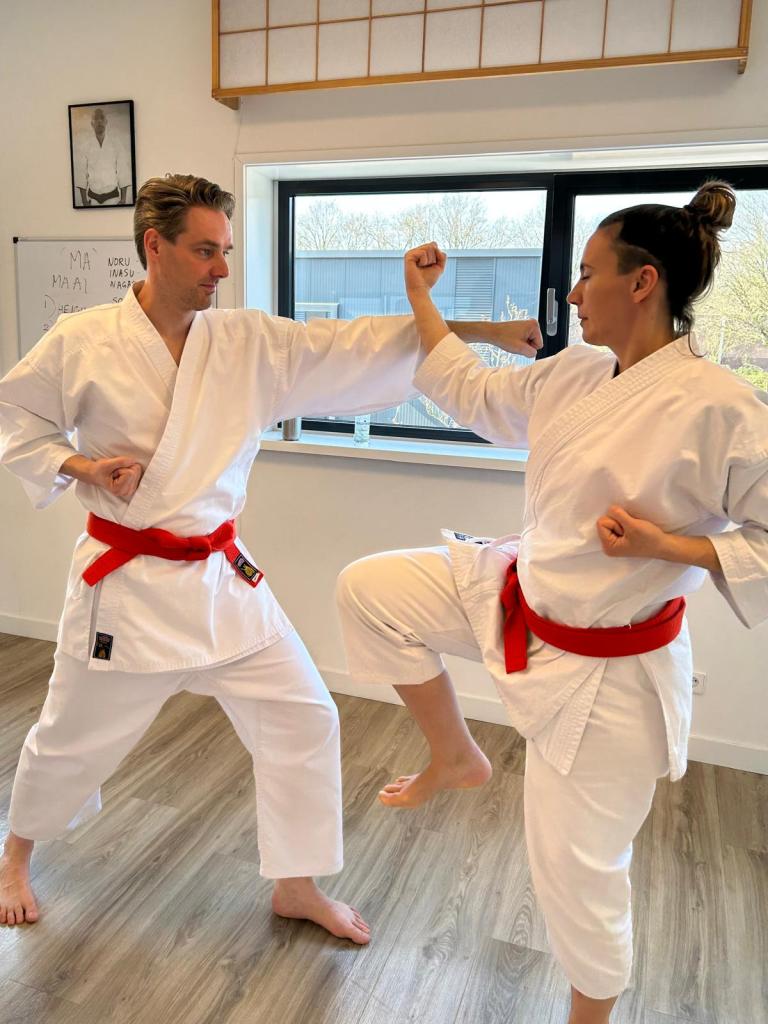
As is frequently the case, we inevitably went into the paired kata. The kumite gata needed a forensic dissection, because it is too easy to cut corners and fail to acknowledge what is really going on. (This came out of Martijn and I engineering it so that we were able to give further detailed feedback to the two recently successful Nidan candidates. We did this through reviewing a video of the grading and collected sets of notes – all really useful stuff).
Lecture PowerPoint.
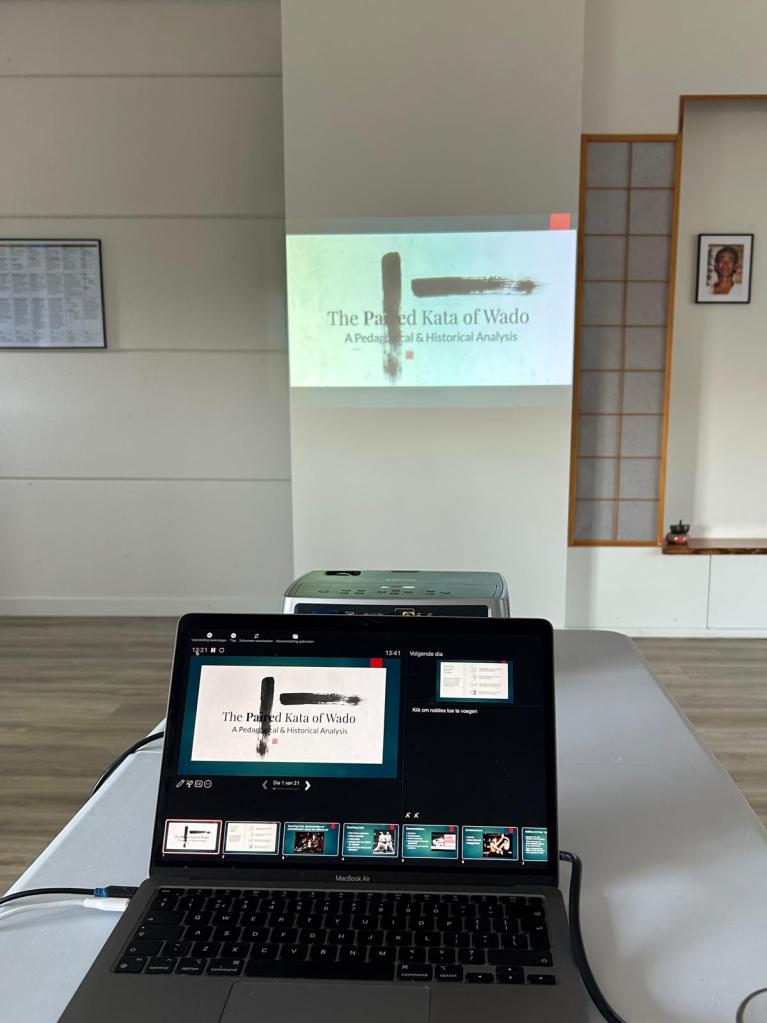
At the end of Saturday training, it had been organised for me to present a PowerPoint lecture explaining how the paired kata of Wado were structured, with the idea that students would gain greater insights into how it is supposed to work. This was well received and opened up a dialogue which hopefully dispelled some of the myths and assumptions floating around.
Throughout the training, I always work to present suitable challenges to the junior grades (I am aware that often this course get a little ‘top heavy’ with Dan grades). But on the Saturday they were able to experiment with the various options contained within the single flowing combination in the middle of Pinan Sandan.
Sunday training.
Sunday, the final day kicked off with a gentle lead into something that unfolded into a paired, coordinated drill that meshed the demands of simultaneous attack and defence. Difficult to describe, but it put the individuals in a position of safety then imperceptivity strayed into an area of jeopardy. All very safe but I like to think that some valuable lessons were picked up. Also, it was one of those drills that could be adapted to create other equally valuable variants.
Extra-curricular.
The weekend was not all about the sweat and toil of the Dojo.
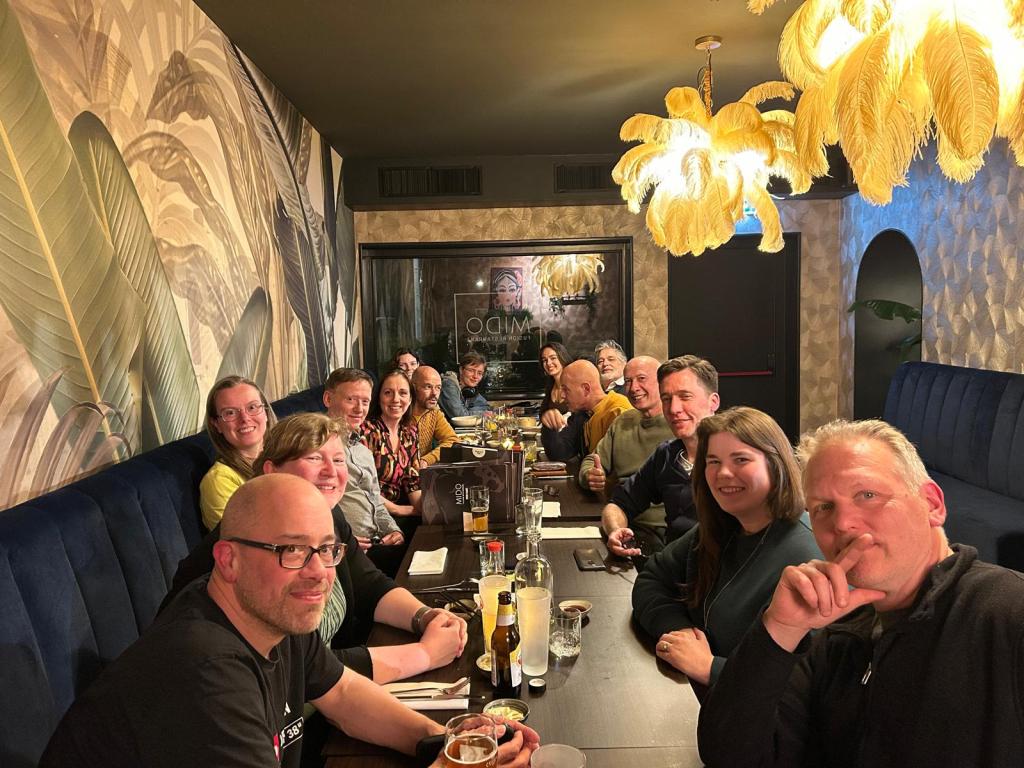
There was the opportunity for everyone to get together in a very well selected Asian Fusion restaurant, called Mido, in central Hilversum. The menu was a real surprise, made up of a continual roll out of rather excellent dishes.
As usual, across the weekend, everything was super-efficient, all put together by hosts Martijn and Astrid Schelen de Vries, to whom I am always immensely grateful. We have plans in place for another course for October later this year. Please keep and eye on the Shikukai website.
I have produced a set of support notes intended for the people who attended, and the mildly curious. These are to be published soon on, www.budojourneyman.substack.com
Just a brief comment from me to provide a little context to Andrew’s report (below).
I was trying to figure out when Andrew and I first met in a Dojo setting? It’s very likely to be around late 1978, or early ’79 at the old Doncaster Judo Club on Baxter Avenue, when the parents of Andrew and Suzanne Genery established it as a hub for Wado karate, and venue for courses for so many of the then resident Japanese Sensei in the UK.
Over the next four years or so I spent many hours at Baxter Avenue attending courses and squad training.
During lock-down, with all of those Zoom sessions, Andrew re-established his contact with the Shikukai organisation though his long-time bond with ex-Doncaster students, now Shikukai senior instructors Pam and Steve Rawson. It was on the back of this initiative that Andrew and I were to reconnect. This is now the third time I have driven the arrow-straight route from Essex to Doncaster, and I am really grateful to Andrew and all his students for their continual hard work and enthusiasm.
Tim Shaw
Report.
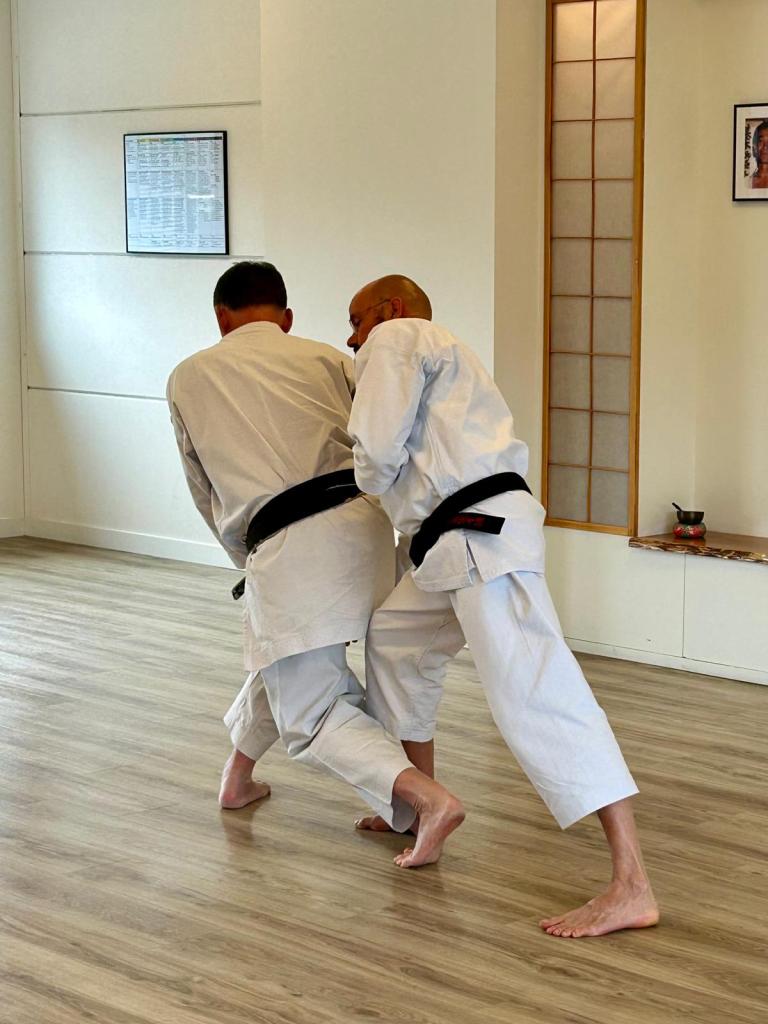
Sunday March 1st Kishinkai Wado Ryu welcomed back to the Doncaster Dojo Tim Shaw Sensei, aka The Budo Journeyman. Under Tim Sensei’s guidance we took dive into the Wado Ryu tool kit and looked at pair-work principles and Junzuki to begin ensuring the technique was performed as one move. This swiftly flowed on to looking at the correct focus of tension.
The session moved on to Harai uke and the principles behind the move, before progressing to applications and references back to kata. This was combined with naiwan (uchi) uke while defending gyakuzuki. These were put into partner drills switching the blocks from jodan to chudan. The paired drills started by taking a wider distance, to work on timing and correct techniques. The distance was reduced until it was at a minimum.
After a short break, the session moved on to kihon kumite 2 and 6. The key fundamentals were covered, including aspects such as Go No Sen, disruption, taisabaki and distance, as well as the importance of correct attacks. Thank you to Tim Sensei for sharing his vast depth of knowledge and the students who attended.
Andrew Genery, Chief Instructor, Kishinkai Wado Ryu Karate.
Running courses in the coldest season of the year is always a risk; you just don’t know what the weather is going to throw at you. The organisers always nervously eye the forecast. In fact, in all the years we have been running the Shikukai Winter Course in Essex, we have only had a couple of occasions where things became a little sticky. One for an unexpected fall of snow, and the other for a nasty seasonal storm which caused airport closures. But this year, we got lucky.
This was all good news because we were on target for topping our highest attendance for our annual seasonal Kangeiko (Winter training).
Location.
This is our second experiment with running the course in Bishop Stortford; which is looking like an ideal location, on many fronts. This includes, proximity of London Stansted Airport, the rail links and training located at two excellent venues across four days. All of this ticks so many boxes.
The train connection to London is very slick and at least one visitor from abroad took the opportunity to have a day in town (to catch the rather excellent ‘Samurai’ exhibition at the British Museum).
We had participants from Hungary, The Netherlands and France, as well as from the further north of the UK (Doncaster and Scarborough). With this being an open course, not all participants were members of Shikukai Karate-Do International. These courses are intended to inclusive and to engage with the wider Wado community, irrespective of politics.
The training.
All training was directed by our chief instructor, F. Sugasawa Sensei 7th Dan. The main drive of the training was put into the hands of the very able and experienced senior instructors, with Sugasawa Sensei picking up on the correct delivery of techniques and interjecting to ensure that everything stays on task.
According to Sugasawa Sensei, the three main course across the year (Spring, Autumn and Winter) are the opportunities to establish the core themes and principles and make sure everyone is fully onboard. For this particular course the overarching subjects for Sensei were to fully utilise our observational faculties; to be able to spot good practice (or even bad practice) and adjust our techniques appropriately; hence the junior grades were encouraged to watch the seniors very closely.
Sensei also wanted us all to constantly review where we had come from, ‘two steps forward, one step back’, to always revisit aspects of our earlier training, not assuming that everything is in place.
It is impossible to catalogue everything we did across the four days of training, as so many plates were all spinning at the same time. But, needless to say, there was a solid base of Kihon and solo kata, including Pinan kata, Kushanku, Naihanchi, Jion, Jitte.
There was time spent on paired kata, including for the advanced students, the bigger throwing techniques included in Kihon Gumite 5 and 10. This was made so much easier because the centre at Bishop Stortford was totally matted-out, so, in addition, we took the opportunity to recap on Ukemi waza, with the emphasis on safety.
In the extra hour on Saturday, students were given the opportunity to explore the kneeling defences of Wado karate, the Idori. This particular series included kansetsu waza and shime waza.
Extra-curricular.
There’s always time and space for getting together socially, with the visiting of various hostelries and eating establishments. Big thanks to Kelly Cavaciuti from Chippenham for securing an Italian restaurant on a busy Saturday evening (with it being Valentines Day as well) where many of the course participants met up and a good time was had by all.
On the subject of thanks…
Massive thank you for the Chelmsford team, captained by Steve Thain. This is for all of the many lifts, airport runs, venue to hotel runs; organising locations, timings, costings, catering (Alex and Jenny Clarke for the cakes) and so many other tasks which all go to make a successful friction-free course.
Senior instructors: Gratitude to Pam and Steve Rawson Sensei, Richard Barham Sensei, Rob Selby Sensei and Carol Chatterton Sensei, all freely and willing shared their combined decades of experience within the training.
Also, thank you to Sugasawa Sensei who continues to direct our progress, keeping a steady guiding hand on quality control and acting as a general inspiration to Shikukai members and supporting groups.
A last big thanks to the most important members of this shared enterprise; all of you who turned up to train. The equation is simple; ‘no participants’ equals ‘no courses’. Everyone is incredibly grateful for the success of this combined effort.
Saturday 10th January 26 saw the Shikukai Karate International New Year training for all students being hosted by Kiku Wa Jyuku in Chippenham. Training was taken by myself and Pam Rawson Sensei 7th Dan. Sugasawa Sensei had to send his apologies due to him recovering from an eye procedure that was offered to him at very short notice.
Once the formalities and greetings were over it was recommended that all students set themselves an achievable goal for the year. That could be anything from taking a Dan Grade, to learning a new Kata etc. – stressing how important it is to strive to achieve their goal.
Pam set the theme of the training to be Seichisa. She went on to explain what each Kanji meant and how when they are put together it translates into “precision”. The example given was don’t just punch at the Chudan Area but try to be as precise as possible down to the last mm of accuracy.
The first half of training was back to basics, Junzuki, Gyakuzuki etc but with the added difference of changing the striking point. This made students have to think about their stances whilst punching a different target area.
After a short break “precision” was still evident in a practical sense as the students then worked on grade appropriate Kumite Gata. The students were also encouraged to explore for themselves how important it is to be able to adapt to different opponents. This stopped them from being comfortable with the same partner as they always work with.
To finish, the students were shown a non syllabus Kumite Gata where the importance of timing was paramount.
Once Karate training was finished Club Instructors were invited to Foxham to undertake their annual First Aid Training. Refreshments were very kindly provided by Carol Chatterton Sensei 6th Dan. This consisted of soup and a very nice Rum infused fruit cake!
Carol’s husband Ian then spent the next three hours instructing in his unique way the now updated ways of performing CPR and other life saving skills. Competition was fierce for the box of chocolates with three students achieving 99% efficiency on the electronic Chest compression dummy. Ian congratulated them on how well they had done, especially as he recently taught at a Doctors surgery to have a GP attain only 79% efficiency. The course culminated in the group being split into two teams and having to work together on two casualties who were clothed, wet and requiring defibrillators to be located and used. His final piece of instruction was to Pam Sensei and telling her when using an epipen she has to be positive but not so hard it breaks the casualty’s leg, as the bruising on my leg shows!!!!
Once again thank you to Carol and Ian for hosting the Shikukai Training and First Aid Course.
People usually visit Prague in December to soak up the atmospheric Christmas markets – which are lovely!
However, December in Prague is a time that we look forward to each year to reconnect with our Shikukai Prague family and train under the expert guidance of Richard Barham Sensei focussing on the fundamental principles laid down by Shikukai.
As usual the course was held over three days with Friday’s training being exclusively for Shikukai members and focused on pair work. The main message for the session this Friday was about creating opportunity and space for a counterattack to execute kobo no ichi – the Wado model of offence and defence working in tandem.
On Saturday we focused on the principles of tsuki. Emphasis was placed on tsuki no san yoso (the three elements of, speed, koshi and weight). Attention was also given to eliminating waza no san aku (the three mudanas: mudana chikara, mudana ugoki and mudana waza).
The session seamlessly moved on to the practice of junzuki, sonoba zuki and then junzuki and gyakuzuki variants. Kihon kata was cleverly practiced to stress the importance of a good junzuki dachi. Here our intention was also drawn to importance of relaxation – Datsu Ryoku.
Saturday’s training concluded with Kushanku Kata. Rather than initially looking at the kata as a whole we concentrated on where our energy was generated from. This was a very useful exercise as it allowed us time to feel if we were connected to our hara, to notice if we were consciously eliminating the mudana’s or if we were leaking energy.
The last day of training came all too quickly. It was a culmination, a bringing together, of all that we had learnt on previous days. We were reminded about the principles of Junzuki dachi, tsuki no san yoso and the mudanas and were encouraged to absorb these principles in everything that we do.
In pairs, groups and then as a whole some observed others (mitori-geiko) as a way of enhancing our learning. This worked well because of the of essence behind Budo. Everybody worked as a team; everybody was encouraging and at the same time was able to give constructive criticism to help move learning on.
Many thanks to David Vlk and his team for allowing us to visit once again. Thank you for your support and for the chance to train with such a lovely group of people. Thank you for your friendship and for looking after us with transportation and for the very enjoyable hospitality in the evenings.
We are already planning our trip back
Sue Dodd
Some extra words from the host, David Vlk:
Once again Shikukai instructor Richard Barham (6th Dan) was invited to Prague for the Christmas course, accompanied by Mark Gillis (4th Dan) and Sue Dodd (2nd Dan). This is the third year they have come to Prague and gave us great support and an extra zest for practice. The course is of great importance for students in Prague who cannot attend Shikukai courses in the UK. We appreciate that the course is always tailor-made; just as a tailor measures a dress, so Richard checks and directs our karate practice according to needs. A good example is that we were asked to show our Junzuki movement without any specific instructions to start with. Richard then compared us to the correct posture and timing and gradually introduced elements of execution that he would like to see. These were not necessarily new messages, but sometimes I feel like when I say this to my group, they do not hear, but everyone tried their best in front of Richard, so it was actually nice to see. Time in Prague is not only about training. Gatherings are planned also in the evenings, in the beautiful centre of Prague, where folk customs must be observed. So there was a lot of drinking and laughing, and spending time together to enjoy the company. Well, the end of the course came very quickly and we are already looking forward to 2026, when we will be happy to invite Richard to Prague again for more training in the Shikukai way.