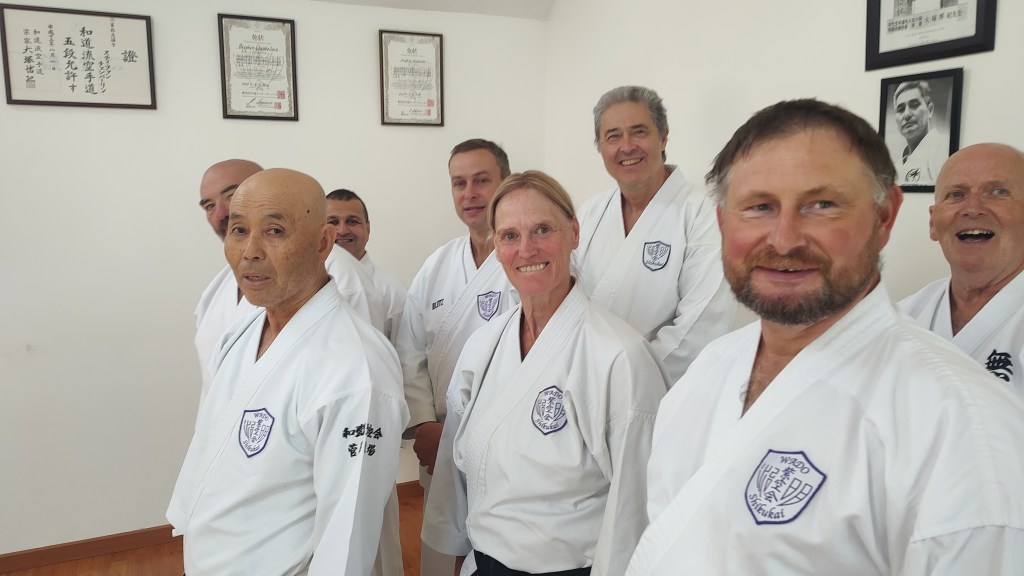
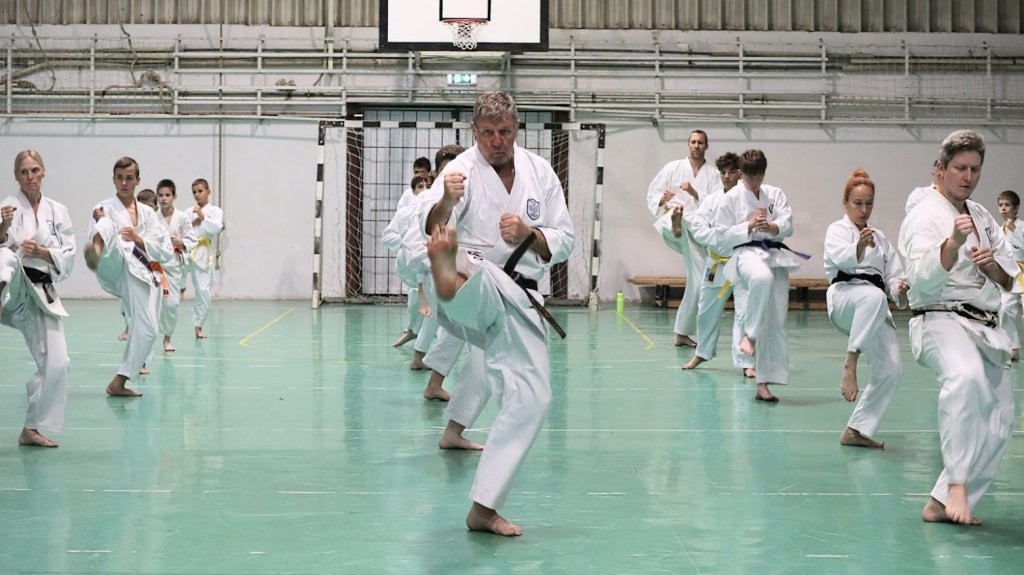
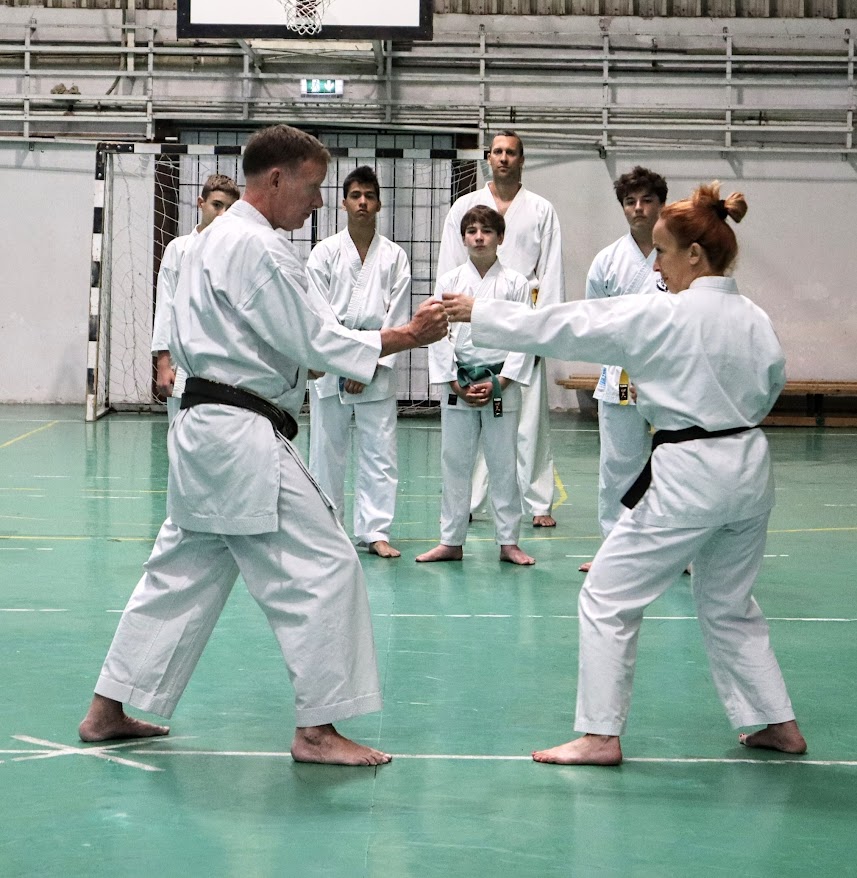
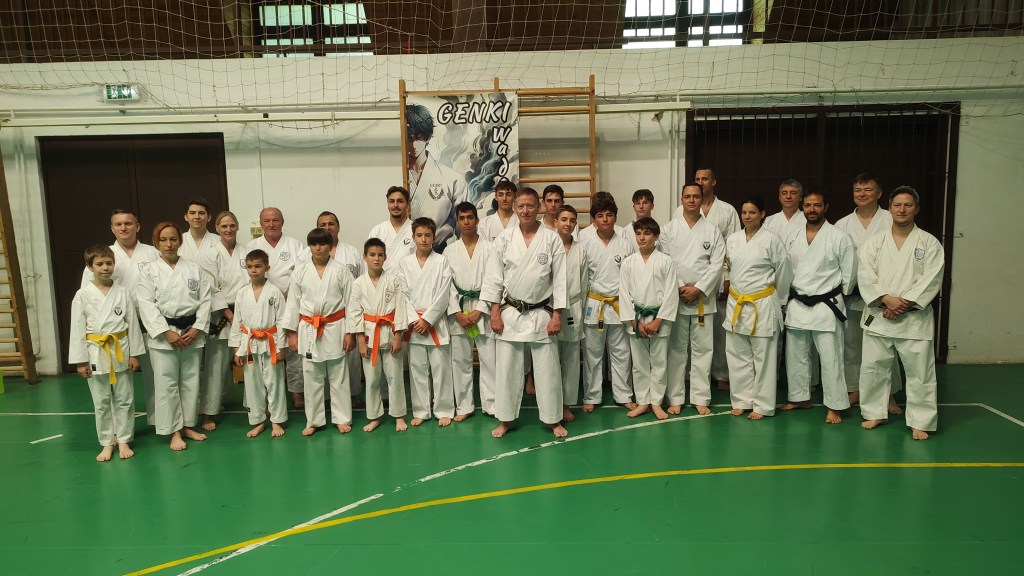
Report – Pre-Dan Grade Course and Mock Grading.

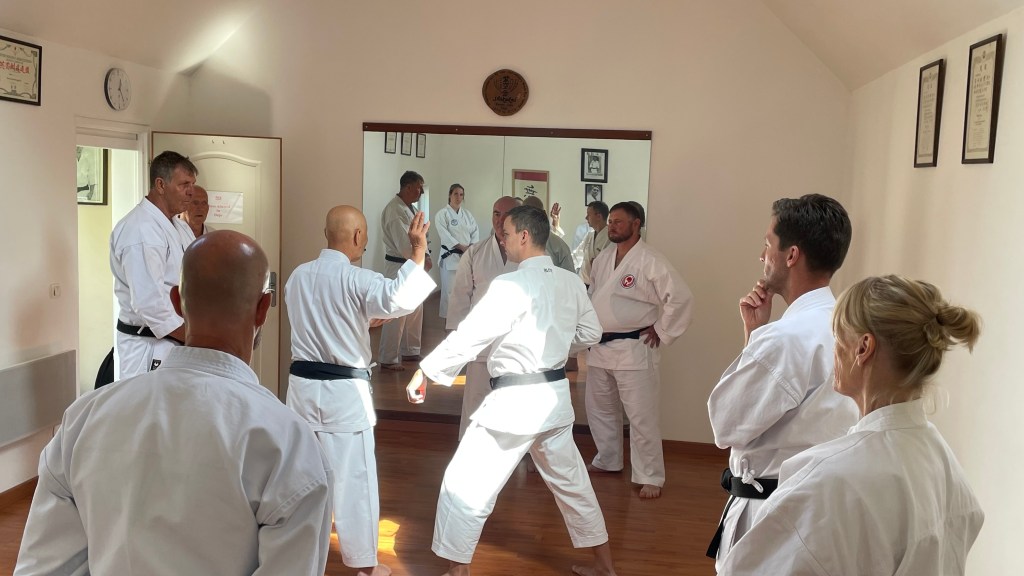
Steve and I always try to think of new approaches when planning courses and the
idea of a Pre-Dan Grade training/mock grading was decided upon.
We held it in two parts, at two different venues, so we could cover a larger content
and make travelling a bit easier for the students. Session 1 was held at The Osprey
Leisure Centre, Portland in January and a good contingent of students from the
varying Clubs took part.
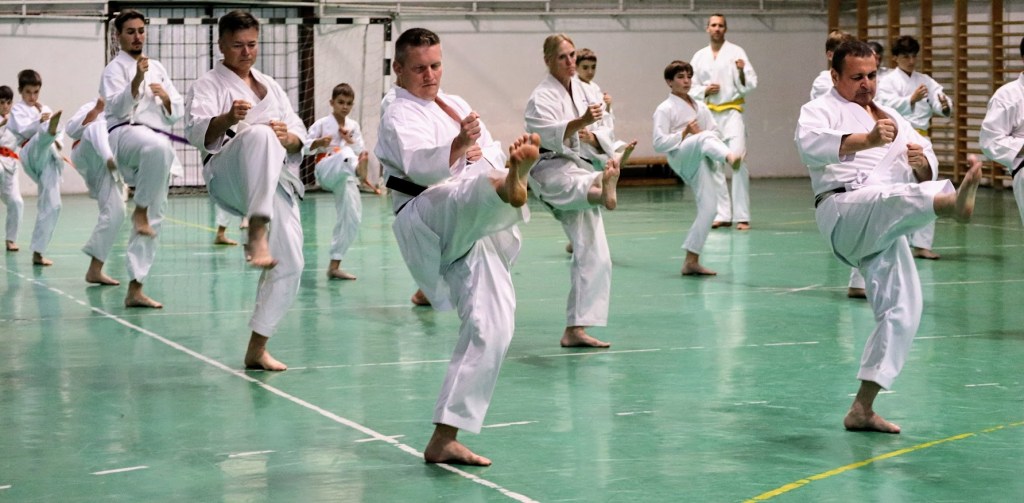
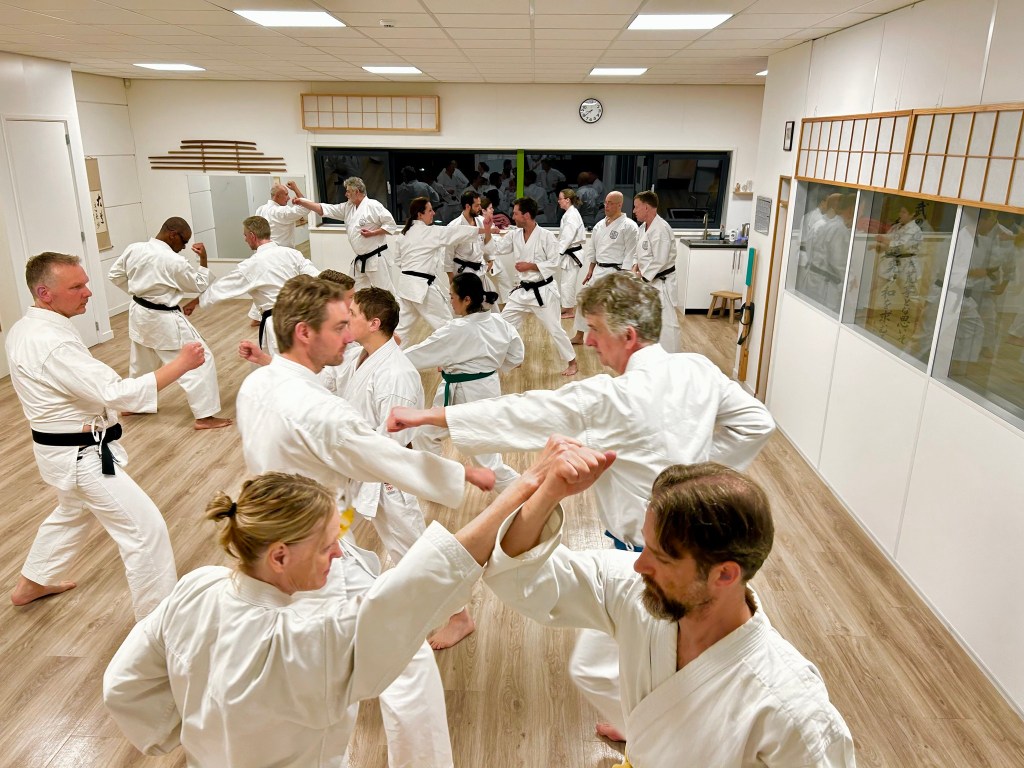
We decided to split the content over the two sessions. Part 1 covered all the Jun
techniques, including Tobikomizuki and Nagashizuki. After Shuto practice we went
on to Keri, this time focussing on Maegeri and Sokuto. As we had some junior grades
in the mix we covered some of the 5th/3rd Kyu Renketsu Dosa. We then went on to
Kata. Everyone trained in Pinan Shodan before separating into groups. Steve
concentrated on Naihanchi, Jitte and Rohai while I took the Seniors for Chinto. We
then went on to Pairs. This session concentrated on Kumite Gata Aigamae Soto/Uchi
and Kihons 1 to 3. They could then ascertain which areas needed the most work.
With Session 2 being two months later the students had the opportunity to work on
those areas in the meantime.
It was great to see a good turnout again at The Olympiad on 22nd March. Thanks to
Carol and Kiku Wa Jyuku for hosting. This time we focussed on the Gyaku
techniques, including Tobikomi Nagashi Gyakuzuki and Ayumi Ashi Gyakuzuki.
Kicks were Mawashigeri and Ushirogeri, followed by one of the 2nd Kyu Renketsu
Dosa.


We then went on to Kata, with everyone practising Pinan Yondan. The Juniors
continued with this practice, whilst Steve worked with the 1st Kyu and 1st Dans on
Kushanku and Jion. With a range of Senior Grades in my group, the students’
consensus was they would like to work on Bassai so this is what we did, with a final
run through on Wanshu. Next it was Pairs. This time the Kyu grades continued to
practice what they had covered in Session 1 while we introduced Kumite Gata
Gyakumae Soto for the Seniors and Kihon Gumite 8.
All too soon time was up and while the prospective mock Dan Grade candidates went
for a break, we held a Kyu Grading for two students from Kiku Wa Jyuku. Meg
Chatterton and Alex Watt were successful in attaining 1st and 2nd Kyu respectively.
During the break the students were given a selection of example Dan Grading
questions for them to discuss amongst themselves, before, the mock Dan Grading
commenced. This was a great opportunity for students to perform under strict
conditions alongside others from different clubs. Four students took the 1st Dan mock
exam – two from Ken Bu Jyuku and two from Kiku Wa Jyuku. It was then the turn
of three Dan Grades to perform the 2nd and 3rd Dan syllabuses respectively.
Afterwards all the participants were given feedback, ensuring they had plenty to work
on for the future. It was a really useful learning curve, both for those taking the mock
Grading, and for those spectating. Hopefully the students will feel the benefit when
they come to take the Dan Gradings for real.
Pam Rawson
24/3/25

Report – 2025 Shikukai Winter Course.

Winter is not everyone’s favourite time of year, but there has to be at least one shining light the other side of Xmas. We always hope that for Shikukai, the annual Winter Course provides some respite from the short days and the grim cold evenings.

This time, to shake everyone out of their complacency, we decided to shift the venue. Our thinking was that we had been getting too cosy over the last few years, and so felt a need to go out on a limb and upgrade.

Bishop Stortford is technically in Hertfordshire, but only just, (the Essex border is actually in the southern outskirts of the town). But what was crucial for us was the location of two first class training venues and the convenience of Stansted airport. In fact, a large group of us stayed at the Novotel Hotel at Stansted, and it was easy enough to cadge lifts to the venues, or even take a short regular bus ride from the hotel to the centre of Bishop Stortford.

Relaxation time at the Novotel Stansted.

The unofficial start to the Winter Course.

Following the pattern of previous years, we had organised for Thursday and Friday training for people who had travelled a long way to really maximise on their Dojo time. Across the weekend this all added up to a potential thirteen hours of training.

The training this time was at the very new and spacious sports hall of Hockerill College. The underfloor heating gave more of a feeling of July than February, but we soon learned to engineer some appropriate ventilation.

For these two (early) days training I was following a strict brief directed to me by Sugasawa Sensei. He was adamant that we should be securing a firm base in our Kihon and really hammering home the key principles. We found time to explore kata Pinan Shodan, as well as some of the Kihon Gumite.

Saturday and Sunday, the ‘official’ beginning of the course.

The main event was at the Bishops Stortford Judokwai,situatedat the Herts & Essex Sport Centre. This is a large, purpose-built, matted Dojo; a perfect space and surface on which to train.

The instruction team (other than myself) were; Steve Rawson Sensei, 7th Dan, Pam Rawson Sensei, 7th Dan, Richard Barham Sensei, 6th Dan and Rob Selby Sensei 5th Dan. Sugasawa Sensei came in on the Sunday offering specific guidance to the Dan grade candidates.

Richard Barham Sensei teaching the senior grades on the Saturday.

Shikukai students had come from all parts of the UK, but we also had contingents from Hungary, Czechia, France and a large group from the Netherlands.

Across the two days, kyu grades and Dan grades worked with the various instructors through relevant kata and kumite. Though we wanted to take advantage of the matted surface and had planned to include more technical content that involved nage waza (throwing techniques).

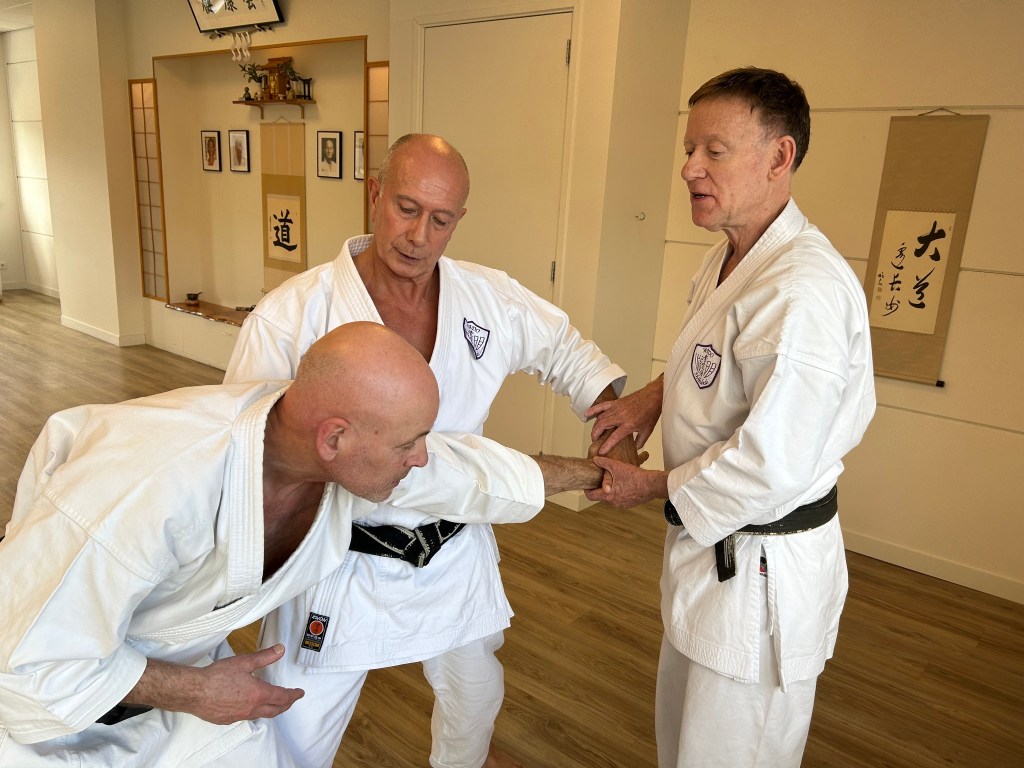
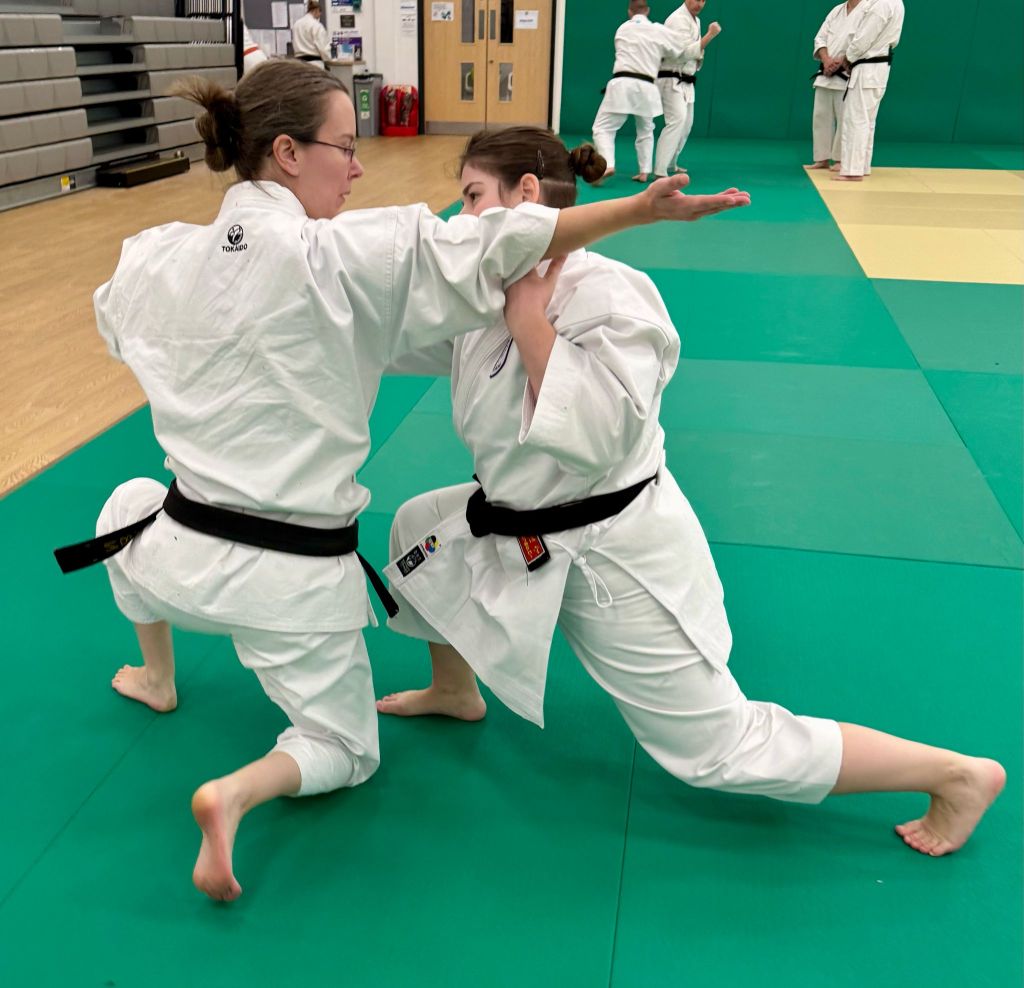
On Saturday Steve and Pam Rawson focussed the Dan grades on Kihon Gumite No. 5 and added extra throwing techniques to continue the theme.

Pam Rawson Sensei, teaching Kihon Gumite No. 5 to Mark Troman and Mark Gillis.

For the additional (optional) hour at the end of the day, I taught Wado Idori (kneeling defence) supported by specifically Wado Tehodoki (hand release method).

Development from Tehodoki.

Senior students from the Netherlands training in Idori.

All of these throwing techniques were conducted with safety in mind, and enabled students to train to their own level and build confidence in Ukemi.

Rob Selby Sensei inflicting pain on one of his own students.

This was reinforced on the Sunday when it was my turn to teach the Dan grades Kihon Gumite No. 10, which incorporates an over-the-top throw featuring a specific entry, sometimes referred to as Kinukuguri.

All weekend the main thrust remained with Kihon and the correct methods of movement and body mechanics. We were fortunate to have such high-level instructors, who go to great pains to explain the technical demands, characteristic of pure Wado methodology.

I am confident that the students came away with a wealth of knowledge and hands-on experience; enough to enable them to move forward on this difficult, demanding but rich journey called Wado Karate.

None of this would have happened if it were not for the inspiration of our chief instructor F. Sugasawa Sensei 7th Dan, and the supremely experienced and dedicated team of instructors teaching across the weekend.

But, spare a thought for the quiet and efficient engine running behind the organisation of the entire event. This was the few dedicated members of Shouwa Jyuku, Teresa Claxton, John Ebel, and Sue Dodd, (as well as the local connection who chipped in when needed; thank you Mark Troman), but all of it masterminded by the unflappable Steve Thain.

But… a massive thanks to everyone who turned up for the training. Without you, weekends like this wouldn’t happen.

Dan grading result:

Congratulations to Attila Jakab, Chief instructor of the Genki Dojo (Shikukai) in Hungary, for achieving the level of 4th Dan.

Remember to set your 2026 calendar for the same time next year.

Shikukai events are being added to the calendar regularly. Keep up to date by visiting: https://shikukai.com/courses/

Tim Shaw

Report – Netherlands Course November 2024.

I was pleased yet again to be invited to teach at the Shikukai open course in the Netherlands organised by Martijn Schelen de Vries through his Shikukai/Kenkokai Dojo.

This time I was lucky enough to be accompanied by Steve Thain 4th Dan, from my Dojo in Chelmsford. His presence there was really useful to help make connections to the way that Sugasawa Sensei, as our chief instructor, teaches and explains Wado principles and the Shikukai syllabus.

This event on the calendar seems to be going from strength to strength. The Dojo at Eemnes can only cope with a limited number, and across the three days we were very close to capacity (for future events places will have to be limited, so book early).

Martijn’s regular club members make up about two thirds of those attending, but we are getting an increasing proportion from the wider KBN Wado community. It’s true to say that people dip in and dip out, but a growing number are starting to return regularly now.

Course content.

As with all my courses, I plan the content well ahead of time, and always respond to prior requests. I tend to carousel through syllabus content in my twice-yearly visits. This time the kata element was focussed on Jitte (with Steve Thain teaching aspects of Pinan Sandan for the kyu grades).

Jitte is a tricky kata for Wado stylists to pick the bones out of – it is far too easy to find yourself drifting into flights of fantasy, or reverse engineering, but I tried to keep it anchored into secure Wado principles.

We also created time to give specific attention to students considering Dan grading through the Shikukai route.

The training was designed to pick up on particular themes and established a series of threads that ran across the weekend, so it’s always an advantage for participants to commit to the fuller weekend training.

Specific themes this time involved, enlivening the training of the paired kata to ensure that they were imbued with meaning and delivered the fuller agenda of what I call ‘Project Wado’.

With solo and paired kata Sugasawa Sensei has recently been stressing the concept of ‘Kobo no Ichi’, ‘Attack and defence are one and the same’. Students applied these in paired relays, and we looked at different modes whereby this might operate.

Netherlands hospitality.

Saturday evening saw us taking advantage of the bright lights of Hilversum; albeit a rainy night. But again, the Gorkha Nepalese restaurant provided a much-needed oasis on such a wet evening. Lively conversation, drink and excellent food made things just perfect.

The final day.

Sunday training started with pulling apart some of the Kihon Gumite. Again, a focus on the needs of those thinking of Dan grading. But the bulk of the training was an introduction to Ohyo Henka Dosa ‘applied variation method’. The emphasis was on free movement but hopefully to be able to employ the principles embodied in San Mi Ittai, the ‘three as one’, as in, working with changing the body position (relative to the opponent), changing the body shape/dynamic to enable the execution of technique from an advantageous position.

Ohyo Henka Dosa.

And then all too suddenly, it was over. An accumulation of eight hours of training across the weekend ended up on the right note, with a smile on everyone’s face.

I am immensely grateful to the organisers, Martijn and Astrid Schelen de Vries, and to the continued warm welcome from the wider Wado community in the Netherlands. I said at the closure of the course that this was a truly collaborative process and a two-way street in terms of teaching and learning. Much of it depends on the receptiveness of the attendees, and because of the quality and depth of knowledge already established I was able to pitch it at a very high level, a credit to the hard work and consistency of the Dutch senior grades.

Plans are already afoot for the next course in March, and Martijn has already put his requests in for what he wants to look at.

For anyone interested in the fuller course content, follow this link to the course support notes on my Substack project. https://budojourneyman.substack.com/p/support-notes-november-2024-netherlands

Tim Shaw

Report – Steve Rawson’s 50 Years of Karate Training Celebration.

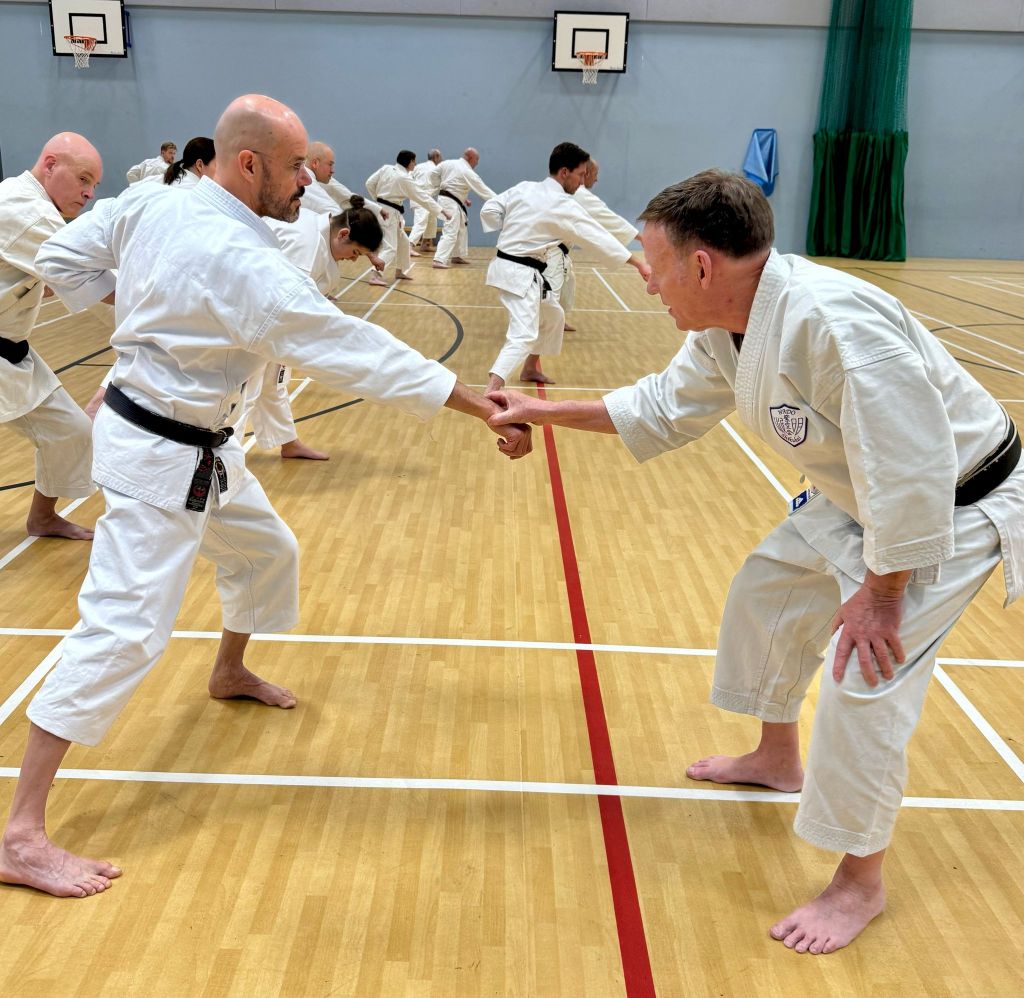
2024 marks the 50th Anniversary of Steve’s Wado karate journey and the decision was made to hold a special training session, bringing past and present students together, including friends and fellow karate-ka from the past 50 years, enabling us all to train together, as we used to.

Initial approaches were made to Arthur Meek Sensei, Andrew Genery Sensei, Rob Howells Sensei, Nick Quilliam Sensei and Leeroy Ellis Sensei to join Sugasawa Sensei and Shikukai members in this event. An open invitation was extended to anyone who knew Steve and had trained alongside him. It was decided to hold the event at The Olympiad Leisure Centre for two reasons, namely, it was easier for most people to get to, and this was the home of Steve & Pam’s Club for many years before they relocated to Weymouth.

Half an hour before training was due to start the hall became full with friends and karate-ka, many of whom had not put gis on for many years. It was very heart-warming to see so many people had made such a special effort to attend. Commemorative pens were handed out to all attendees.

After a warm up by Carol Chatterton, Steve’s long-time senior student, a group photo was taken, and introductions made. The plan was to invite several of the instructors to each take a session, following the pattern of Steve’s karate journey. Steve explained how and why he took up Karate at the Doncaster Dojo in Baxter Avenue with Andrew Genery and his late sister Suzanne. Andrew took the first session with a lighthearted and novel approach to attack and defence techniques which really got the students thinking.

Steve then explained how he had met Pam at the Club, subsequently getting married and having three children, all of whom went on to become Dan Grades. It was at this point that Steve introduced Nicky Hawker, who was the third member of the Ladies Kata Team with Pam & Carol who had represented their country at the World All Styles Karate Competition in Malaysia in 1994. Session two was taken by Pam who concentrated on various Kette Junzuki movements involving balance and working on the core.

Arthur Meek then led the next session, concentrating on Irimi, Kuzushi and Maai in pairwork. Steve followed on with pairwork, using the analogy that all three of his and Pam’s children are different in character and in stature. He then showed a simple pairwork using the same attack, but with three different ways of defending, by making subtle changes. It was now the turn of Sensei Sugasawa to take the final session, where he concentrated on the importance of Okori Taru Tokoro and abdominal breathing. The three hours passed all too quickly, culminating in presentations to Steve by Sugasawa Sensei and Andrew Genery Sensei.

A social gathering was held at The Dumb Post Public House in Bremhill, owned by Richard Board who had trained with Steve and Pam as a youngster until University days. There was understandably lots of reminiscing and poring over some very old photographs!

Pam Rawson
September 2024

Report – Breton 2024.

Annual training at Mumei Jyuku Dojo with Sugasawa Sensei and Steve Chamberlain Sensei.

It was the August Bank Holiday, so Shikukai members from four countries made their way by road, rail and sea to converge on a little town in the heart of Brittany countryside for what has become a highlight of the Shikukai calendar.

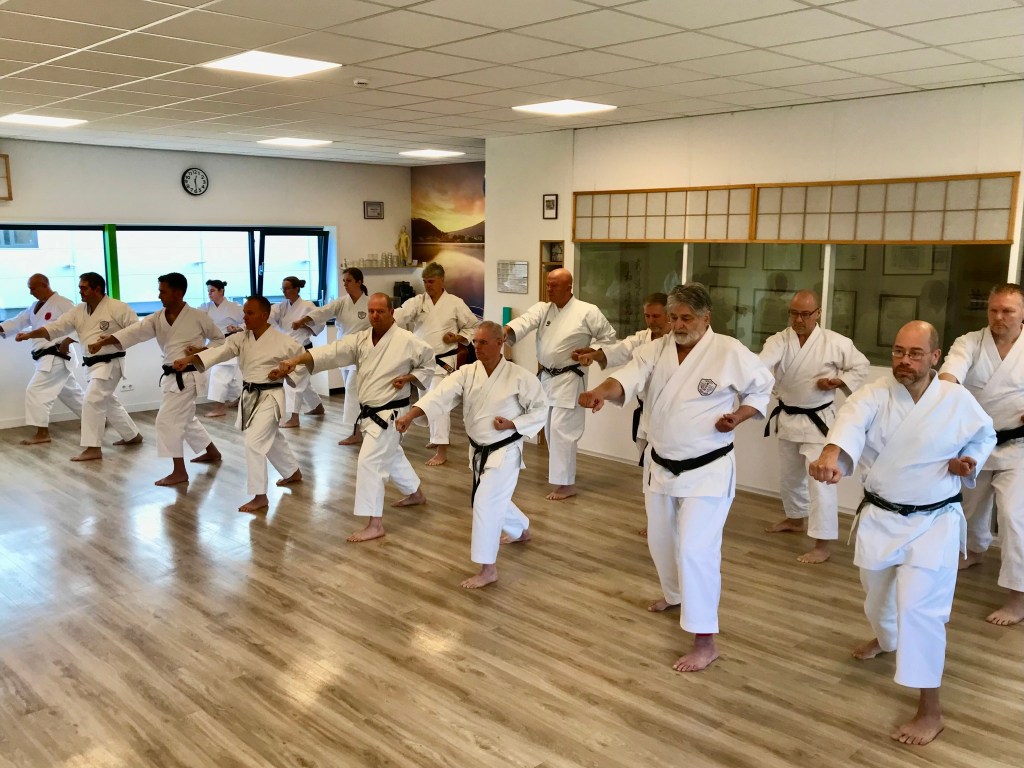
As the first training session got underway, it was clear from the outset that Sensei wanted to focus on fundamentals, explaining that these elements are an integral part of all that we do, irrespective of whether that is Kihon, Kata or Kumite.

Taking the core imperative of Tsuki-No-Sanyo-Sa, Sensei broke this down into several critical components including; controlled breathing, establishing a strong foundation through the correct distribution of weight and creating an effective koshi wo kiru (hip cutting) action, activated internally using neru (a muscular action similar to kneading). Neglecting the precise positioning of feet, knees, hips, elbows and head each had its own detrimental impact on the technique. We were deep into crucial details here.   

The challenge all of us face was to apply these principles in tandem and to full effect in everything we practise during the weekend, and indeed in our ongoing training. Now, the 4¾ hours of Day 1 may seem like a lot of time to spend on just five Kihon techniques, but actually it was not even close to being enough!

Day 2 included a brief review of individual performances of Pinan Yondan to see how well we were applying the lessons of the first day, before moving on to Kumite Kata. These are all familiar practices, but it was remarkable how much attention was necessary to correctly utilise the fundamentals. Nevertheless, most of us could now and then, perceive a tangible improvement in technique when several of the elements clicked together…and that is what we were there for.

A distinguishing character of any Shikukai course is always the camaraderie. With most of us sharing an apartment in the main town close to the training venue, we had the privilege of hosting a dinner on both evenings, making good use of the fresh fish and produce available locally. After dinner, we revisited a perilous dice-rolling game taught to us last year by the boys from Prague, where the unlucky contestant faces a shot from a chilled and frosty bottle of some mystery alcoholic beverage dubbed ‘the prisoner’.

All too quickly, we were saying our goodbyes and looking forward to the next opportunity to meet up.

A final word of thanks must go to Steve Sensei for inviting us to his dojo and for hosting yet another memorable course, and to Sugasawa Sensei for sharing his unique insight and guiding us in this fine art.

Richard Barham.
Sue Dodd.

Report – Hungarian Summer Course 2024.

If you Google ‘Hungary’ you inevitably land on a mixture of Wiki-style fact files or tourist sites. To my mind, none of these do justice to Hungary or the Hungarian people.

I have been going over to Hungary for quite a few years now; first to train under visiting Japanese Sensei, and then to teach courses in my own right. The experiences have always been positive.

This year, I was joined by Richard Barham 6th Dan, Mark Gillis 4th Dan and Sue Dodd 2nd Dan.

Our Shikukai representatives in Hungary are the Genki Dojo situated in the small city of Isaszeg twenty miles east of Budapest. Isaszeg is allowed to call itself a city, even though it has a population of only 11,000 people. (Compare the city of Chelmsford at 181,000).

The Genki Dojo is well-established and is the on-going project of the Jakab family. This is a Dojo with a youthful profile who do very well in competitions up to a national level and have a solid reputation.

This summer course was part of a week-long youth camp, culminating in a grading for the juniors. Our presence was only for the first four days of the camp, but it had also been organised so that visitors from abroad who just wanted to dip in for a weekend away could easily make it happen. For the UK audience this meant uncomplicated flights from the main London airports.

Yes, it was hot (our Hungarian hosts told us that they were in the middle of an unprecedented dry spell) but the heat was a welcome change from the kind of non-summer we have been enduring in the UK.

The training was organised to be in the cooler part of the day; and the sports hall was airy and well-ventilated; so, as long as we kept topped-up with fluids, it all worked well.

I was particularly impressed with the youngsters, who maintained solid concentration for the full three-hours training each day. The activities were differentiated to be as grade-specific as possible with such a mixed group. I kept it to the Kihon, solo Kata and paired Kata, format each day and we did seem to cover a lot of ground.

We also found time to work exclusively with the two most senior instructors and give advice and correction specific to their needs.

It wasn’t all about training. Our hosts introduced us to some very impressive restaurants, where the quality and variety across the menus were truly mind-blowing. These were places not necessarily known on the tourist trail.

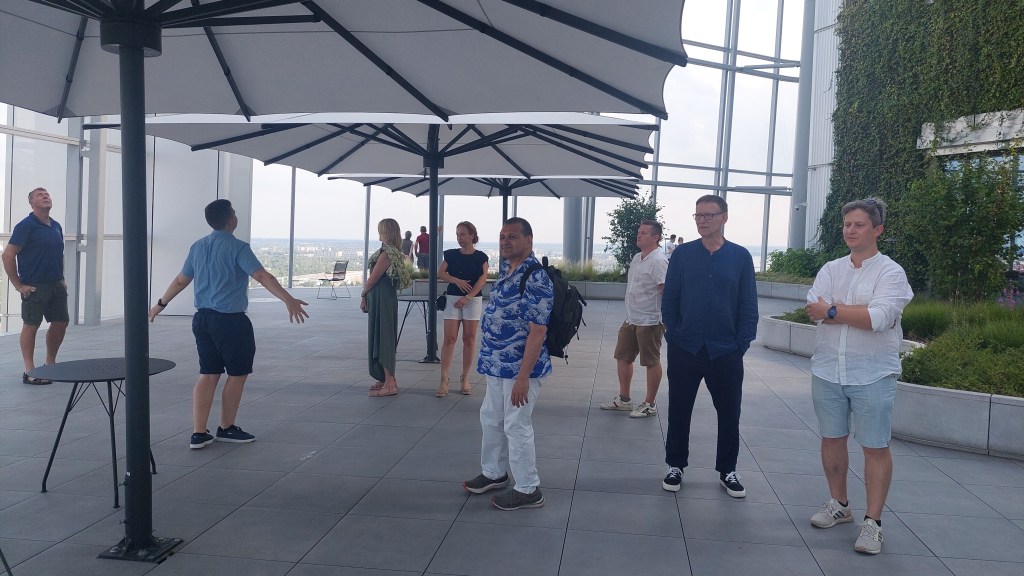
We were also given access to the Mol Skydeck, which offered amazing views across Budapest, showing the staggering vastness of the Danube River as it snaked through the centre of the city on its way to the Black Sea; this is Europe’s second longest river.

I was really pleased to have Richard, Mark and Sue on-board, their presence and influence acted as an inspiration and a positive example to the Hungarian students; I know that the youngsters in particular took motivation from the high level of skill and knowledge demonstrated by the UK Shikukai seniors.

We have plans to make this a regular thing and would welcome others to take advantage of this wonderful experience. Not only were we given insight into Hungarian life and culture, of the type not necessarily experienced by the regular tourist or casual visitor, but for anyone travelling on a budget, with Hungary being outside the Euro-zone, accommodation prices are around a third of the price of the budget hotels here in the UK.

As a final word; a special one-off dispensation was granted to Genki Dojo regular Eszter Dobai to attempt her Shikukai Shodan examination under the direction of Richard Barham Sensei and myself. We are pleased to announce that she now joins the ranks of the Shikukai registered yudansha after an excellent performance. A real bonus to the Genki Dojo and a great way to end the course.

I must also add that this was a course that was open to all Wado stylists and we were pleased to see the presence of Hungarian senior Wado Kai Sensei. Long may that particular relationship continue; definitely something we can build on.

A huge thanks to the Genki team and the family Jakab. Their hospitality and friendship are greatly appreciated by all at Shikukai.

See everyone next year!

Tim Shaw

Report – Shikukai Spring Course 2024.

Report by Pam Rawson

It is always a pleasure to welcome the Shikukai family and friends to Weymouth & Portland for the annual Spring Course and this year was no exception.

Planning for the event always starts the previous year, with the booking of the venue. This year, proceedings started early, with Sugasawa Sensei, Julie and Steve Chamberlain calling in to the Rawson residence for a spot of lunch and a pre-course chat. Following on from Ken Bu Jyuku’s normal training session later that evening, the Norwegian contingent arrived. Friday saw the arrival of students from across the country in preparation for the first training session that evening.

The theme of the course was ”Bu no Honshitsu wo Mikiwame” (Absorb the essence of Budo)

Friday’s session commenced with an opening speech by Sugasawa Sensei who welcomed and thanked everyone for attending, including Andrew Genery from Kishin Kai Karate and his student, plus the international students. Sensei’s message was that Karate should not be viewed merely as exercise, but a means to acquire knowledge and that “we were all in it together, no matter how hard it may seem.” An hour of basics followed, where the tiniest of detail was scrutinised, culminating in the students working in pairs to practice timing and distance. Sugasawa Sensei gave special attention to the potential Dan Grade candidates, which he continued to do throughout the course.

Prior to training on Saturday morning, Meg Chatterton ran a complimentary Yoga Class for students at a nearby venue. Donations were made to Pancreatic Cancer.

Saturday saw the four senior Shikukai Instructors, Tim Shaw 7th Dan, Steve Chamberlain 7th Dan, Steve Rawson 7th Dan and Pam Rawson 7th Dan take various groups under the watchful eye of Sugasawa Sensei for Kihon, Kata and Pairworks. On Saturday evening the senior Shikukai Club Instructors enjoyed a social meal and gathering at Weymouth’s prestigious sea-view Italian restaurant.

Sunday took on a similar format to Saturday with the senior Shikukai instructors leading various groups with Sugasawa Sensei overseeing the instruction and ensuring no details were overlooked. The 3rd – 1st Kyu group were particularly fortunate in receiving sustained and detailed instruction on Nai Hanchi kata from Sugasawa Sensei.

Monday began with a meeting for the Shikukai Club instructors where it was decided to hold the 2025 course in Weymouth & Portland. Training again was split into groups, with Sugasawa Sensei once more concentrating on the intricacies of Nai Hanchi kata. The senior Dan Grades were tested both physically and mentally with a Tai Sabaki drill comprising of many elements.

All too soon, the four days of training was over. Sensei closed the Course and thanked everyone for attending.

The formal Dan Grading then commenced with four students attaining 1st Dan:

Per Eide (Hoku Sei Jyuku)

Berit Lyngstad (Hoku Sei Jyuku)

Matt Kelly (Ken Bu Jyuku)

George Krethlow Shaw (Shouwa Jyuku)

Report – Netherlands Course March 2024. Tim Shaw.

I have been travelling across to the Netherlands now for around a decade; initially with Sugasawa Sensei but more recently to continue the support for Shikukai students who are now well-established within our organisation and continue to thrive through the hard work and dedication of Martijn Schelen de Vries.

Although it had only been a matter of a few weeks since we saw a strong Dutch contingent at the Shikukai Winter Course in the UK, there seems to be no lack of appetite for guidance and instruction. I am always happy to oblige, as the welcome in the Netherlands is second to none and the enthusiasm of the students at all levels is truly infectious.

Friday evening kicked off the training as we meant to go on. As usual I established my themes, but all in negotiation with Martiijn. I am always keen to respond to requests as it is really important that Shikukai students are kept up to date with developments and refinements of the syllabus – we tend to jokingly refer to this as ‘Operating systems updates’, (all directed by Sugasawa Sensei, of course). We find that these are essential, as the Shikukai syllabus and the continued fine-tuning, is an ongoing process.

The Kihon aspect of Friday training was an essential underpinning of everything that was to follow across the weekend.

Kyu grades were set the task of applying timing and distancing in operating two models of the dropping cover/block found in the syllabus; while the seniors worked Kihon Gumite and Kumite Gata.

On Saturday, we had a longer dedicated period unpacking the first part of the solo kata Pinan Godan. For some reason, in all the years I had been coming over I realised we had never been through this particular kata. To introduce the kata, I included broken-down aspects of individual techniques found within the form, and later on kaisetsu (commentary) regarding the implied usage of the covering/protective hands.

This was followed by the junior grades training in Nihon Gumite, while the seniors again explored the various Kihon Gumite and Kumite Gata.

Sunday: another three-hour session. This one was reserved for the kicking techniques, as found in the Shikukai syllabus; inclusive of variations on the back kick (ushiro geri). We also completed the remaining section of Pinan Godan.

Saturday evening; we had time to relax and unwind over an excellent meal, again at the Gorkha Restaurant in Hilversum. We had the opportunity to taste Nepalese wine (a first for me), I had never thought of Nepal as a wine growing part of the world, but apparently the vineyards are some of the highest elevated locations on the planet (2,750m/9,000ft); I’m not enough of an expert to know how that affected the wine.

We somehow managed to cram so much training in across the weekend, which, from my perspective seemed to be over before it began.

We already have plans for the next course in the Netherlands this year. A date in November is already earmarked, more details to follow.

For the next course, Shikukai in the Netherlands (Kenkokai) are keen to invite other Wado practitioners from the UK and Europe, but places will be limited, so get in early once the dates are announced.

For this course, I have produced a series of support notes which will be published on my Substack project, www.budojourneyman.substack.com

A huge thanks to my hosts Martijn and Astrid Schelen de Vries.

Tim Shaw

Report – 2024 Shikukai Winter Course, Essex UK.

Shikukai Karate-Do International runs three major courses every year; Winter, Spring and Autumn (see calendar page for details). These courses are open to all Wado karateka whatever their affiliation.

This year, as usual, it was our privilege to host our Winter Course in February in Essex.

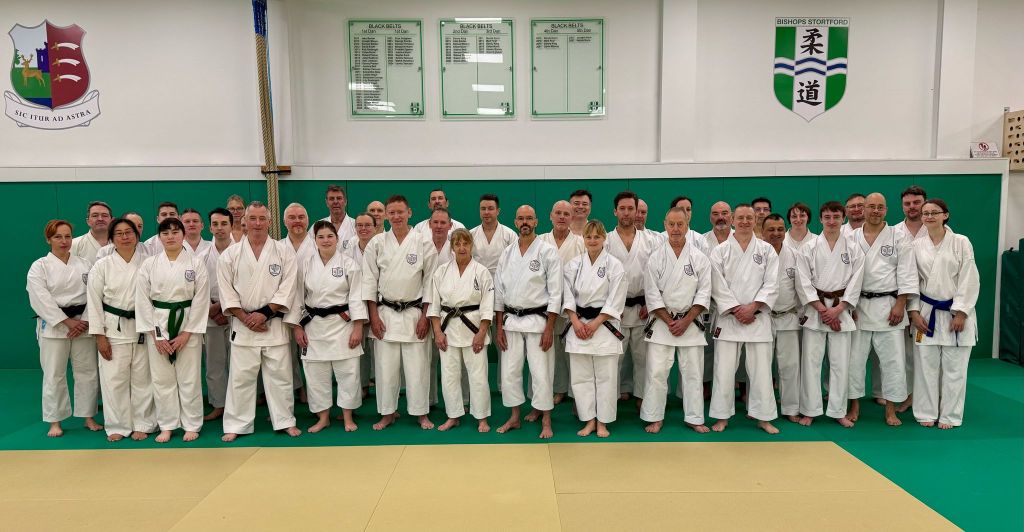
Long in the planning, the two-day official training was strongly supported by students from across the UK and the continent. The content of the course covered the fuller spectrum of the Wado karate techniques, as represented on the Shikukai syllabus. All of this was delivered by a strong team of senior instructors, who had carefully designed the delivery of technical knowledge and information, which I know was greatly appreciated by students at all levels.

As usual, there was an ‘unofficial’ start to the course; this was the additional Dojo time organised for those wishing to maximise the training opportunity, particularly those coming from far-flung locations. This took place on the Thursday and Friday at Woodham Walter. These sessions were designed as a kind of primer to the main training, specifically offering extra tuition to those who were planning on grading at the end of the weekend. This meant that the students had accumulated an extra three and a half hours of Dojo time before the course had officially started.

Across the weekend we were privileged to tap into the considerable knowledge of senior instructors Steve and Pam Rawson from Dorset, Richard Barham from Surrey, Rob Selby from Devon and Steve Thain, local instructor, from Essex.

In addition, on the Sunday, Sue Dodd and Richard Barham conducted the training for the younger junior members of Shikukai, with students from Woodham Walter and Hertford.
The themes across the training were rich and varied, but following strict guidance from Sugasawa Sensei, who was insistent that instructors and students paid rigorous attention to the absolute fundamentals of Wado karate.

In addition to essential kihon, we covered the solo kata of Naihanchi, Kushanku, Chinto, Rohai, Jion, as well as an appropriate selection from the Pinan kata.

Add to this the paired kata of kumite gata and kihon gumite, which were covered in some depth across the four days.

The truly international nature of the course was attested to by the presence of students from the Netherlands, Hungary, Czechia (and Japan) all part of the wider Shikukai family.

It wasn’t all about the training; there were opportunities to socialise. On the Friday after class a large group of us descended on the Salero Lounge in Maldon for after-training refreshments. While on Saturday we all went ‘Mexican’, for some excellent food at El Guaca restaurant, again in Maldon.

Grading results, congratulations to:

  • 1st Dan, Bence Kepes, Genki Dojo, (Hungary).
  • 6th Kyu, Will Doble, of Mushin Jyuku (Devon).
  • 1st Kyu, Andrew Skelton, of Kikuwa Jyuku (Chippenham).
  • 8th Kyu, Polina Pylypets, of Shouwa Jyuku Kodomo (Essex)
  • 6th Kyu, Jamie Richardson, of Bunbu Jyuku (Hertford)

Thanks to:

The amazing instructor team who went beyond the call of duty to deliver the outstanding quality of direction and guidance across the whole weekend.

The support team who seamlessly stitched the weekend together without a single hitch. These were the on-the-ground people who organised lifts, restaurants, advising on accommodation and all of the multiple communication and admin tasks.
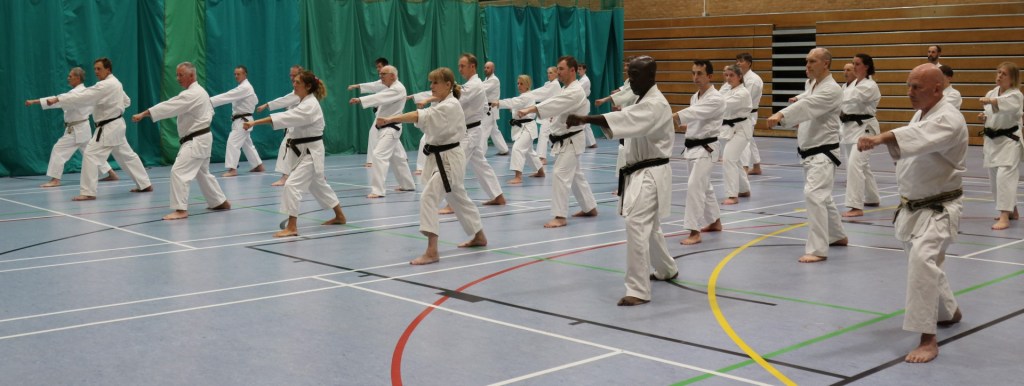
Also, (really important) a huge thanks for the continuing support of all the participants. Without you these courses cannot happen. Your continued endorsement of all Shikukai events enables us to go forward and develop this wonderful unique tradition inspired by those who have gone before us and the continual inspiration of our chief instructor, F. Sugasawa Sensei.

Tim Shaw

Instructor at Shouwa Jyuku (Chelmsford).

Training and Mock Dan Grading at The Osprey, Portland, Dorset, UK.

The Training and Grading on 27th January was planned mainly to assist future Dan Grades to go through their various syllabi under “mock” exam conditions, although all grades were welcome to attend.  The course was well attended with students from Ken Bu Jyuku, Kiku Wa Jyuku, Mushin Jyuku and Chertsey. 

After a short warm up the lesson was underway. As space was at a premium in the upstairs Dojo, quality rather than quantity of techniques was the order of the day. All students were taken through basics for the Dan Syllabus with the junior grades enjoying the opportunity to try something different.  

As there were quite a few different katas to cover for 1st/2nd and 3rd Dan, the students were taken through various moves which were common to several of the katas, before having the chance to practice their particular katas in small groups.  Whilst the seniors were working on their pairwork, two students from Ken Bu Jyuku took a formal 5th Kyu Grading. 

After two and a half hours eveyone took a short break before attempting the Mock Dan Grading. 

It was interesting to learn from the students how the nerves unexpectedly crept in, even at this early stage. 

At the end of the session everyone migrated to the nearby Beehive Cafe on Portland for some well earned refreshments and structured feedback on performances.   

Steve & Pam would like to thank everyone for attending and for the effort they put in. 

Pam Rawson 

30/1/24