
This year the jump from an English summer to a Hungarian summer was not such a big one. While parts of the UK cooked up to around 33 degrees, Hungary was enjoying temperatures that were very much like a better version of the typical Brit summer.
For training this made things rather more comfortable.
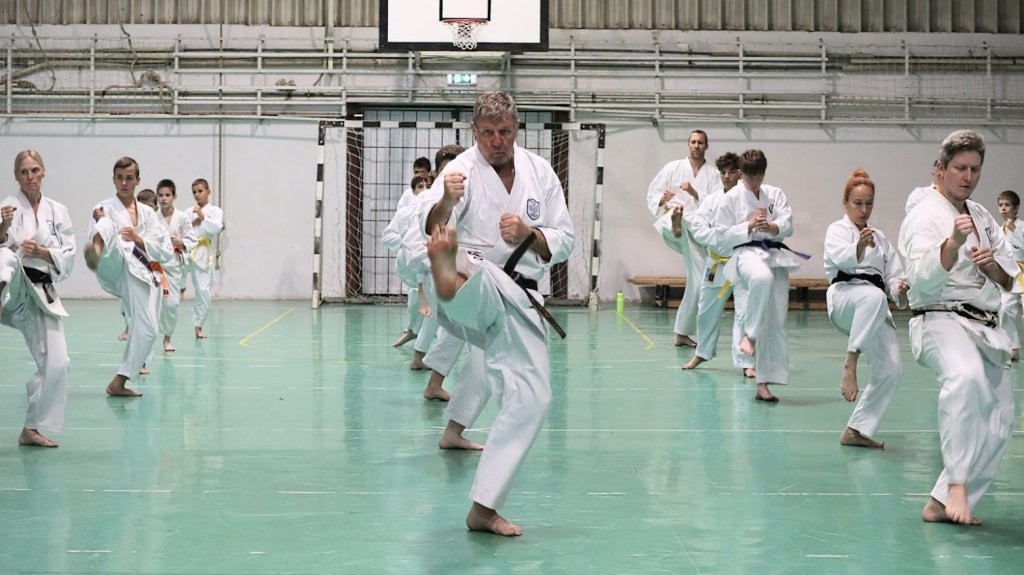
The Genki Dojo in the town of Isaszeg in the Budapest metropolitan area has been the location for our Shikukai Summer training for quite a few years now. The organisers are really skilled in their hospitality and, as hosts, are second to none.
As the popularity of the course is growing this has meant that the UK contingent has expanded and we were joined this year by Yuri Bregoli from Italy, who I had met earlier in the year on our course in the Netherlands.
I was fortunate to have a solid representation of UK Shikukai seniors come over to work and train alongside the Genki Dojo instructor team and their students. My thanks to Richard Barham, Mark Gillis, Sue Dodd and Mark Troman.
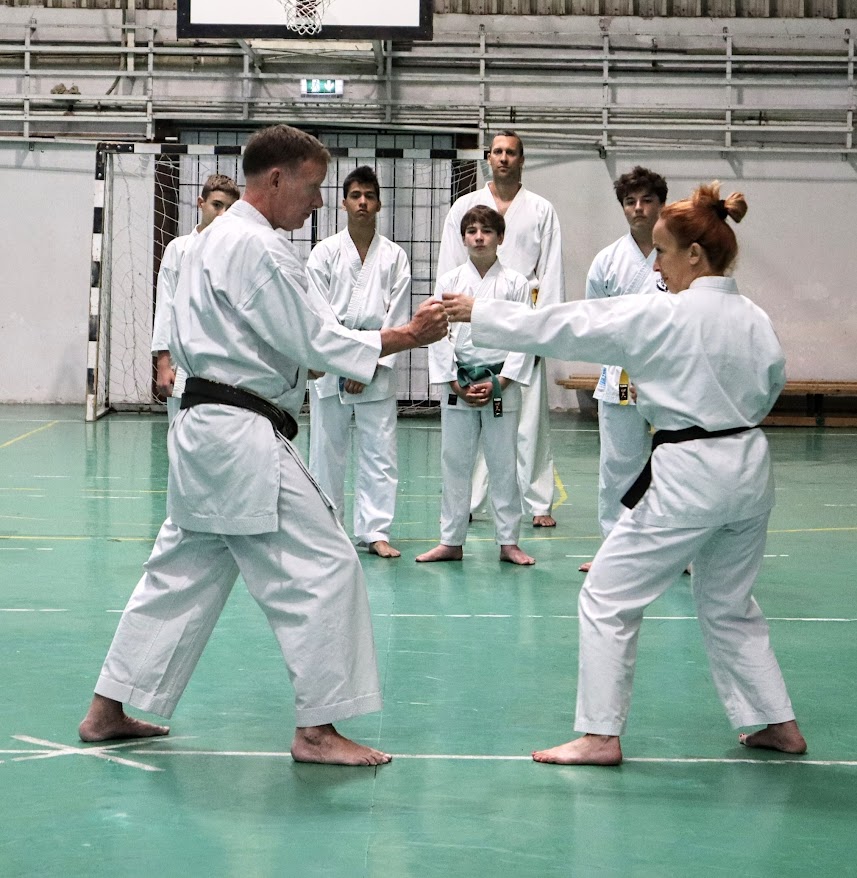
The training was organised to start on the Saturday and go through to Tuesday. The thinking behind this was that if anyone was only able to do the weekend, then it would work well for them. The British (and Italian) contingents actually planned it the other way round; arriving in Budapest earlier to do the City tourist thing and then on to the training for the remaining days. It proved to be an excellent idea.
The training.
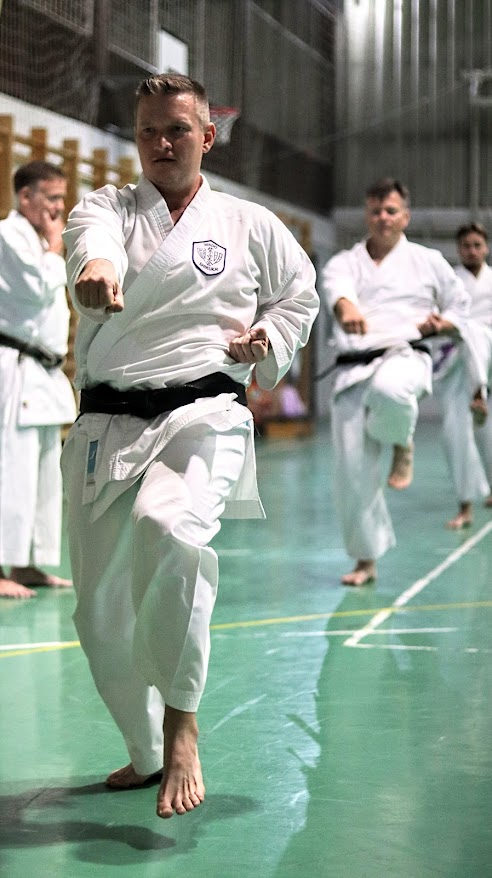
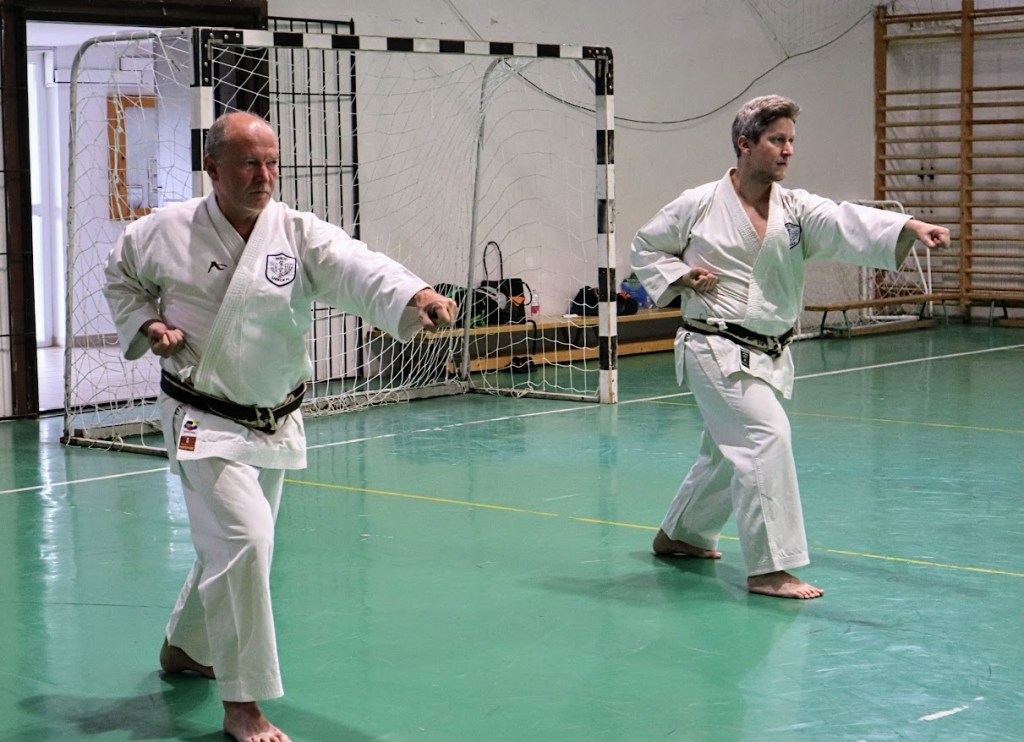
I will be honest, I have been planning the content of the training for months; determined to get the balance right and to squeeze as much out of the time available as possible. Included in this was Sugasawa Sensei’s ‘updates’, not changes as such, more refined detail, including very precise body mechanics relating to Kihon.
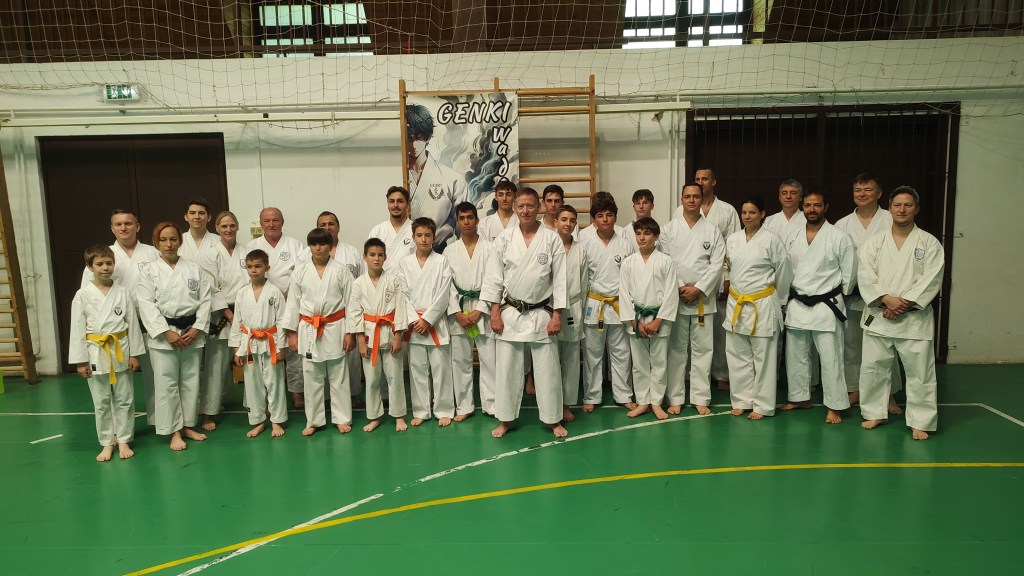
As with the previous year, I engineered it so that I could have some time to work exclusively with the instructors; we did this on each of the first three days. This enabled me to give very detailed observations and directions to the team.
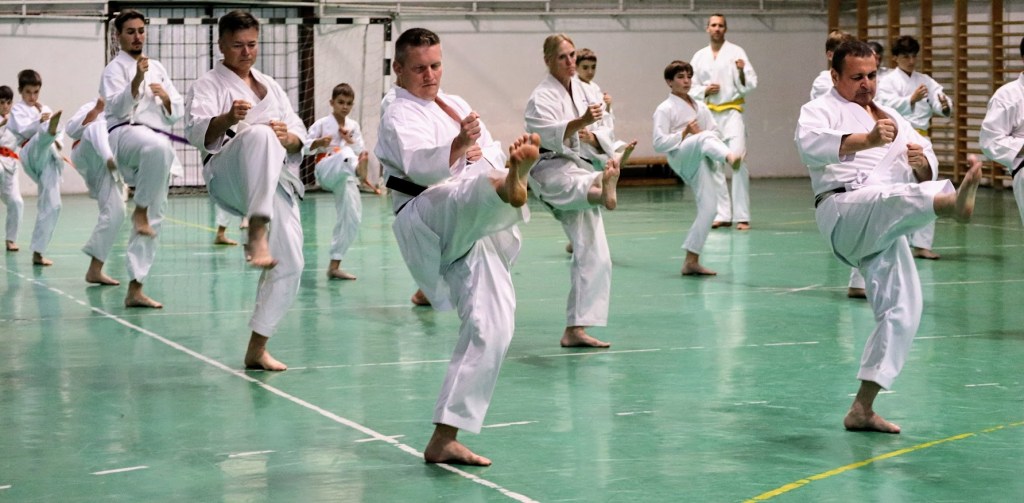
Some of the main themes were inspired by Sugasawa Sensei’s recent directions. A couple of key phrases; when looking at solo of paired kata, ask the question, ‘what does this give you?’ and in paired kata, when finding yourself at a particular point, ‘where can this go from here?’ I suppose the driving mindset is to avoid blithely blundering through your formal training, and instead to apply your intelligence and question everything.

We worked on only two solo kata; Pinan Nidan and Pinan Sandan, which I kept coming back to, showing the connections with more freeform, less formal, examples of the usage of the principles extracted from the kata. The plan was to underline the connectedness of what we do in Wado training.
In the paired kata, particularly for the junior grades, they were encouraged to always stay close to their core kihon references and to give meaning to their kata, understanding timing, distance and application. We looked at Kuzushi in some detail and students were encouraged to avoid only thinking about what was happening with their bodies, but also considering what was occurring with the other person’s structure, balance and connection.

Now for the tourist brochure part.
It has to be said that Budapest and Hungary in general is full of delights, some of it hidden and some of it on full spectacular display.
For ‘spectacular’ our hosts booked us in for a guided tour of the Hungarian Parliament building, proudly positioned on the banks of the Danube, this wonderful piece of architecture (based in part on the Vienna City Hall and the Palace of Westminster) had a real ‘wow’ factor.
But inside, the Hungarians know how to do opulence. Gold, glitter, glass and statuary all completed in seventeen years. It was a real surprise to us.


I have to say that one of the many ‘hidden’ aspects, is the restaurants. Do not assume that Hungarian cuisine is all goulash, paprikash, and stuffed cabbage. The Hungarian restaurateurs are not shy of fusion menus and always have a surprising spin on dishes you thought you knew, plus many you had never encountered before. Also, pounds sterling and the euro go a long way in Hungary. So dining is always a delight.

A massive thanks to the Jakab family, who gave support and advice throughout and made our stay totally frictionless. Our accommodation was ideally situated in comfortable apartments with all the comforts you would need.
In conclusion.
The Genki Dojo within Shikukai is a shining light of teamwork and dedication, with an exceptionally high standard. The plan is for this course to grow and to bring on board more Wado students from near and far. And yes, next year’s dates are already fixed – July 11th to 14th 2026.
Tim Shaw
 Shikukai Karate-Do International